 (No Ratings Yet)
 Loading...
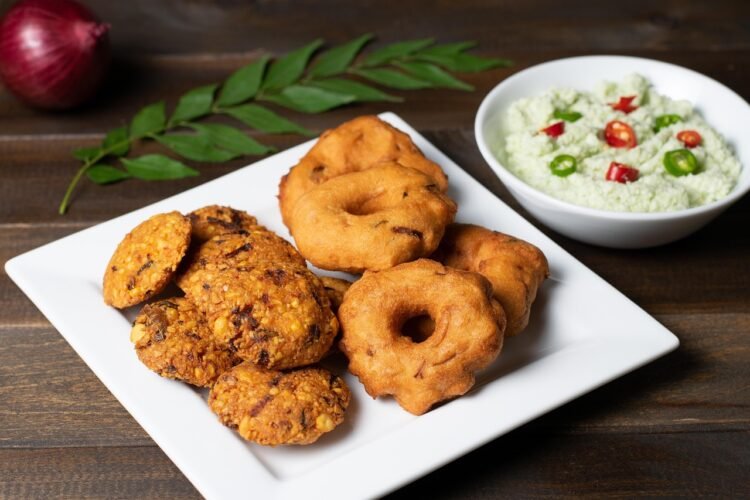
Medu vada is a beloved South Indian snack shaped like a doughnut and fried until deeply golden on the outside while staying pillowy and tender inside. Made from a fermented batter of urad dal spiced with curry leaves, black pepper, and green chili, these crisp lentil rings are traditionally served with coconut chutney and hot sambar for breakfast or evening tea. The batter is airy and whipped to trap steam and bubbles, which gives vada its characteristic light, fluffy center once fried.
Prep Time20 mins
Cook Time25 mins
Total Time45 mins
Servings4
Yield12 vadas (4 servings)
Nutrition Facts
Per serving (estimated)
- 310 kcalCalories
- 17 gFat
- 2.5 gSaturated Fat
- 30 gCarbs
- 7 gFiber
- 1 gSugar
- 13 gProtein
- 420 mgSodium
- 480 mgPotassium
- 60 mgCalcium
- 3.5 mgIron
- 5 mgVitamin C
- 30 mcgVitamin A
Ingredients
For the batter
- 2 cups (400 g) whole skinless urad dal (split black gram)
- 3 cups cold water, for soaking
- 1 inch (10 g) fresh ginger, peeled
- 2 to 3 green chilies, roughly chopped
- 10 to 12 fresh curry leaves, roughly torn
- 1 tsp whole black peppercorns, lightly crushed
- 1 tsp cumin seeds
- 1/4 tsp asafoetida (hing)
- 1/2 tsp baking soda
- 1 1/2 tsp kosher salt, or to taste
- 2 to 3 tbsp cold water, for grinding
- 1 small onion (90 g), finely diced (optional)
For frying
- 2 cups (about 475 ml) peanut or sunflower oil, for deep-frying
Directions
- Place the urad dal in a large bowl, rinse under cold water 2 to 3 times until the water runs nearly clear, then cover with 3 cups cold water and soak for at least 4 hours and up to 6 hours; drain completely.
- Transfer the soaked dal to a wet grinder or a high-power blender with the ginger, green chilies, and 2 tablespoons of cold water. Grind in short pulses, scraping the sides as needed and adding 1 teaspoon of water at a time, until you have a thick, fluffy, pale batter that is the texture of soft whipped cream and holds its shape when lifted on a spoon, about 8 to 12 minutes.
- Scoop the batter into a large bowl, then fold in the crushed black pepper, cumin seeds, asafoetida, baking soda, and salt with a spatula using a cutting and folding motion for about 1 minute to aerate the batter; it should look pillowy and almost double in volume.
- Stir in the torn curry leaves and the diced onion, if using. Test the batter by dropping a small spoonful into a glass of cold water — it should float on the surface, indicating the right consistency.
- Heat the oil in a deep kadai or heavy-bottomed pan to 350 to 365°F (175 to 185°C) over medium heat. Line a plate or small bowl with a little water to keep your hands wet while shaping.
- Dip your fingers in the water, scoop up about 2 heaping tablespoons of batter, flatten it slightly, and poke a hole through the center with your thumb to form a doughnut shape; gently slide it into the hot oil, or drop the batter onto a wet square of parchment and lower it into the oil.
- Fry 4 to 5 vadas at a time without crowding; once they float, spoon hot oil over the tops and fry for 2 to 3 minutes per side, turning carefully, until deep golden brown and crisp on the edges.
- Lift each vada with a slotted spoon onto a wire rack or paper-lined plate to drain briefly, then serve immediately with coconut chutney, tomato chutney, or hot sambar.
Cook’s Notes
- The secret to fluffy vada is grinding the batter long enough — the volume should visibly increase and it should feel like thick whipped cream when you lift a spoon.
- Always keep your hands wet while shaping; if the batter sticks, dip again — a dry hand will tear the vada when you try to release it into the oil.
- Maintain oil temperature between 340 and 365°F; too hot and the vadas will brown before the centers cook, too cool and they will absorb excess oil and turn greasy.
- You can prep the batter ahead and refrigerate for up to 12 hours; just re-whip it briefly with a spoon before shaping to restore aeration.
- Serve within 10 minutes of frying for the crispiest outside and softest inside; vadas turn dense as they cool.