 (No Ratings Yet)
 Loading...
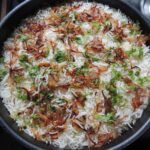
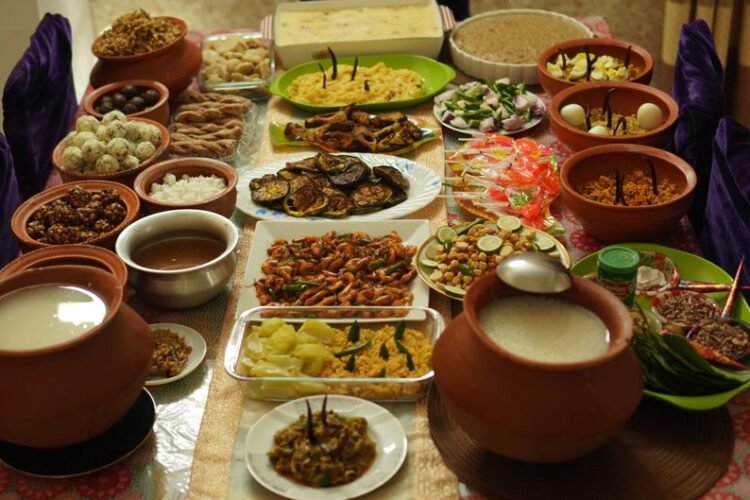
A simplified at-home version of Kerala's legendary festive sadya, served on a banana leaf with steamed rice, a moong dal, a coconut-rich mixed-vegetable stew, a cabbage stir-fry, and a cool yogurt side. Each component is portioned and arranged so the diner enjoys sweet, sour, spicy, and cooling flavors in one sitting.
Prep Time25 mins
Cook Time45 mins
Total Time70 mins
Servings4
Yield4 servings
Nutrition Facts
Per serving (estimated)
- 690 kcalCalories
- 22 gFat
- 11 gSaturated Fat
- 108 gCarbs
- 11 gFiber
- 14 gSugar
- 18 gProtein
- 520 mgSodium
- 980 mgPotassium
- 190 mgCalcium
- 5 mgIron
- 38 mgVitamin C
- 180 mcgVitamin A
Ingredients
For the Steamed Rice
- 1 1/2 cups raw short-grain white rice
- 2 1/2 cups water
- 1/2 teaspoon salt
For the Moong Dal (Parippu)
- 3/4 cup yellow moong dal
- 2 cups water
- 1 tablespoon coconut oil
- 1 teaspoon black mustard seeds
- 2 dried red chilies, broken
- 8 curry leaves
- 1/4 teaspoon turmeric
- 1 teaspoon salt, or to taste
For the Mixed Vegetable Coconut Stew (Avial)
- 2 cups mixed vegetables (yam, raw banana, carrot, drumstick, green beans, eggplant), cut into batons
- 1/2 cup grated fresh coconut
- 1/2 cup thick yogurt, whisked
- 2 tablespoons coconut oil
- 1 teaspoon cumin seeds
- 2 green chilies, slit
- 10 curry leaves
- 1/2 teaspoon turmeric
- 1 tablespoon rice flour
- 1 1/2 teaspoons salt, or to taste
For the Cabbage Stir-Fry (Thoran)
- 3 cups finely shredded green cabbage
- 3/4 cup grated fresh coconut
- 1 tablespoon coconut oil
- 1 teaspoon black mustard seeds
- 2 dried red chilies, broken
- 6 curry leaves
- 1/2 teaspoon turmeric
- 3/4 teaspoon salt
For the Coconut Yogurt Side (Thayir Pachadi)
- 1 cup plain whole-milk yogurt
- 1/3 cup grated fresh coconut
- 1 small cucumber, finely chopped
- 1 green chili, minced
- 1/4 teaspoon cumin powder
- 1/4 teaspoon salt, or to taste
For Serving
- 4 ripe bananas (nendran or cavendish), peeled and halved lengthwise
- 8 store-bought papadums
- Extra coconut oil, for drizzling
Directions
- Rinse the rice until water runs clear, then combine with 2 1/2 cups water and salt in a heavy pot. Bring to a boil, cover, reduce heat to low, and steam 18 minutes. Fluff and keep covered.
- Cook the moong dal: rinse the dal, simmer with 2 cups water and turmeric until very soft, about 15 minutes; mash lightly and season with salt. Heat coconut oil in a small pan, pop the mustard seeds, then add dried chilies and curry leaves. Pour the tempering over the dal.
- Make the avial: simmer all the vegetables with turmeric, salt, green chilies, and just enough water to cover until just tender, about 12 minutes. Stir in the rice flour mixed with 2 tablespoons water to lightly thicken, then fold in the grated coconut and yogurt off the heat. Finish with a tempering of cumin seeds and curry leaves in coconut oil.
- Make the thoran: heat coconut oil in a wide pan, pop the mustard seeds, then add chilies and curry leaves. Add the cabbage and turmeric and stir-fry over medium-high heat for 4-5 minutes until wilted but still crisp. Stir in the coconut and salt and cook 1 minute more.
- Stir together the yogurt, coconut, cucumber, green chili, cumin, and salt for the thayir pachadi. Chill until ready to serve.
- Roast or fry the papadums until puffed and crisp.
- To serve: lay a banana leaf glossy-side up. On the left half, place a mound of rice; on the right, spoon small portions of dal, avial, thoran, and pachadi in a row. Add a papadum and banana pieces at the top edge. Drizzle everything with a little coconut oil just before eating; traditionally each item is eaten with the right hand, mixing the rice with each side in turn.
Cook’s Notes
- If banana leaves are not available, serve on large round plates lined with parchment brushed with a thin layer of coconut oil to mimic the flavor.
- A nendran (Kerala) banana is traditional and adds natural sweet, starchy balance; ripe cavendish works as a substitute.
- Always temper the curries with curry leaves crackled in coconut oil at the end; this final step carries the signature aroma.
- Eat with your right hand and use the rice as the base, mixing small bites with each side dish to enjoy the contrasting sweet-sour-spicy notes in sequence.
- Leftover components keep separately in the fridge for up to 3 days; refresh the avial with a splash of warm water before reheating.