 (No Ratings Yet)
 Loading...
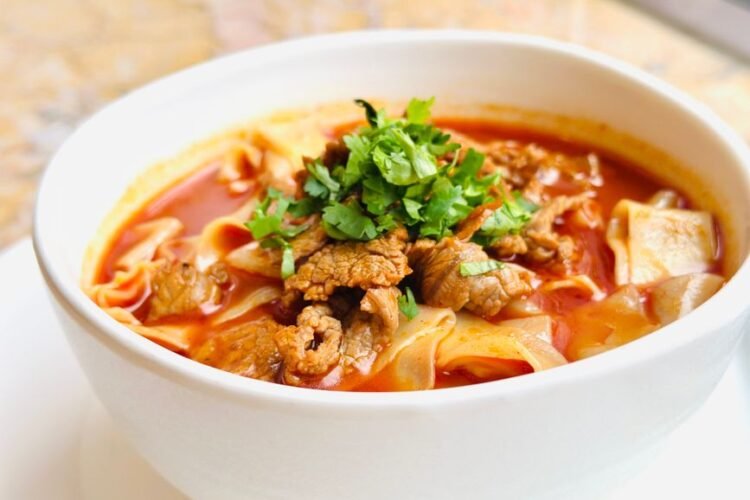
Hailing from the noodle shops of Gansu Province in northwest China, this iconic bowl features a clear, aromatic beef broth, hand-pulled alkaline noodles, tender sliced beef, and a fragrant topping of cilantro, scallions, and chili oil. The broth is the soul of the dish—slowly simmered with beef bones, warming spices, and daikon for a clean yet deeply savory flavor.
Prep Time25 mins
Cook Time180 mins
Total Time205 mins
Servings4
Yield4 servings
Nutrition Facts
Per serving (estimated)
- 580 kcalCalories
- 22 gFat
- 7 gSaturated Fat
- 58 gCarbs
- 4 gFiber
- 5 gSugar
- 38 gProtein
- 920 mgSodium
- 720 mgPotassium
- 95 mgCalcium
- 6 mgIron
- 18 mgVitamin C
- 110 mcgVitamin A
Ingredients
For the beef broth
- 2 lb beef shank with bone, cut into 2-inch chunks
- 1 large daikon radish, peeled and cut into 1-inch chunks
- 1 large yellow onion, halved (skin on)
- 4-inch piece fresh ginger, smashed
- 6 garlic cloves, smashed
- 3 star anise, 2 cinnamon sticks, 1 bay leaf, and 1 tbsp Sichuan peppercorns
- 2 tbsp Shaoxing wine
- 10 cups cold water
For the noodles and beef
- 1 lb fresh alkaline wheat noodles (lamian)
- 8 oz baby bok choy or baby spinach
- 1 tbsp kosher salt, plus more to taste
- Reserved cooked beef shank, thinly sliced against the grain
For the chili oil and seasoning
- 3 tbsp Chinese chili oil with sediment
- 2 tbsp light soy sauce
- 1 tbsp Chinkiang black vinegar
- 1/2 tsp ground white pepper
- 4 scallions, thinly sliced
- 1/2 cup fresh cilantro, chopped
- 1 cup finely chopped pickled mustard greens (suan cai), optional
Directions
- Place the beef shank in a large stockpot, cover with cold water, and bring to a boil. Blanch for 5 minutes, then drain and rinse the beef and pot to remove impurities for a clearer broth.
- Return beef to the cleaned pot with daikon, onion, ginger, garlic, star anise, cinnamon, bay leaf, Sichuan peppercorns, Shaoxing wine, and 10 cups cold water. Bring to a boil over high heat, then immediately reduce to a bare simmer, skimming any foam that rises.
- Partially cover and simmer gently for 2.5 to 3 hours, until the beef is fork-tender and the broth is rich and clear. Remove the beef, let cool, and slice thinly against the grain; set aside.
- Strain the broth through a fine-mesh sieve into a clean pot, season with 1 tablespoon salt and the white pepper, and keep at a rolling boil for service.
- Bring a separate large pot of water to a vigorous boil. Add the noodles and cook 3 to 4 minutes until just tender with a slight chew; drain and divide evenly among 4 large bowls.
- Blanch the bok choy in the noodle water for 30 seconds, then arrange on top of the noodles along with the sliced beef.
- Ladle about 2 cups of the hot broth into each bowl, making sure each portion has a few slices of daikon from the broth.
- Top each bowl with scallions, cilantro, pickled mustard greens (if using), a generous spoonful of chili oil with its sediment, and a splash of soy sauce and black vinegar. Serve immediately with extra chili oil on the side.
Cook’s Notes
- For the clearest, most authentic broth, simmer gently and never let it boil hard—agitation makes it cloudy. Skim the surface every 30 minutes.
- Make the broth a day ahead and refrigerate overnight; the fat will solidify on top for easy removal, and the flavor deepens considerably.
- Look for fresh alkaline wheat noodles (lamian) at Chinese or Korean markets. Avoid substituting dried pasta, which lacks the characteristic chewy bite.
- Always include the chili oil sediment (the red flakes at the bottom of the jar), not just the clear oil—this gives Lanzhou-style broth its signature ruby sheen and aromatic depth.
- If you want to pull your own noodles, use a high-gluten flour dough rested for 2 hours, then stretch and fold repeatedly on an oiled surface until thin and elastic.