 (No Ratings Yet)
 Loading...
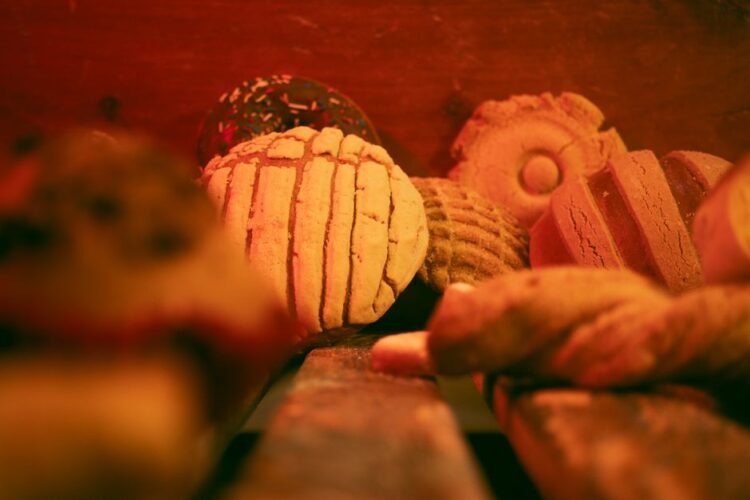
Melon pan is a beloved Japanese sweet bread featuring a soft, pillowy milk bread base wrapped in a thin, crispy sugar-crusted cookie layer that resembles the rind of a cantaloupe. Despite its name, the bread does not typically contain melon and gets its moniker purely from its iconic crosshatched golden dome.
Prep Time30 mins
Cook Time20 mins
Total Time50 mins
Servings6
Yield6 melon pans
Nutrition Facts
Per serving (estimated)
- 430 kcalCalories
- 16 gFat
- 9 gSaturated Fat
- 62 gCarbs
- 2 gFiber
- 22 gSugar
- 9 gProtein
- 280 mgSodium
- 120 mgPotassium
- 60 mgCalcium
- 2.5 mgIron
- 0 mgVitamin C
- 150 mcgVitamin A
Ingredients
For the milk bread dough
- 250 g (about 2 cups) bread flour
- 30 g (2 tablespoons) granulated sugar
- 3 g (1/2 teaspoon) fine salt
- 4 g (1 teaspoon) instant dry yeast
- 15 g (2 tablespoons) nonfat dry milk powder
- 1 large egg, room temperature
- 110 ml (about 1/2 cup) warm whole milk, around 38°C (100°F)
- 30 g (2 tablespoons) unsalted butter, softened
- 1 teaspoon pure vanilla extract
For the cookie topping
- 60 g (1/2 stick) unsalted butter, softened
- 60 g (1/4 cup plus 1 tablespoon) granulated sugar
- 1 large egg yolk
- 1 teaspoon pure vanilla extract
- 150 g (about 1 1/4 cups) cake flour
- 1/2 teaspoon baking powder
- 2 to 3 drops green food coloring, optional
For assembly and baking
- 60 g (about 1/3 cup) coarse granulated or sanding sugar, for coating
- 1 tablespoon melted butter, for brushing
- All-purpose flour, for dusting the work surface
- Parchment paper, for lining the baking sheet
Directions
- Make the dough: In the bowl of a stand mixer, whisk together the bread flour, sugar, salt, yeast, and milk powder. Add the egg, warm milk, and vanilla, then knead with the dough hook for about 5 minutes on medium speed until the ingredients come together into a shaggy mass.
- Add the softened butter and continue kneading 7 to 10 minutes more, until the dough is smooth, elastic, and clears the sides of the bowl. It should pass the windowpane test when a small piece is stretched thin.
- Shape the dough into a tight ball, place in a lightly greased bowl, cover with plastic wrap, and let rise in a warm spot for 60 to 90 minutes, until nearly doubled in size.
- Meanwhile, make the cookie layer: In a medium bowl, cream the butter and sugar with a wooden spoon or hand mixer until pale and fluffy, about 2 minutes. Beat in the egg yolk and vanilla until smooth.
- Sift the cake flour and baking powder over the butter mixture, then fold with a spatula until a soft dough forms. Stir in green food coloring now if using. Wrap in plastic and chill for 20 minutes while the bread finishes its first rise.
- Divide the risen bread dough into 6 equal portions (about 75 g each) and shape each into a tight round ball. Divide the cookie dough into 6 equal pieces as well.
- Roll each cookie piece between two sheets of parchment into a thin round about 12 cm (5 inches) wide. Drape a cookie round over each bread ball, gently pressing to seal at the base and smoothing out any wrinkles so the dough is an even, thin layer.
- Brush the cookie-coated tops lightly with melted butter, then roll the tops in the coarse sugar to coat generously. Place sugar side up on a parchment-lined baking sheet, spacing buns about 7 cm (3 inches) apart.
- Using a sharp knife or the back of a butter knife, score a crosshatch melon-rind pattern across the sugared surface of each bun, cutting just through the cookie layer. Let the shaped buns rest uncovered for 25 to 30 minutes to puff slightly.
- Bake in a preheated 180°C (350°F) oven for 18 to 22 minutes, until the cookie tops are deep golden and the bread feels light when tapped. Cool on a wire rack for 10 minutes before serving; melon pan is best eaten the day it is baked.
Cook’s Notes
- Keep the cookie dough cold while working; if it becomes too soft to handle, return it to the refrigerator for a few minutes before rolling.
- Roll the cookie topping thin so it crackles rather than bakes into a heavy cap; aim for roughly 3 to 4 mm of thickness.
- For the crispiest sugar shell, use coarse or sanding sugar rather than fine granulated sugar on the outside.
- Score the melon pattern before the final rise so the lines stay crisp and defined during baking.
- Store leftover melon pan in an airtight container at room temperature for up to 2 days; re-crisp in a 160°C (325°F) oven for 5 minutes before serving.