 (No Ratings Yet)
 Loading...
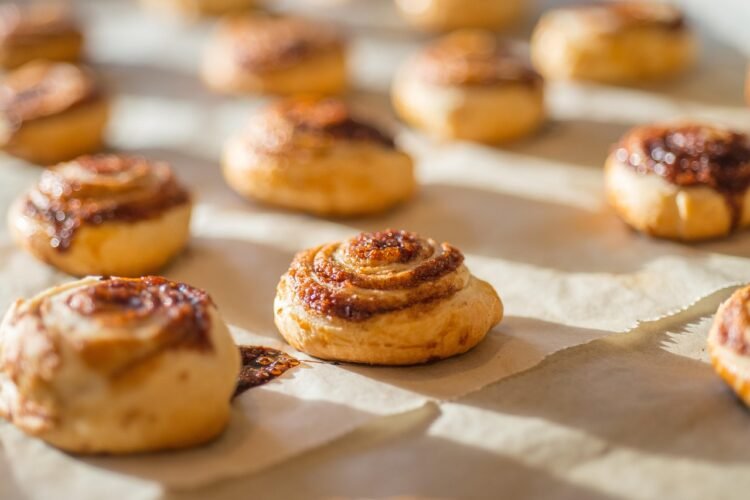
Anpan is one of Japan's most beloved everyday pastries, pillowy enriched milk bread wrapped around a generous core of sweet azuki red bean paste and capped with toasted sesame seeds. The tangzhong (flour paste) method keeps the crumb cloud-soft for days, while a glossy egg wash gives the rolls their signature bakery shine.
Prep Time35 mins
Cook Time18 mins
Total Time53 mins
Servings8
Yield8 rolls
Nutrition Facts
Per serving (estimated)
- 295 kcalCalories
- 6 gFat
- 2.5 gSaturated Fat
- 52 gCarbs
- 3 gFiber
- 21 gSugar
- 8 gProtein
- 180 mgSodium
- 210 mgPotassium
- 55 mgCalcium
- 2.4 mgIron
- 0.5 mgVitamin C
- 45 mcgVitamin A
Ingredients
For the Tangzhong (Flour Paste)
- 3 tbsp (25 g) bread flour
- 100 ml water
For the Dough
- 300 g bread flour
- 40 g granulated sugar
- 1 tsp (4 g) instant yeast
- 1/2 tsp fine salt
- 1 large egg (about 50 g), room temperature
- 130 ml whole milk, warmed to 38°C
- 30 g unsalted butter, softened
- 1 tsp milk powder (optional, for softer crumb)
For the Sweet Red Bean Paste (Anko)
- 200 g dried azuki beans, soaked overnight
- 150 g granulated sugar
- 1/4 tsp fine salt
- 1 tbsp mirin
- 60 ml of the bean cooking water
For the Topping
- 1 large egg, beaten with 1 tbsp water
- 2 tbsp toasted black or white sesame seeds
Directions
- Make the tangzhong: whisk the flour and water in a small saucepan over medium heat, stirring constantly for 2-3 minutes until a thick, glossy paste forms and holds a line when you draw through it with a spoon. Scrape into a bowl, cover, and cool to room temperature.
- Cook the bean paste: drain the soaked beans, cover with fresh water in a pot, and simmer 40-50 minutes until very tender. Drain (reserving 60 ml of liquid), then mash the beans with sugar, salt, mirin, and the reserved water until a thick, spreadable paste forms. Set aside to cool completely.
- Mix the dough: in a stand mixer, combine bread flour, sugar, yeast, salt, milk powder, egg, milk, and the cooled tangzhong. Knead 8 minutes on medium, then add the butter and knead 6-8 minutes more until the dough is smooth, elastic, and passes the windowpane test.
- First rise: shape the dough into a ball, place in a lightly oiled bowl, cover, and let rise 60-75 minutes at 26°C until nearly doubled.
- Shape the rolls: divide the dough into 8 equal pieces (about 65 g each). Flatten each into an 8 cm disc, place 55-60 g of cooled bean paste in the center, gather the edges up and pinch tightly to seal, then roll gently into a smooth ball. Place seam-side down on a parchment-lined tray and lightly press the top to flatten slightly.
- Second rise: cover the shaped rolls and proof 30-40 minutes until puffy and visibly increased in size. Meanwhile, preheat the oven to 180°C (350°F).
- Top and bake: brush each roll gently with egg wash, then press the flattened top into a small dish of sesame seeds to coat evenly. Bake 16-18 minutes until deep golden and hollow-sounding when tapped. Cool on a rack for 10 minutes before serving.
Cook’s Notes
- For an ultra-smooth koshi-an, press the cooked beans through a fine mesh sieve before sweetening to remove all the skins.
- Don't overfill or the bean paste will burst during baking; 55-60 g per roll is the sweet spot.
- If you prefer a glossy, sweet finish, brush the warm rolls with a thin syrup made from 1 tbsp sugar dissolved in 1 tbsp hot water.
- Store rolls airtight at room temperature for up to 3 days, or freeze (after cooling) for up to 1 month; refresh in a 160°C oven for 3 minutes.
- Tsubu-an (chunky paste) works beautifully too if you prefer texture in every bite instead of a smooth filling.