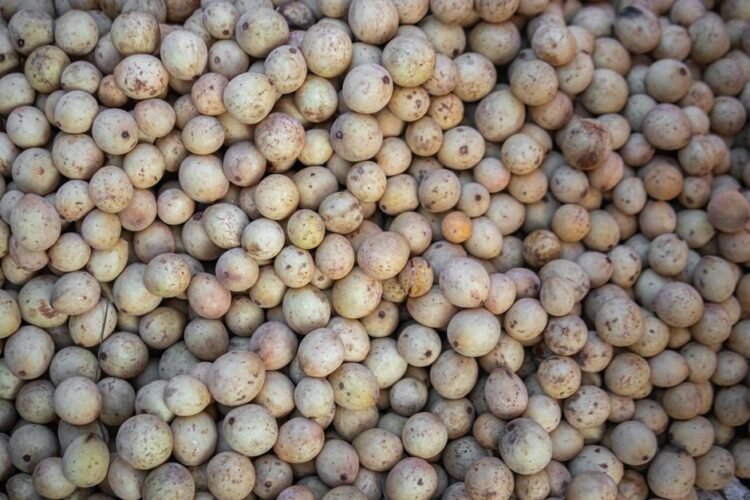
A small, ovoid tropical fruit of the mahogany family whose translucent, segmented flesh is prized across Southeast Asia for its sweet-tart, lychee-like flavor.
CategoryFruits
Scientific nameLansium domesticum
OriginMaritime Southeast Asia (Malay Peninsula, Borneo, Sumatra, southern Philippines)
History & Origins
Langsat is indigenous to the Malay Archipelago and has been gathered from wild forest stands and home gardens for several centuries. Spanish colonizers are credited with spreading it through the Visayas and Mindanao, where it remains a celebrated market fruit. Today it is also cultivated in Thailand, southern India, Sri Lanka, and parts of tropical Australia.
Nutrition Facts
Per 100 g, edible portion (estimated)
- 66 kcalCalories
- 0.8 gProtein
- 0.2 gFat
- 16 gCarbs
- 0.9 gFiber
- 14 gSugars
- 201 mgPotassium
- 19 mgVitamin C
- 30 mcgVitamin A
Culinary Uses
- Eaten fresh, peeled, with the bitter seed(s) discarded
- Poached in light syrup or caramelized for tropical desserts
- Blended into shakes, sorbets, and ice creams
- Pickled with salt and chili in the Philippines as a savory snack (sinukmani style)
Known Benefits
- Provides vitamin C to support immune function
- Source of dietary fiber that aids digestion
- Contains potassium which helps regulate blood pressure
Hidden Benefits
- Peel and seed extracts studied for antioxidant and antidiabetic activity
- Supplies modest amounts of riboflavin, thiamine, and niacin
- Contains onoceranoid and triterpene compounds of pharmacological interest
Cautions & Considerations
- Raw seeds are bitter and contain mildly irritating compounds; do not chew or swallow
- Sticky latex from the skin and bark can irritate skin in sensitive handlers
- Highly perishable, fermenting within 2-3 days of harvest unless refrigerated


