 (No Ratings Yet)
 Loading...
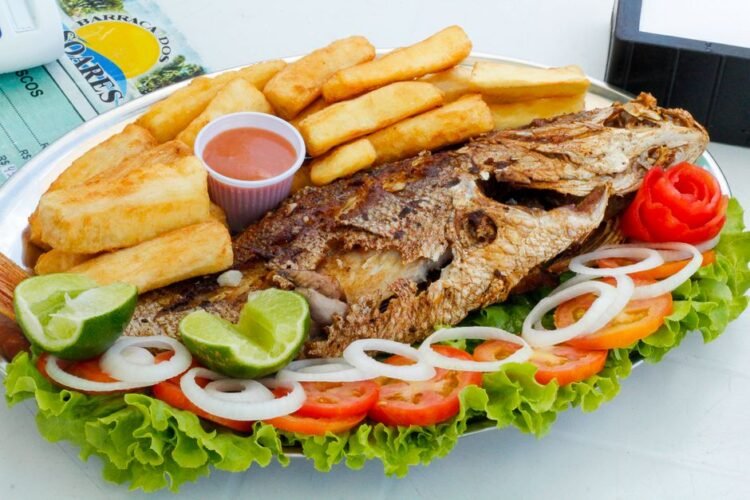
Mufete is the signature dish of Luanda, where grilled, spice-rubbed fish is arranged alongside a mound of smooth cassava porridge, red beans, fried plantains, and a fiery tomato-and-pepper sauce. Every element is served at once so diners can build bites of each on the plate. It is a festive, hands-on meal meant to be shared at the center of the table.
Prep Time25 mins
Cook Time45 mins
Total Time70 mins
Servings4
Yield4 servings
Nutrition Facts
Per serving (estimated)
- 680 kcalCalories
- 28 gFat
- 6 gSaturated Fat
- 65 gCarbs
- 9 gFiber
- 14 gSugar
- 42 gProtein
- 720 mgSodium
- 1100 mgPotassium
- 180 mgCalcium
- 6 mgIron
- 38 mgVitamin C
- 220 mcgVitamin A
Ingredients
For the Fish and Marinade
- 4 whole mackerel or red snapper fillets (about 6 oz / 170 g each), butterflied and scored
- 3 tablespoons fresh lemon juice
- 4 cloves garlic, minced
- 1 teaspoon fine sea salt
- 1 teaspoon smoked paprika
- 1 teaspoon ground cumin
- 3 tablespoons olive oil
For the Spicy Tomato Pepper Sauce
- 3 medium tomatoes, finely chopped
- 1 small red onion, finely diced
- 2 red bell peppers, diced
- 3 to 4 malagueta or bird's-eye chilies, minced
- 2 tablespoons tomato paste
- 1 tablespoon palm oil
- 1 teaspoon grated ginger
- 1/2 teaspoon salt
For the Cassava Porridge
- 2 lbs (900 g) fresh cassava, peeled and cut into chunks
- 1 teaspoon salt
- 2 tablespoons cold water or unsalted butter for smoothing
For the Bean and Plantain Sides
- 1 cup dried red kidney beans, soaked overnight (or 1 can, drained)
- 2 ripe plantains, peeled and sliced diagonally into 1/2-inch rounds
- 1 small onion, chopped
- 2 cloves garlic, smashed
- 1 bay leaf
- 1/2 teaspoon salt
- 2 tablespoons vegetable oil for frying
Directions
- Make the spicy tomato pepper sauce first: warm the palm oil in a small saucepan over medium heat, add the onion and cook 3 minutes until translucent, then stir in the garlic, ginger, and chilies for 30 seconds.
- Add the tomatoes, bell peppers, tomato paste, and salt. Simmer uncovered for 12 to 15 minutes, mashing with a spoon, until the sauce thickens and the peppers are soft. Keep warm.
- Cook the beans in a pot with the onion, garlic, bay leaf, and 4 cups water for 30 to 35 minutes until tender (less time if using canned). Season with salt and simmer to a thick, juicy consistency; remove the bay leaf.
- Boil the cassava chunks in salted water for 20 to 25 minutes until very tender when pierced. Drain, return to the hot pot, and mash with a wooden spoon, gradually stirring in cold water (or butter) until you have a soft, smooth, stretchy mound that holds together.
- While the cassava cooks, marinate the fish: combine the lemon juice, garlic, salt, paprika, cumin, and olive oil, rub the mixture thoroughly into the flesh and scored skin, and let rest for 15 minutes.
- Heat a grill pan or outdoor grill over medium-high heat. Cook the fish skin-side down for 4 minutes, then flip and cook 3 to 4 minutes more until the flesh is opaque and flakes easily; finish with a squeeze of lemon.
- Meanwhile, fry the plantain rounds in 2 tablespoons of vegetable oil over medium heat for 2 to 3 minutes per side until caramelized and golden. Drain on paper towels.
- To plate, mound a generous scoop of cassava porridge on each large plate, then arrange a fish alongside it. Spoon a heap of red beans next to the fish, add the fried plantains, and finish with a generous spoonful of the pepper sauce over the fish.
Cook’s Notes
- Choose a firm, oily fish such as mackerel, red snapper, sea bass, or tilapia; it holds up to grilling and absorbs the marinade.
- Soak the dried beans overnight in cold water with a pinch of baking soda for extra-creamy texture.
- The cassava porridge should be soft enough to pinch off with your fingers; that is the traditional way to eat it, scooping up bits of fish and beans together.
- Adjust the chilies in the sauce to your heat preference; in Angola, palm oil adds a smoky, slightly tangy note that is essential to the flavor.
- Serve with cold Angolan beer or a light lager to balance the heat of the pepper sauce.