 (No Ratings Yet)
 Loading...
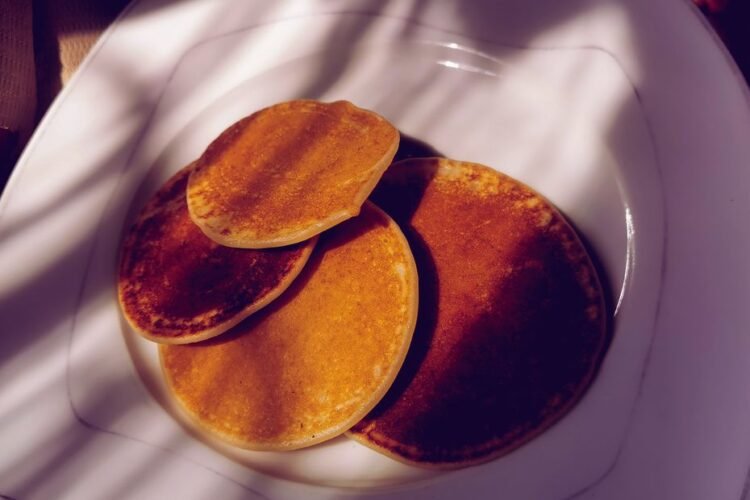
These spongy Moroccan pancakes are famous for the hundreds of tiny holes that form on their surface as they cook, soaking up pools of melted butter and honey. Made from a simple semolina batter, they are traditionally eaten for breakfast or with afternoon tea. The pancakes are cooked on one side only, which creates their signature honeycomb texture.
Prep Time15 mins
Cook Time20 mins
Total Time35 mins
Servings4
Yield4 servings (about 12 pancakes)
Nutrition Facts
Per serving (estimated)
- 380 kcalCalories
- 11 gFat
- 6 gSaturated Fat
- 65 gCarbs
- 2 gFiber
- 22 gSugar
- 7 gProtein
- 240 mgSodium
- 110 mgPotassium
- 28 mgCalcium
- 1.8 mgIron
- 0 mgVitamin C
- 180 mcgVitamin A
Ingredients
For the batter
- 1 cup fine semolina
- 1/2 cup all-purpose flour
- 1 teaspoon active dry yeast
- 1 teaspoon granulated sugar
- 1/2 teaspoon fine salt
- 2 cups warm water (about 105°F)
- 1 teaspoon baking powder
For serving
- 1/2 cup warm honey or date syrup
- 4 tablespoons unsalted butter, melted
- 1/4 cup softened butter for spreading
Directions
- In a large bowl, whisk together the semolina, flour, yeast, sugar, and salt. Pour in the warm water and blend with an immersion blender or whisk vigorously for 2 to 3 minutes until the batter is completely smooth, very liquid, and slightly frothy.
- Cover the bowl with a clean kitchen towel and let the batter rest at room temperature for 45 minutes to 1 hour, until bubbles form on the surface and the batter has thickened slightly.
- Stir the batter gently to deflate; it should have the consistency of thin pancake batter. Stir in the baking powder just before cooking and adjust with a tablespoon of water if the batter has thickened too much.
- Heat a non-stick skillet or flat griddle over medium-low heat; do not grease it. Once warm, pour about 1/3 cup of batter onto the center from a height to help spread it evenly into a 5- to 6-inch round.
- Cook the pancake for about 90 seconds to 2 minutes, until the entire surface is covered with small holes and the top looks set and dry; do not flip. The bottom should be pale golden.
- Slide the pancake onto a plate. Repeat with the remaining batter, stacking the pancakes as you go; keep them covered with a towel to stay soft and warm.
- Stir the melted butter into the warm honey until smooth. Serve the pancakes stacked on a platter with the honey-butter sauce and softened butter for spreading.
- Tear pieces of the pancakes with your fingers and dip into the honey-butter, allowing the sauce to pool into the holes.
Cook’s Notes
- Use a non-stick pan without oil for the best honeycomb pattern; oil prevents holes from forming.
- Blend the batter thoroughly with an immersion blender so it is completely smooth; lumps stop the holes from developing.
- Pour batter from a slightly higher height to help it spread into an even round.
- Cook only on medium-low heat; too hot and the bottom burns before the holes open up, too cool and the pancake dries out without forming bubbles.
- Beghrir is best eaten the day it is made, but leftovers can be stored covered at room temperature and briefly reheated in a dry pan.