 (No Ratings Yet)
 Loading...
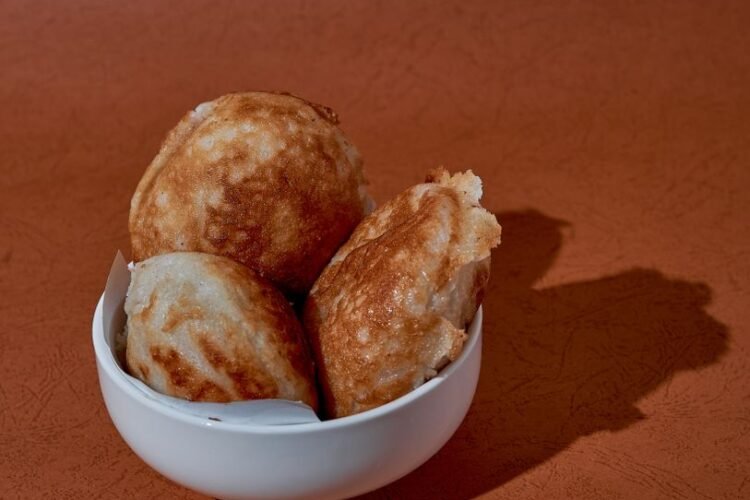
A beloved staple from Northern Nigeria, this soft, stretchy rice paste has a smooth, elastic texture and a mild flavor that pairs beautifully with rich, spicy soups. Made from finely ground soft rice, it is traditionally eaten by hand — small pieces are pinched off and dipped into a stew or sauce for a deeply satisfying meal.
Prep Time10 mins
Cook Time15 mins
Total Time25 mins
Servings4
Yield4 servings (about 600 g paste)
Nutrition Facts
Per serving (estimated)
- 245 kcalCalories
- 0.6 gFat
- 0.1 gSaturated Fat
- 54 gCarbs
- 1.5 gFiber
- 0.2 gSugar
- 5 gProtein
- 295 mgSodium
- 75 mgPotassium
- 15 mgCalcium
- 0.5 mgIron
- 0 mgVitamin C
- 0 mcgVitamin A
Ingredients
For the rice paste
- 2 cups (about 240 g) soft rice flour, finely sifted
- 3 cups (720 ml) water, plus 2-4 tablespoons more if needed
- 1/2 teaspoon fine salt
- 1 tablespoon cold water, for wetting hands
Directions
- Sift the soft rice flour into a large mixing bowl to remove any coarse grains or grit; a fine, powdery flour is essential for a smooth, lump-free paste.
- In a heavy-bottomed pot, bring the 3 cups of water and the salt to a rolling boil over medium-high heat, then reduce the heat to medium-low.
- Gradually sprinkle the sifted rice flour into the boiling water in a thin, steady stream while stirring continuously with a sturdy wooden spoon to prevent clumping.
- Keep stirring vigorously for 5 to 7 minutes as the mixture thickens into a stiff, glossy dough that pulls away from the sides of the pot and has an elastic, stretchy consistency.
- If the paste becomes too dry or stiff, splash in 1 to 2 tablespoons of hot water and continue stirring until it is soft, smooth, and pliable again.
- Cover the pot and let the rice paste rest on low heat for 2 to 3 minutes so the interior finishes cooking through and develops its signature smooth surface.
- Wet your hands with the cold water (a traditional step) and scoop the hot paste onto a clean serving plate or shallow bowl, shaping it with wet fingers into a smooth, rounded dome.
- Serve immediately while still warm, accompanied by a rich Northern Nigerian soup such as baobab leaf soup, groundnut soup, or egusi, for dipping.
Cook’s Notes
- For the silkiest result, use freshly milled soft rice flour (sometimes labelled 'tuwo flour') rather than standard packaged rice flour meant for baking.
- If lumps form, press the hot paste through a fine-mesh sieve with the back of a spoon to rescue the texture.
- Wetting your hands before shaping prevents the sticky paste from clinging to your skin and gives the surface a glossy finish.
- The paste is best eaten fresh; it firms up and loses its stretchy quality as it cools, so time it to coincide with the soup being ready.
- A small knob of butter or a drizzle of palm oil stirred in at the end gives a richer, glossier finish favored in some households.