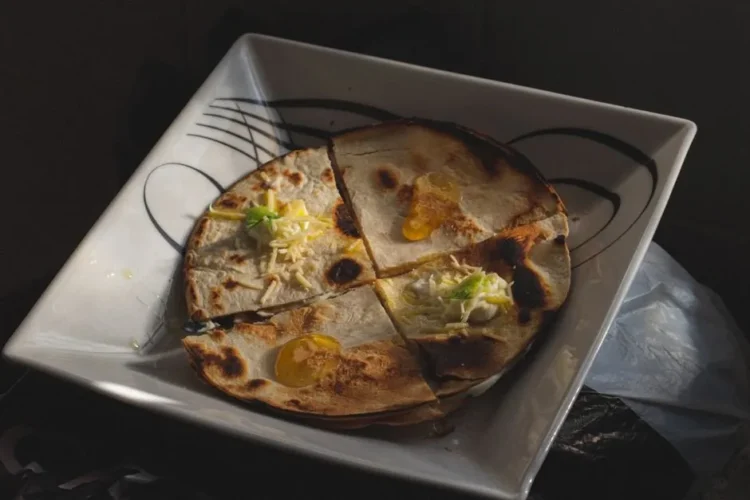
Huitlacoche, the smoky-sweet corn fungus prized as Mexico's 'corn truffle,' turns a simple quesadilla into something deeply earthy and savory. Folded between crisp tortillas with melty Oaxaca cheese and a hit of epazote, this is a beloved street-style preparation from central Mexico.
Prep Time15 mins
Cook Time20 mins
Total Time35 mins
Servings4
Yield4 quesadillas (serves 4)
Nutrition Facts
Per serving (estimated)
- 520 kcalCalories
- 26 gFat
- 10 gSaturated Fat
- 52 gCarbs
- 6 gFiber
- 3 gSugar
- 18 gProtein
- 580 mgSodium
- 380 mgPotassium
- 320 mgCalcium
- 2.5 mgIron
- 16 mgVitamin C
- 220 mcgVitamin A
Ingredients
For the huitlacoche filling
- 1 cup fresh huitlacoche (or one 8-oz can, drained; about 6 oz thawed frozen)
- 1 tablespoon vegetable oil
- 1/2 cup white onion, finely chopped
- 2 cloves garlic, minced
- 1 small poblano pepper, roasted, peeled, and diced (about 1/3 cup)
- 1 tablespoon fresh epazote, chopped (or 1 teaspoon dried)
- 1/2 teaspoon kosher salt
- 1/4 teaspoon freshly ground black pepper
For assembling the quesadillas
- 8 corn tortillas, 6-inch (or 8-inch flour tortillas)
- 8 ounces Oaxaca cheese, pulled into thin strings (or shredded Monterey Jack)
- 2 tablespoons vegetable oil, for grilling
- 1/4 cup Mexican crema or sour cream, for serving
- 1/4 cup crumbled queso fresco, for garnish
- Fresh epazote leaves, for garnish
- Lime wedges, for serving
Directions
- Heat 1 tablespoon oil in a medium skillet over medium heat. Add the onion and cook 4 to 5 minutes, stirring, until translucent and just beginning to turn golden at the edges.
- Stir in the garlic and diced poblano and cook 1 minute until fragrant. Add the huitlacoche, epazote, salt, and pepper, breaking up any large pieces with the back of a spoon.
- Cook the mixture 5 to 6 minutes, stirring occasionally, until the huitlacoche is heated through and any liquid has cooked off, leaving a thick, glossy filling. Remove from heat and taste for salt.
- Heat a comal or large dry skillet over medium heat and warm each tortilla for 20 to 30 seconds per side until pliable and just starting to blister. Stack them on a plate and cover with a clean towel.
- Build each quesadilla on the comal: place one tortilla down, scatter about 1/4 cup cheese over the surface, spoon 2 to 3 tablespoons of the huitlacoche filling on top, then finish with another 1/4 cup cheese and a second tortilla. Press gently with a spatula.
- Cook the quesadilla 2 to 3 minutes until the bottom tortilla is crisp and golden and the cheese at the edges has melted. Carefully flip and cook the second side another 2 to 3 minutes until golden and the cheese is fully melted through.
- Slide the finished quesadilla onto a cutting board and repeat with the remaining tortillas and filling, adjusting the heat as needed so the tortillas brown evenly without burning.
- Let each quesadilla rest 1 minute, then cut into 4 wedges. Serve immediately topped with a drizzle of crema, a sprinkle of queso fresco, a few fresh epazote leaves, and lime wedges on the side.
Cook’s Notes
- Fresh huitlacoche is highly perishable, so use it within 1 to 2 days of purchase, or reach for canned or frozen huitlacoche from a Latin market for reliable year-round results.
- If huitlacoche is unavailable, an earthy stand-in is finely chopped cremini mushrooms sautéed with a small splash of soy sauce and a pinch of dried epazote; the flavor won't be identical but will read as savory and woodsy.
- Oaxaca cheese stretches into beautiful long strands when melted, but a 50/50 blend of low-moisture mozzarella and Monterey Jack works just as well and is easier to find.
- For the best crust, brush the outside of the assembled tortillas with a thin film of oil instead of adding oil to the pan, which keeps the cheese from sticking to the comal.
- Don't overstuff the quesadillas; too much filling prevents the cheese from melting evenly and makes the quesadilla hard to flip without spilling.
More Mexico Recipes You’ll Love
Craving more flavors from Mexico? Try these traditional recipes:
- Smoky Chipotle Chicken Tacos with Charred Pineapple-Habanero Salsa
- Beer-Battered Baja Fish Tacos with Chipotle Crema and Charred Lime Slaw
- Smoky Chicken Tinga Tacos with Charred Corn-Poblano Slaw and Crispy Cheese Skirt