 (No Ratings Yet)
 Loading...
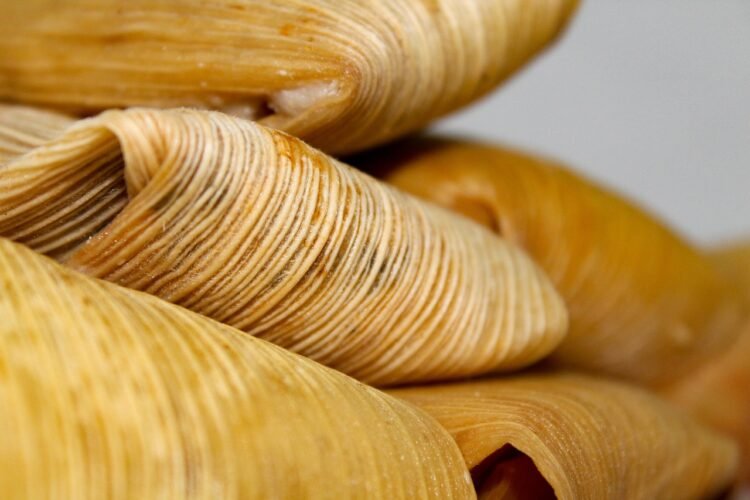
A traditional Mayan tamale from the Yucatan Peninsula filled with Swiss chard, ground pumpkin seeds, and epazote, then steamed in banana leaves. The masa is whipped until airy and tender, yielding a delicate, herbaceous parcel that pairs beautifully with a tangy habanero-tomato salsa.
Prep Time35 mins
Cook Time55 mins
Total Time90 mins
Servings4
Yield4 tamales
Nutrition Facts
Per serving (estimated)
- 480 kcalCalories
- 24 gFat
- 7 gSaturated Fat
- 58 gCarbs
- 7 gFiber
- 3 gSugar
- 9 gProtein
- 490 mgSodium
- 780 mgPotassium
- 150 mgCalcium
- 4 mgIron
- 25 mgVitamin C
- 350 mcgVitamin A
Ingredients
For the masa dough
- 2 cups masa harina
- 1/2 cup lard or softened pork fat
- 1 teaspoon baking powder
- 1 teaspoon fine salt
- 1 3/4 cups warm chicken broth, plus more as needed
For the chard filling
- 1 large bunch Swiss chard (about 1 lb), stems removed and leaves finely chopped
- 1 tablespoon olive oil or lard
- 1/2 small white onion, finely diced
- 2 garlic cloves, minced
- 1 Roma tomato, seeded and diced
- 1 tablespoon fresh epazote leaves (or 1 teaspoon dried)
- 1/4 cup toasted pumpkin seeds, finely ground
- 1/2 teaspoon salt
For wrapping and steaming
- 4 large banana or plantain leaves, cut into 10×14 inch rectangles
- Kitchen twine or thin leaf strips for tying
- Water for the steamer
Directions
- Prepare the chard filling: Heat oil in a large skillet over medium heat. Sauté onion until translucent, about 3 minutes, then add garlic and cook 30 seconds. Stir in chard and cook until wilted, about 4 minutes. Add tomato, epazote, ground pumpkin seeds, and salt; cook 2 minutes more. Transfer to a colander and press out excess liquid; let cool completely.
- Make the masa: In a large bowl, beat lard with a wooden spoon or hand mixer until light and fluffy, about 3 minutes. Add masa harina, baking powder, and salt, mixing to combine. Gradually pour in warm broth while beating, until the dough is soft, spreadable, and slightly sticky. Test by dropping a teaspoon into a glass of cold water; it should float.
- Prepare the leaves: Briefly pass each banana leaf rectangle over a gas flame or hot skillet for 5-10 seconds per side until pliable and bright green. Wipe clean with a damp cloth.
- Assemble the tamales: Place a leaf shiny side up. Spread about 3/4 cup of masa in a thin, even layer (roughly 1/4 inch thick) over the leaf, leaving a 1-inch border on all sides. Spoon a generous line of chard filling down the center lengthwise, about 2 inches wide.
- Fold the tamales: Fold the long sides of the leaf over the filling to overlap slightly. Fold the short ends in toward the filling, creating a flat rectangular packet. Tie securely with twine or leaf strips at both ends and across the middle.
- Steam the tamales: Stand the tamales upright or lay them flat in a steamer basket lined with extra leaves. Pour water into the pot just below the basket, cover tightly, and bring to a boil over medium-high heat. Reduce to medium-low and steam for 55 minutes, checking water levels every 15 minutes and adding boiling water as needed.
- Test for doneness: Unwrap one tamale; the masa should pull cleanly away from the leaf and feel firm yet springy. If still sticky, rewrap and steam another 10 minutes. Let tamales rest 5 minutes before unwrapping.
- Serve warm with chiltomate (roasted tomato-habanero salsa) or pickled red onions and a squeeze of lime.
Cook’s Notes
- If banana leaves are unavailable, soak dried corn husks in hot water for 30 minutes; the flavor differs but the texture will still be lovely.
- For the most authentic flavor, seek fresh masa from a Latin market and replace the masa harina and a portion of the broth with 2 1/2 cups of freshly prepared dough.
- Always toast the pumpkin seeds briefly in a dry skillet before grinding to deepen their nutty flavor.
- The masa is properly aerated when it floats in water; this step ensures a tender, fluffy tamale rather than a dense one.
- Leftover tamales reheat beautifully by re-steaming for 10 minutes; never microwave them in the leaf as it can become tough.