 (No Ratings Yet)
 Loading...
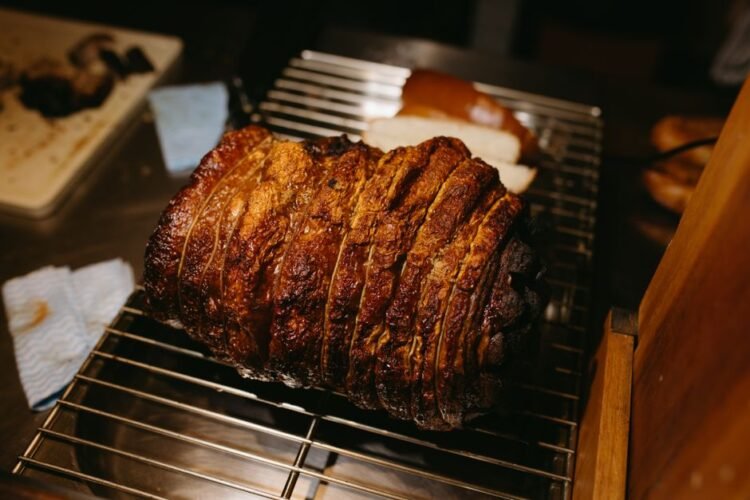
A classic Puerto Rican celebration centerpiece, this slow-roasted pork shoulder is marinated overnight in a punchy garlic-citrus mojo with oregano and cumin, then roasted until the edges turn mahogany-crisp and the interior pulls apart into juicy, herb-scented shreds. Serve with tostones, rice with pigeon peas, or simply a wedge of lime.
Prep Time25 mins
Cook Time240 mins
Total Time265 mins
Servings6
Yield6 servings
Nutrition Facts
Per serving (estimated)
- 620 kcalCalories
- 42 gFat
- 14 gSaturated Fat
- 5 gCarbs
- 1 gFiber
- 2 gSugar
- 52 gProtein
- 1180 mgSodium
- 820 mgPotassium
- 80 mgCalcium
- 3 mgIron
- 15 mgVitamin C
- 30 mcgVitamin A
Ingredients
For the citrus-garlic mojo
- 10 cloves garlic, peeled
- 3/4 cup sour orange juice (or 1/2 cup orange juice plus 1/4 cup lime juice)
- 2 tablespoons fresh lemon juice
- 1/4 cup olive oil
- 3 tablespoons distilled white vinegar
- 2 tablespoons dried Mexican oregano
- 2 teaspoons ground cumin
- 1 tablespoon kosher salt
- 1 teaspoon freshly ground black pepper
- 2 dried bay leaves
For the pork and roasting
- 4 lb bone-in pork shoulder (Boston butt), skin on if possible
- 1 large white onion, thickly sliced
- 1 teaspoon annatto (achiote) powder, optional
- 1 cup chicken broth or water
- 1 tablespoon flaky sea salt, for finishing
Directions
- Make the mojo: combine the garlic, sour orange juice, lemon juice, olive oil, vinegar, oregano, cumin, 1 tablespoon kosher salt, black pepper, bay leaves, and annatto if using in a blender; pulse until a coarse, fragrant paste forms.
- Prepare the pork: pat the shoulder dry and, using a sharp knife, score the fat cap in a shallow diamond crosshatch (do not cut into the meat). Rub the mojo all over the pork, pressing it into the scores and any crevices, then set it fat-side up on a bed of sliced onion inside a large bowl or zip-top bag; cover and refrigerate 12 to 24 hours, turning once or twice.
- Bring the pork to room temperature about 45 minutes before roasting. Preheat the oven to 325°F (165°C). Transfer the pork (and the onions) to a heavy roasting pan just large enough to hold it, and pour the chicken broth around (not over) the roast.
- Roast uncovered, basting every 45 minutes with the pan juices, until the pork is deeply browned and a fork slides in with no resistance, about 3 1/2 to 4 hours (internal temperature should reach 200–205°F in the thickest part for pull-apart tenderness).
- For crispier edges, turn the oven up to 425°F for the final 10 to 15 minutes and watch carefully so the sugar in the mojo does not burn.
- Transfer the pork to a cutting board, tent loosely with foil, and let rest at least 20 minutes so the juices redistribute.
- Spoon off excess fat from the roasting pan, then strain the pan juices through a fine sieve; skim off additional fat and reduce the juices by about one-third over medium heat for a quick sauce.
- Shred or slice the pork, discarding the bone and any large fat chunks. Sprinkle with flaky sea salt and serve with the reduced pan sauce, lime wedges, and traditional sides.
- Cover leftovers and refrigerate up to 4 days, or freeze in portions up to 3 months; reheat gently in a covered pan with a splash of broth.
Cook’s Notes
- No sour oranges? Mix 3 parts regular orange juice with 1 part lime juice and 1 part lemon juice for a balanced sweet-tart punch.
- Marinate the pork at least 12 hours and ideally 24 hours; the acid and salt need time to penetrate and tenderize the shoulder.
- For crackling-style crisp skin, pat the pork completely dry before roasting and avoid covering it with foil during cooking.
- Annatto is traditional for color but optional; smoked paprika makes a fine substitute if you want deeper reddish hue.
- Save the strained pan sauce—it carries the concentrated flavor of the mojo and is the secret to next-day sandwiches.