 (No Ratings Yet)
 Loading...
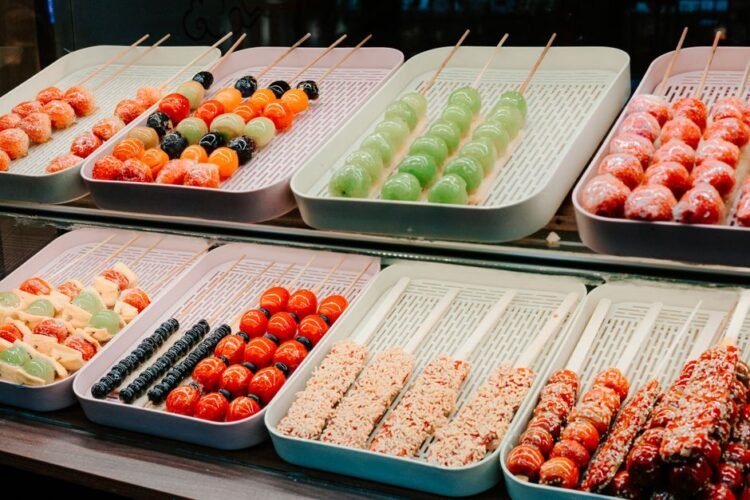
This iconic Northern Chinese winter street snack features tart hawthorn berries encased in a glass-like sugar shell that shatters with a satisfying crack. Traditionally sold from carts in Beijing and Tianjin during the colder months, the contrast between bright, tangy fruit and the sweet brittle coating is what makes these candied skewers so beloved. They are best enjoyed the same day, while the sugar shell still glitters and snaps cleanly.
Prep Time15 mins
Cook Time20 mins
Total Time35 mins
Servings4
Yield4 skewers (6-7 berries each)
Nutrition Facts
Per serving (estimated)
- 380 kcalCalories
- 0.5 gFat
- 0 gSaturated Fat
- 96 gCarbs
- 5 gFiber
- 85 gSugar
- 1 gProtein
- 5 mgSodium
- 270 mgPotassium
- 50 mgCalcium
- 1 mgIron
- 25 mgVitamin C
- 60 mcgVitamin A
Ingredients
For the hawthorn
- 500 g fresh ripe hawthorn berries (or thawed frozen), rinsed and patted very dry
- 4 bamboo skewers, 15 cm long
- 1 teaspoon neutral oil, for greasing parchment
For the sugar shell
- 300 g rock sugar, lightly crushed (or granulated sugar)
- 150 ml water
- 1 tablespoon maltose syrup or light corn syrup, optional for shine
- 1 teaspoon toasted white sesame seeds, optional
Directions
- Rinse the hawthorn berries under cool water and pat them completely dry with a clean towel; any lingering moisture will cause the hot sugar to splatter and refuse to cling.
- Using a paring knife, snip off the stem and dried blossom end of each berry, then thread 6 to 7 hawthorns onto each bamboo skewer, leaving about 3 cm of bare stick at the bottom so you have a handle.
- Combine the rock sugar, water, and maltose (if using) in a small heavy-bottomed saucepan over medium heat. Stir only until the sugar dissolves, then stop stirring to avoid crystallization; wash any crystals off the pan walls with a wet pastry brush.
- Bring the syrup to a steady boil and cook until it reaches the hard-crack stage, 150 to 160 degrees C on a candy thermometer. Without a thermometer, drop a small spoonful into a cup of ice water; the syrup should immediately form brittle threads that snap cleanly when bent.
- Stir in the sesame seeds (if using), remove the pan from the heat, and work quickly, because the syrup can scorch and darken within seconds once it reaches temperature.
- Hold one skewer by the bare end and dip it into the hot syrup at a slight angle, rotating to coat every berry evenly; let the excess drip back into the pan for about 2 seconds.
- Place each coated skewer on the oiled parchment paper and let it cool for about 5 minutes; the coating will turn from translucent to a glassy, crackling white shell.
- Repeat with the remaining skewers, returning the pan to very low heat only if the syrup begins to thicken too much between dips.
- Serve the skewers the same day, ideally in cold weather so the brittle shell stays crisp and shatters dramatically with each bite.
Cook’s Notes
- Choose firm, deeply red hawthorns without soft spots; overripe fruit collapses during dipping and the sugar shell will not seal properly.
- If sugar crystals form on the sides of the pan, brush them down with a wet pastry brush to keep the syrup clear rather than cloudy and grainy.
- Hard-crack stage is non-negotiable; if the syrup stops at soft-crack, the coating will stay tacky instead of forming the iconic glass-like snap.
- Modern vendors often alternate hawthorn with seedless grapes, kumquat slices, or strawberry halves for color and flavor variety.
- Eat these outdoors or over a plate, because the brittle shell shatters into sticky shards that scatter with every crunch.
- A light brush of neutral oil on the parchment prevents the hardened sugar from welding itself to the paper.