 (No Ratings Yet)
 Loading...
A handheld British classic from Cornwall, the Cornish pasty is built from a flaky shortcrust pastry wrapped around a filling of raw diced beef, potato, swede, and onion. Traditionally crimped along one edge, it was the perfect lunch for tin miners in the 19th century.
Prep Time30 mins
Cook Time45 mins
Total Time75 mins
Servings4
Yield4 large pasties
Nutrition Facts
Per serving (estimated)
- 680 kcalCalories
- 32 gFat
- 16 gSaturated Fat
- 72 gCarbs
- 5 gFiber
- 4 gSugar
- 28 gProtein
- 820 mgSodium
- 780 mgPotassium
- 75 mgCalcium
- 5 mgIron
- 18 mgVitamin C
- 55 mcgVitamin A
Ingredients
For the shortcrust pastry
- 500 g (3 1/2 cups) all-purpose flour, plus extra for dusting
- 200 g (14 tbsp) cold unsalted butter, cubed
- 100 g (1/2 cup) cold lard or vegetable shortening
- 1 tsp fine sea salt
- 180 ml (3/4 cup) ice-cold water
For the filling
- 400 g (14 oz) beef skirt or chuck, trimmed and finely diced
- 300 g (10 oz) waxy potatoes, peeled and finely diced
- 200 g (7 oz) rutabaga (swede), peeled and finely diced
- 1 medium yellow onion, finely diced
- 1 tsp fine sea salt
- 1/2 tsp freshly ground black pepper
- 2 tbsp unsalted butter, cut into small pieces
- 1 large egg, beaten with 1 tbsp milk (for egg wash)
Directions
- Make the pastry: pulse the flour, salt, butter, and lard in a food processor until the mixture looks like coarse breadcrumbs. Drizzle in the cold water a little at a time and pulse just until the dough starts to clump together; turn out, shape into a disc, wrap, and chill for 30 minutes.
- Meanwhile, toss the diced beef, potato, swede, and onion in a large bowl with the salt and pepper so the seasoning is evenly distributed. Keep the filling raw — this is essential for an authentic Cornish pasty.
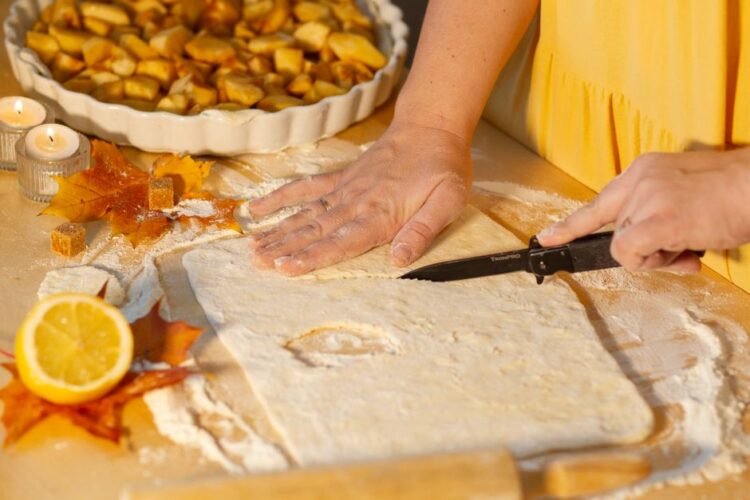
- Roll the chilled pastry on a floured surface to about 5 mm (1/4 inch) thick and cut out four 22 cm (8 1/2 inch) rounds using a plate or pastry cutter as a guide.
- Spoon a quarter of the filling onto one half of each pastry round, leaving a 2 cm border; mound it slightly so the filling cooks evenly. Dot the top of each mound with a few small pieces of butter.
- Brush the pastry border lightly with egg wash, then fold the empty half over the filling to form a half-moon. Press the edges firmly to seal, then crimp by folding the edge over in overlapping pleats along one side (traditionally the curved side).
- Transfer the pasties to a parchment-lined baking sheet, brush the tops and sides with the egg wash, and cut two small steam vents in the top of each. Chill for 10 minutes to help the pastry hold its shape.
- Bake at 200°C (400°F) for 45 minutes, until the pastry is deep golden brown and the filling is bubbling through the vents. If the crust browns too quickly, tent loosely with foil for the final 15 minutes.
- Let the pasties rest on the baking sheet for 10 minutes so the juices settle into the meat, then serve warm. They are traditionally eaten by hand, though a small salad makes a nice accompaniment.
Cook’s Notes
- Authentic Cornish pasties use raw filling; pre-cooking the vegetables changes the texture and is not traditional.
- For a true Cornish crimp, fold the edge over to one side only (not all around) — this was historically done so miners could hold the un-crimped side and eat with clean hands.
- Skirt steak gives the most authentic flavor, but finely diced chuck or stewing beef works well too; just trim any large pieces of gristle.
- Pasties keep refrigerated for up to 3 days and reheat beautifully in a 180°C oven for 10 minutes — avoid the microwave, which softens the crust.
- For an even flakier pastry, replace half the butter with cold lard as written, and always keep your ingredients very cold.