 (No Ratings Yet)
 Loading...
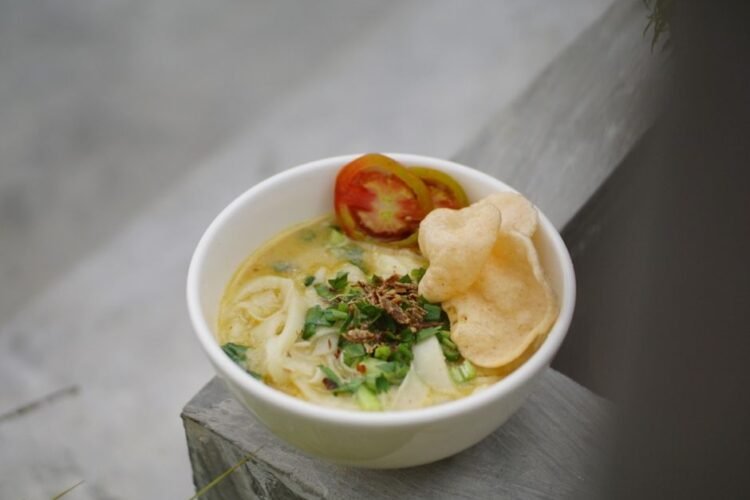
This beloved street food from Bogor, West Java, layers springy egg noodles and rice vermicelli in a clear, aromatic beef broth built on turmeric, lemongrass, and ginger. It's finished with crisp emping crackers, fried shallots, celery, and a sprinkle of koya, a savory seasoning blend of crushed prawn crackers and fried garlic. Squeeze lime over the bowl to brighten every rich, slurpable spoonful.
Prep Time20 mins
Cook Time55 mins
Total Time75 mins
Servings4
Yield4 hearty bowls
Nutrition Facts
Per serving (estimated)
- 610 kcalCalories
- 22 gFat
- 7 gSaturated Fat
- 62 gCarbs
- 4 gFiber
- 6 gSugar
- 38 gProtein
- 960 mgSodium
- 780 mgPotassium
- 115 mgCalcium
- 6 mgIron
- 14 mgVitamin C
- 90 mcgVitamin A
Ingredients
For the broth and beef
- 500 g (about 1.1 lb) beef brisket, trimmed
- 2 L (8 cups) water
- 2 tbsp vegetable oil
- 6 shallots, thinly sliced
- 5 garlic cloves, smashed
- 3 cm (1.2 in) fresh ginger, smashed
- 2 cm (0.8 in) fresh turmeric, smashed (or 1 tsp ground turmeric)
- 2 lemongrass stalks, bruised and tied
- 2 Indonesian bay leaves (salam leaves)
- 3 kaffir lime leaves, torn
- 1 tsp whole coriander seeds, lightly crushed
- 1 tsp white peppercorns, cracked
- 1.5 tsp fine salt, plus more to taste
For the noodles and bowl assembly
- 200 g fresh yellow egg noodles, blanched
- 100 g rice vermicelli (bihun), soaked in warm water 10 minutes
- 100 g fresh bean sprouts, rinsed and briefly scalded
- 2 hard-boiled eggs, peeled and halved lengthwise
- 50 g crispy fried shallots
- 2 celery stalks, finely chopped
- 2 scallions, thinly sliced on the diagonal
- 1 lime, cut into 4 wedges
- 80 g emping crackers (melinjo), for serving
- 1 tbsp kecap manis (sweet soy sauce), optional
- 2 tbsp tauco (fermented yellow soybean paste), optional
For the koya seasoning
- 40 g plain prawn crackers (kerupuk udang)
- 2 tbsp fried garlic powder
- 1/2 tsp fine salt
- 1/4 tsp ground white pepper
Directions
- Make the koya first: pulse the prawn crackers in a mortar or small food processor until finely ground but not powdery, then stir together with the fried garlic powder, salt, and white pepper. Store in a small bowl at room temperature until ready to serve.
- Build the broth: heat the oil in a large pot over medium heat and sauté the shallots, garlic, ginger, and turmeric until fragrant and softened, about 4 minutes. Add the coriander and white pepper and toast for 30 seconds.
- Add the beef brisket, water, lemongrass, salam leaves, kaffir lime leaves, and salt. Bring to a boil, then immediately reduce to a gentle simmer. Skim any foam that rises during the first 10 minutes, partially cover, and cook at a low simmer until the beef is fork-tender, 40 to 50 minutes.
- Remove the brisket and let it rest for 10 minutes before slicing it across the grain into thin 5 mm slices. Strain the broth, discarding the aromatics, and taste for salt, adjusting if needed; keep the broth piping hot.
- Prepare the noodles and toppings: bring a separate pot of water to a boil. Blanch the yellow noodles for 30 seconds, drain, and divide among 4 deep bowls. Add a nest of soaked vermicelli alongside, then top with scalded bean sprouts and sliced beef.
- Whisk the tauco with a ladle of hot broth in a small bowl until smooth, then stir 1 to 2 teaspoons of this mixture into each bowl of broth, or serve the tauco on the side for diners to add themselves. Drizzle in kecap manis if using.
- Ladle the hot broth generously over each bowl. Garnish with hard-boiled egg halves, fried shallots, chopped celery, and scallions.
- Serve immediately, passing the koya, emping crackers, lime wedges, and extra kecap manis and chili at the table so each diner can customize their bowl.
Cook’s Notes
- For the deepest flavor, simmer the brisket a day ahead and refrigerate the broth overnight; lift off the solidified fat the next day before reheating and slicing the beef.
- If salam leaves are unavailable, substitute 2 regular bay leaves, though the flavor will be slightly more muted and less herbal.
- Truly authentic Bogor soto is served with both yellow noodles and bihun in the same bowl; skipping one changes the texture experience considerably.
- Tauco is salty and funky, so add it gradually; some diners prefer just a small spoonful stirred into the broth.
- Koya stays crisp for weeks if kept dry, so feel free to double the batch and store any leftovers in an airtight jar.