 (No Ratings Yet)
 Loading...
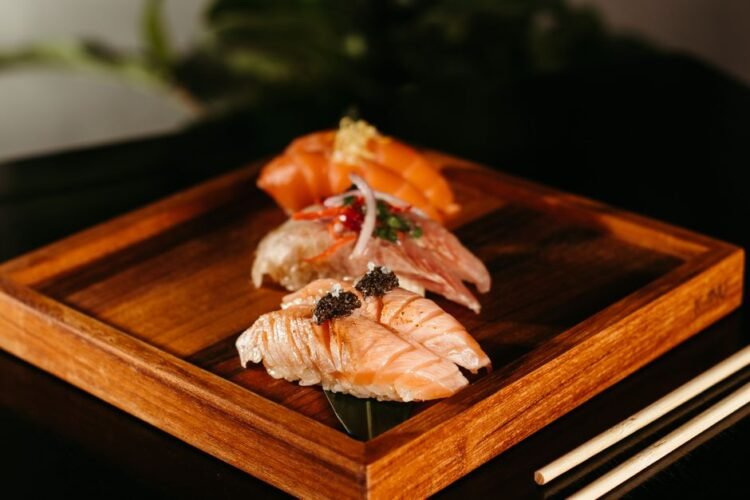
A beautiful Japanese nigiri sushi platter showcases hand-pressed seasoned rice topped with fresh seafood and egg. Making nigiri at home is a rewarding experience that lets you appreciate the delicate balance of textures and flavors. This assortment of salmon, tuna, shrimp, and sweet tamago is a classic combination perfect for a special meal.
Prep Time30 mins
Cook Time30 mins
Total Time60 mins
Servings4
Yield4 servings (about 8 pieces per person)
Nutrition Facts
Per serving (estimated)
- 445 kcalCalories
- 10 gFat
- 2 gSaturated Fat
- 58 gCarbs
- 1 gFiber
- 4 gSugar
- 30 gProtein
- 720 mgSodium
- 420 mgPotassium
- 55 mgCalcium
- 2.5 mgIron
- 2 mgVitamin C
- 85 mcgVitamin A
Ingredients
For the sushi rice
- 2 cups Japanese short-grain sushi rice
- 2 1/2 cups cold water
- 1 (2-inch) piece kombu seaweed (optional)
- 1 tbsp sake (optional)
For the sushi vinegar (sushi-zu)
- 4 tbsp rice vinegar
- 2 tbsp granulated sugar
- 1 tsp fine sea salt
- 1 tsp mirin (optional)
For the nigiri toppings
- 150 g sushi-grade salmon fillet, skinless
- 150 g sushi-grade tuna (ahi), sashimi grade
- 8 large raw shrimp, peeled and deveined
- 3 large eggs
- 3 tbsp dashi or water (for tamago)
- 1 tsp soy sauce (for tamago)
For assembling and serving
- 2 tbsp wasabi paste
- 1/4 cup soy sauce, for serving
- 1/3 cup pickled ginger (gari)
- 1 sheet toasted nori, cut into thin 1/2-inch strips
Directions
- Rinse the sushi rice in cold water three to four times until the water runs clear, then drain and let rest for 15 minutes. Combine the rice, 2 1/2 cups water, kombu, and sake in a rice cooker or heavy pot and cook until tender, about 18-20 minutes, then let steam covered for 10 minutes; remove kombu.
- Meanwhile, whisk rice vinegar, sugar, salt, and mirin in a small saucepan over low heat just until the sugar dissolves; let cool. Transfer the hot rice to a wide wooden bowl and gently fold in the vinegar mixture with a cutting motion while fanning to cool it to body temperature.
- Prepare the toppings: slice the salmon and tuna against the grain into thin rectangles about 1/4 inch thick and 2 inches long. Cook the shrimp in simmering water with a pinch of salt for 90 seconds, then cool, peel tails on, and butterfly lengthwise. For tamago, beat the eggs with dashi and soy, then cook in a small oiled rectangular pan as a thin omelette and slice into strips about 1 inch wide.
- Wet your hands with cool water and rub a pinch of wasabi between your palms. Take about 2 tablespoons of seasoned rice and gently press it between your fingers into an oval log roughly 2 inches long and 1 inch wide, handling it just enough to hold its shape.
- Spread a thin smear of wasabi across the top of each rice oval. Drape a slice of fish over each piece and press lightly to adhere. For shrimp nigiri, lay the butterflied shrimp tail-end over the rice. For tamago, top with an egg strip and wrap a thin nori band around the middle to secure it.
- Repeat with all the toppings, rewetting your hands as needed and keeping finished pieces covered with a damp towel. Arrange the nigiri on a flat platter grouped by variety: salmon, tuna, shrimp, and tamago.
- Serve immediately with small dishes of soy sauce, a mound of pickled ginger, and extra wasabi on the side. Eat nigiri in one or two bites, dipping the fish (not the rice) lightly into soy sauce.
Cook’s Notes
- Always use sushi-grade or sashimi-grade fish from a trusted fishmonger for raw consumption; freeze the fish briefly at home if you are unsure of its handling history.
- Keep a small bowl of water nearby and rewet your hands frequently so the rice does not stick and stays glossy rather than mushy.
- Fanning the rice while folding in the seasoning gives it the characteristic shiny coat and slightly sticky yet firm texture; a piece of cardboard works well as a fan.
- Slightly undercook the rice so each grain still has a gentle bite; overcooked rice will fall apart when shaped.
- Assemble nigiri just before serving for the best texture, but seasoned rice can be kept covered with a damp cloth at room temperature for up to 2 hours.