 (No Ratings Yet)
 Loading...
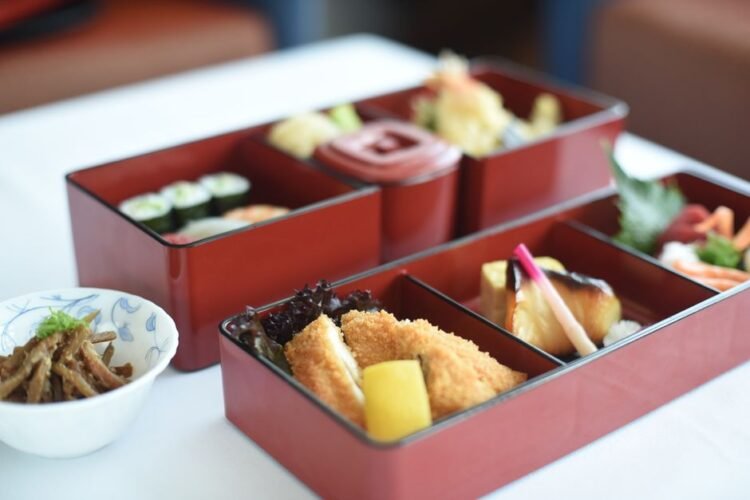
Osechi ryori is the elaborate, symbolic cuisine traditionally enjoyed on New Year's Day in Japan, with each component carrying a wish for prosperity, health, and happiness in the coming year. This curated four-part assortment layers sweet simmered black soybeans, a sweet rolled fish omelette, kombu rolls, and chestnut-studded sweet potato mash into a lacquered jubako. The elegant, gentle flavors are meant to be savored slowly as the first meal of the new year.
Prep Time60 mins
Cook Time90 mins
Total Time150 mins
Servings4
Yield4 servings (1 osechi box each)
Nutrition Facts
Per serving (estimated)
- 445 kcalCalories
- 14 gFat
- 3 gSaturated Fat
- 68 gCarbs
- 7 gFiber
- 32 gSugar
- 14 gProtein
- 620 mgSodium
- 780 mgPotassium
- 120 mgCalcium
- 4.5 mgIron
- 16 mgVitamin C
- 180 mcgVitamin A
Ingredients
For the kuromame (sweet black soybeans)
- 1 cup (200 g) dried black soybeans
- 4 cups water for soaking
- 3/4 cup granulated sugar
- 3 tbsp soy sauce
- 2 tbsp mirin
- 1/2 tsp fine sea salt
- 1 piece (3-inch) dried kombu, lightly scored
For the datemaki (sweet rolled fish omelette)
- 4 large eggs, room temperature
- 200 g fresh white fish paste (unsweetened surimi without starch)
- 3 tbsp granulated sugar
- 1 tbsp mirin
- 1 tbsp soy sauce
- 2 tbsp dashi stock
- 1/2 tsp yuzu zest, optional
For the kobumaki (stuffed kombu rolls)
- 4 wide sheets (about 6 in / 15 cm) dried kombu
- 4 dried shiitake mushrooms, rehydrated
- 1 large carrot, peeled and cut into 4 sticks
- 1 cup dashi stock
- 2 tbsp soy sauce
- 2 tbsp mirin
- 1 tbsp sake
- 2 tsp granulated sugar
For the kurikinton (chestnut sweet potato mash)
- 2 Japanese sweet potatoes (about 500 g), peeled and cubed
- 10 cooked chestnuts (canned or vacuum-packed)
- 1/3 cup granulated sugar
- 2 tbsp mirin
- 1 tbsp butter
- Pinch of fine sea salt
- Yuzu peel strips, for garnish
Directions
- The night before, rinse the black soybeans and soak in 4 cups of cold water for 8 to 12 hours; drain and place in a heavy pot with fresh water to cover by 2 inches, then simmer with the kombu for about 1 hour until the beans are tender.
- Drain the beans, return them to the pot, and stir in the sugar, soy sauce, mirin, and salt; simmer gently for another 20 minutes until the glaze is syrupy and coats each bean; cool completely in the liquid.
- For the datemaki, whisk the eggs, fish paste, sugar, mirin, soy sauce, dashi, and yuzu zest until very smooth. Cook thin rectangular layers in a small nonstick pan, one at a time, stacking each finished layer onto a sushi mat.
- Roll the stack of cooked layers tightly in the mat while still warm, wrap in foil, and chill for 1 hour to set; slice into 1-inch pinwheels just before arranging in the box.
- Rehydrate the shiitake in warm water for 30 minutes, then tuck one mushroom and a carrot stick into each sheet of kombu; roll tightly from the short end and secure with soaked toothpicks or kitchen string.
- Place the kombu rolls in a small pot with dashi, soy sauce, mirin, sake, and sugar; bring to a simmer, cover, and cook over low heat for 35 to 40 minutes until the kombu is fork-tender and silky.
- Steam the sweet potatoes over boiling water for 20 minutes until very soft, then pass through a ricer or mash thoroughly with butter, sugar, mirin, and salt until glossy and smooth.
- Fold the whole chestnuts gently through the mash, transfer to a heatproof bowl, and shape into a smooth dome; chill until firm and finish with a curl of yuzu peel on top.
- Line a lacquered jubako or shallow bento box with green bamboo leaves or parchment, then arrange mounds of kuromame, slices of datemaki, two kombu rolls each, and a serving of kurikinton into separate compartments.
- Cover and refrigerate for at least 4 hours, or overnight, so the flavors settle; serve at room temperature with a small cup of ozoni or hot sake to start the new year.
Cook’s Notes
- Soak the black soybeans overnight without salt or acidic ingredients, which toughen their skins.
- A small rectangular tamagoyaki pan works best for datemaki so each thin layer cooks evenly and rolls without cracking.
- Keep each component in its own compartment with a small square of parchment or bamboo leaf to preserve the colors and prevent flavors from mingling.
- Osechi flavors deepen after resting overnight in the refrigerator, making it an ideal make-ahead celebration dish.