 (No Ratings Yet)
 Loading...
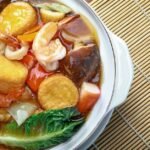
Oden is Japan's beloved winter comfort food, a humble yet deeply satisfying one-pot simmer of daikon, eggs, konnyaku, tofu, and fish cakes in a light, savory dashi broth. Each ingredient soaks up the gentle umami flavors, making it the perfect warming meal on a cold evening. Serve piping hot with a dab of spicy karashi mustard for the authentic touch.
Prep Time20 mins
Cook Time50 mins
Total Time70 mins
Servings4
Yield4 servings
Nutrition Facts
Per serving (estimated)
- 315 kcalCalories
- 14 gFat
- 3.5 gSaturated Fat
- 18 gCarbs
- 3 gFiber
- 6 gSugar
- 22 gProtein
- 920 mgSodium
- 480 mgPotassium
- 180 mgCalcium
- 3 mgIron
- 14 mgVitamin C
- 380 mcgVitamin A
Ingredients
For the dashi broth
- 6 cups water
- 2 pieces dried kombu (about 4 inches each)
- 1/2 cup bonito flakes (katsuobushi)
- 1/4 cup soy sauce
- 3 tbsp mirin
- 2 tbsp sake
- 1 tsp sugar
For the oden ingredients
- 1 large daikon radish (about 1 lb), peeled and cut into 1.5-inch thick rounds
- 4 large eggs
- 1 block konnyaku (about 8 oz), scored and cut into triangles
- 8 oz thick fried tofu (atsuage), cut into 2-inch pieces
- 2 chikuwa fish cakes (about 4 oz), cut into 1-inch pieces
- 1 hanpen fish cake (about 3 oz), cut into 4 wedges
- 4 fresh shiitake mushrooms, stems trimmed
- 1 medium carrot, peeled and cut into 1/2-inch rounds
For serving
- 2 tbsp Japanese hot mustard (karashi) or prepared spicy mustard
- Ichimi togarashi or shichimi togarashi, to taste
- 2 green onions, thinly sliced (optional)
- Lemon wedges (optional)
Directions
- Make the dashi: In a large pot, combine the water and kombu and let soak for 30 minutes. Slowly heat over medium until small bubbles form around the kombu (do not let it boil). Remove the kombu and bring the liquid to a gentle boil.
- Remove from heat, sprinkle in the bonito flakes, and let steep for 3 to 4 minutes until the flakes sink. Strain through a fine-mesh sieve lined with cheesecloth or a paper towel, discarding the flakes.
- Prep the ingredients: Peel the daikon and cut into thick rounds. Using a paring knife, score one side of each round in a shallow crosshatch pattern to help it absorb flavor and prevent crumbling. Soak the rounds in cold water for 10 minutes.
- Score the konnyaku in a crosshatch on both sides, cut into triangles, and parboil in fresh water for 2 minutes to remove any bitterness; drain well. Place the eggs in a small pot of cold water, bring to a boil, simmer 9 minutes, then transfer to ice water before peeling.
- Return the strained dashi to the pot and stir in the soy sauce, mirin, sake, and sugar. Bring to a gentle simmer over medium-low heat.
- Add the daikon rounds first and simmer for 15 minutes until nearly tender. Then add the konnyaku, carrot rounds, and shiitake mushrooms and simmer another 10 minutes.
- Add the chikuwa, hanpen, fried tofu, and peeled eggs to the pot. Continue to simmer gently for 15 to 20 minutes, allowing the flavors to meld. Keep the heat low and avoid a rolling boil, which will cloud the broth and toughen the fish cakes.
- Skim any foam from the surface. Taste and adjust with a bit more soy sauce if needed; the broth should be lightly savory with a clean umami flavor.
- To serve, ladle the hot broth into bowls and arrange an assortment of daikon, eggs, konnyaku, tofu, fish cakes, and vegetables in each. Pass karashi mustard and togarashi at the table so each person can season their own bowl.
Cook’s Notes
- Oden tastes even better the next day once the ingredients have fully soaked up the dashi; refrigerate overnight and gently reheat before serving.
- Don't skip scoring the konnyaku and daikon; the crosshatch pattern lets them absorb much more flavor and creates a nicer texture.
- Find chikuwa, hanpen, konnyaku, and atsuage at Japanese or Asian grocery stores; if unavailable, substitute extra fried tofu and a few small fish balls.
- Avoid a vigorous boil because a gentle simmer keeps the broth beautifully clear and prevents the fish cakes and tofu from breaking apart.
- Serve with karashi mustard rather than wasabi for the traditional flavor; a small dab adds sharp, spicy heat that cuts through the rich broth.