 (No Ratings Yet)
 Loading...
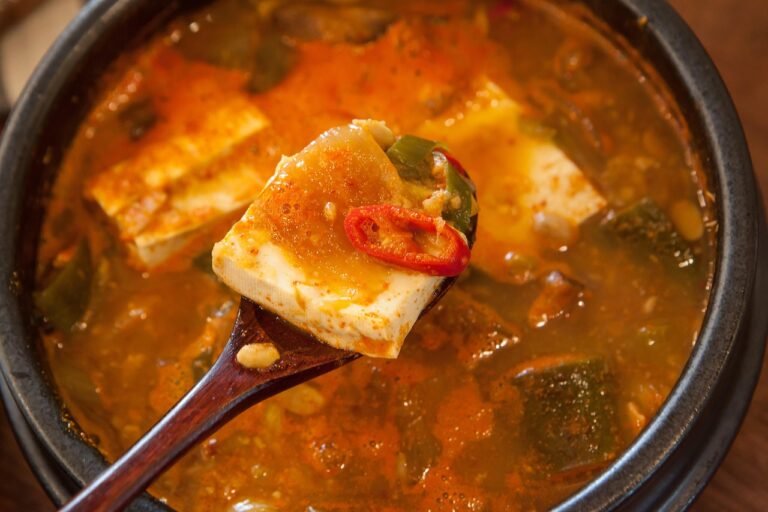
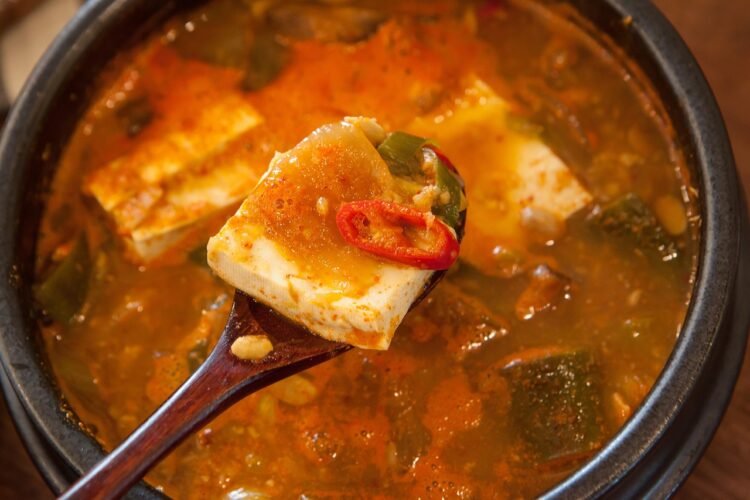
This classic Korean soybean paste stew delivers deep, savory umami from aged fermented soybean paste, paired with tender vegetables and silky tofu in a bubbling anchovy-kelp broth. It is a beloved everyday stew served family-style with steamed rice and banchan across Korean homes.
Prep Time15 mins
Cook Time25 mins
Total Time40 mins
Servings4
Yield4 servings
Nutrition Facts
Per serving (estimated)
- 320 kcalCalories
- 16 gFat
- 5 gSaturated Fat
- 22 gCarbs
- 4 gFiber
- 5 gSugar
- 22 gProtein
- 1180 mgSodium
- 780 mgPotassium
- 210 mgCalcium
- 4 mgIron
- 16 mgVitamin C
- 85 mcgVitamin A
Ingredients
For the broth and base
- 4 cups water
- 8-10 dried anchovies, heads and guts removed
- 1 piece dried kelp (about 3 inches)
- 3 tablespoons doenjang (Korean fermented soybean paste)
- 1 teaspoon gochujang (Korean chili paste)
- 4 cloves garlic, minced
- 1/2 pound pork belly, thinly sliced (optional)
For the stew vegetables
- 1 small Yukon gold potato (about 6 oz), peeled and cubed
- 1/2 medium zucchini, sliced into half-moons
- 1/2 small onion, sliced thin
- 4 fresh shiitake mushrooms, stemmed and quartered
- 1 cup enoki mushrooms, trimmed
- 1 block (14 oz) medium-firm tofu, cut into 1-inch cubes
- 2 green onions, sliced, whites and greens separated
- 1 small green chili pepper (optional), sliced
Directions
- Make the anchovy-kelp broth: combine water, anchovies, and kelp in a heavy pot and bring to a gentle simmer over medium heat for 8 minutes; remove and discard kelp just before boiling, then strain out the anchovies.
- Return broth to a boil and add pork belly if using; simmer 5 minutes until the meat is cooked through and some fat rises to the surface.
- In a small bowl, whisk doenjang, gochujang, and minced garlic with 2 tablespoons of the hot broth until smooth, then stir this mixture back into the pot.
- Add potato, onion, and shiitake mushrooms; simmer 7 to 8 minutes until the potato is fork-tender.
- Add zucchini and tofu cubes carefully so they do not break apart; simmer another 3 minutes to heat through.
- Add enoki mushrooms and the white parts of the green onions; cook 1 minute more until the enoki just wilts.
- Taste and adjust with a pinch of salt or more doenjang if needed; remove from heat and garnish with sliced green onion tops and green chili.
- Serve immediately in stone bowls or a communal pot, ladled over steamed short-grain rice with Korean side dishes.
Cook’s Notes
- Use traditional doenjang aged in clay pots for the deepest, least bitter flavor; commercial doenjang works but tastes slightly saltier.
- For a vegetarian version, skip pork and anchovies and replace the broth with 4 cups of water simmered with dried kelp and a handful of dried shiitake stems.
- Add a teaspoon of Korean rice wine (cheongju) at the end for a brighter aroma, especially if skipping the pork.
- Do not boil the stew vigorously after adding tofu; gentle simmering keeps the tofu intact and the broth clear.
- Stir only from the bottom when dissolving the doenjang, as undissolved paste sinks and can scorch the bottom of the pot.