 (No Ratings Yet)
 Loading...
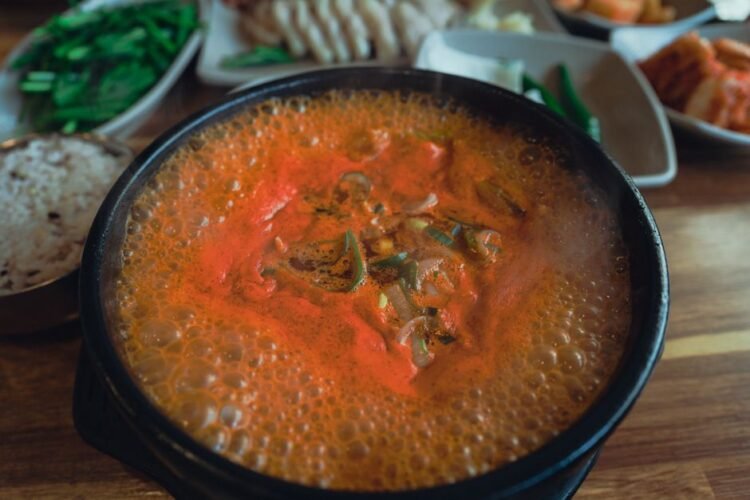
A beloved Korean comfort stew built on aged, sour napa cabbage kimchi and rich pork belly simmered with tofu and summer squash. The bubbling red broth is intensely savory, gently spicy, and meant to be ladled over hot steamed rice. Every Korean household has its own version of this weeknight staple, which gets better as the kimchi ages.
Prep Time15 mins
Cook Time25 mins
Total Time40 mins
Servings4
Yield4 servings
Nutrition Facts
Per serving (estimated)
- 485 kcalCalories
- 30 gFat
- 11 gSaturated Fat
- 22 gCarbs
- 4 gFiber
- 6 gSugar
- 28 gProtein
- 1480 mgSodium
- 820 mgPotassium
- 180 mgCalcium
- 4 mgIron
- 28 mgVitamin C
- 380 mcgVitamin A
Ingredients
For the pork base
- 1 lb pork belly or pork shoulder, cut into bite-size pieces
- 1 tbsp neutral oil (if using lean shoulder)
- 1 medium yellow onion, sliced thin
- 4 cloves garlic, minced
- 1 tsp grated fresh ginger
For the kimchi and seasoning
- 2 cups well-fermented napa cabbage kimchi, chopped into 1-inch pieces
- 1/2 cup kimchi brine from the jar
- 2 tbsp Korean red pepper flakes (gochugaru)
- 1 tbsp Korean red pepper paste (gochujang)
- 1 tbsp soy sauce
- 1 tsp sugar
- 4 cups water or anchovy stock
For finishing
- 1 block (14 oz) firm or medium tofu, cut into 1/2-inch cubes
- 1 small Korean zucchini or regular zucchini, sliced into half moons
- 4 scallions, white and green parts separated, sliced
- 1 tsp toasted sesame oil
- 2 cups hot steamed short-grain rice, to serve
Directions
- Place a heavy pot or Korean stone pot (ttukbaegi) over medium-high heat and add the pork belly. Cook for 5-6 minutes, stirring occasionally, until the fat has rendered and the pieces are lightly browned on the edges.
- Add the sliced onion and stir for 2 minutes until softened, then stir in the garlic and ginger and cook for 30 seconds until fragrant.
- Add the chopped kimchi and stir-fry for 3-4 minutes so it softens and starts to caramelize against the bottom of the pot; this deepens the flavor.
- Stir in the kimchi brine, gochugaru, gochujang, soy sauce, and sugar, then pour in the water or anchovy stock. Bring to a boil, reduce the heat, and simmer uncovered for 10 minutes so the broth turns cloudy and richly red.
- Gently slide the tofu cubes and zucchini slices into the pot and simmer for another 5-7 minutes, until the zucchini is tender but still holds its shape and the tofu is heated through.
- Stir in the white parts of the scallions, drizzle with the toasted sesame oil, and taste for seasoning, adding a pinch more salt or a splash of soy if needed.
- Ladle the stew into bowls making sure each portion gets pork, tofu, and plenty of broth, then top with the green scallion tops. Serve immediately with bowls of steamed rice and extra kimchi on the side.
Cook’s Notes
- Use kimchi that has been fermented at room temperature for 2-3 weeks; it should smell sharply sour and taste tangy, not sweet or fresh.
- Save and pour in the kimchi brine – it is the secret to a deep, complex broth and provides most of the saltiness.
- For an extra-rich jjigae, finish each bowl with a spoonful of cooked rice directly into the hot broth and let it soak for a minute before eating.
- Swap pork belly with pork shoulder if you prefer a leaner stew; add 1 tablespoon of neutral oil since shoulder has less fat to render.
- Leftovers taste even better the next day after the flavors meld; reheat gently on the stovetop and add a splash of water if the broth has reduced too much.