 (No Ratings Yet)
 Loading...
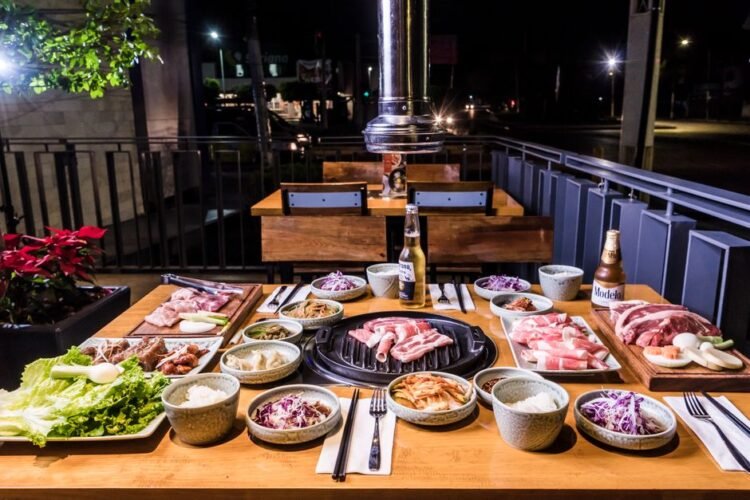
Chadol baegi is the Korean BBQ classic of paper-thin, marble-veined beef brisket cooked in seconds over a screaming-hot grill and wrapped in lettuce with dipping sauces. The beef itself has almost no seasoning, letting the rich beefiness shine alongside sesame-oil salt dip and ssamjang. It is meant to be interactive, communal, and eaten hot off the grate.
Prep Time25 mins
Cook Time10 mins
Total Time35 mins
Servings4
Yield4 servings
Nutrition Facts
Per serving (estimated)
- 540 kcalCalories
- 38 gFat
- 12 gSaturated Fat
- 18 gCarbs
- 3 gFiber
- 5 gSugar
- 32 gProtein
- 720 mgSodium
- 610 mgPotassium
- 85 mgCalcium
- 3.5 mgIron
- 9 mgVitamin C
- 180 mcgVitamin A
Ingredients
For the brisket
- 1.5 lb beef brisket point, partially frozen for slicing
- 1 tbsp neutral oil, for the grill
- 1 medium onion, sliced into 1/2-inch half-moons
- 4 oz king oyster mushrooms, sliced lengthwise
- 8 cloves garlic, smashed
For the sesame-salt dip
- 1/4 cup toasted sesame oil
- 1 tsp kosher salt
- 1 tsp coarsely cracked black pepper
For the ssamjang dipping sauce
- 2 tbsp doenjang (Korean soybean paste)
- 1 tbsp gochujang (Korean red pepper paste)
- 1 tbsp toasted sesame oil
- 1 clove garlic, finely grated
- 1 tsp rice syrup or sugar
- 1 scallion, finely chopped
To serve
- 1 head red leaf or butter lettuce, leaves separated and washed
- 2 cups steamed short-grain rice
- 1 cup kimchi, for wrapping
Directions
- Wrap the brisket tightly in plastic wrap and freeze for 45 to 60 minutes until firm but not solid; this makes paper-thin slicing possible. Slice across the grain into 1/16-inch-thick slices, laying each on a tray without overlapping.
- Make the sesame-salt dip by stirring together sesame oil, salt, and cracked pepper in a small bowl. Make the ssamjang by combining doenjang, gochujang, sesame oil, grated garlic, rice syrup, and scallion until smooth; set both sauces aside.
- Prepare a tabletop grill, cast-iron pan, or heavy skillet over high heat until very hot, about 5 minutes. Brush the cooking surface lightly with neutral oil.
- Lay brisket slices flat on the hot grill in a single layer, working in batches to avoid crowding. Cook 30 to 45 seconds per side, just until edges curl and the meat turns from red to brown; do not overcook.
- After the first batch, push meat to a cooler spot and add a layer of onion slices and mushrooms alongside more brisket, grilling 1 to 2 minutes until onions char at the edges and mushrooms are tender.
- Transfer cooked brisket and vegetables to a warm platter and repeat with remaining slices, keeping the grill between batches.
- To eat, place a brisket slice on a lettuce leaf with a piece of grilled onion or kimchi, drizzle with the sesame-salt dip or a dab of ssamjang, and wrap into a bundle. Eat alongside bites of steamed rice.
- Repeat until all the meat is gone, dipping and wrapping as you go; the meal is finished when only lettuce and sauces remain.
Cook’s Notes
- Partially freezing the brisket is non-negotiable for clean paper-thin slices; ask your butcher to do this if you do not have a sharp slicer.
- A screaming-hot surface is essential – if the meat sizzles aggressively the moment it touches the grill, the temperature is right.
- Eat brisket straight off the grill; it toughens and loses its buttery texture if it sits more than a minute.
- Save any leftover unmarinated raw slices for next-day bulgogi or a quick fried rice by stirring into hot rice with soy sauce and sesame oil.
- Always use toasted sesame oil for the dips, not raw oil; the nutty aroma is what carries the dish.