 (No Ratings Yet)
 Loading...
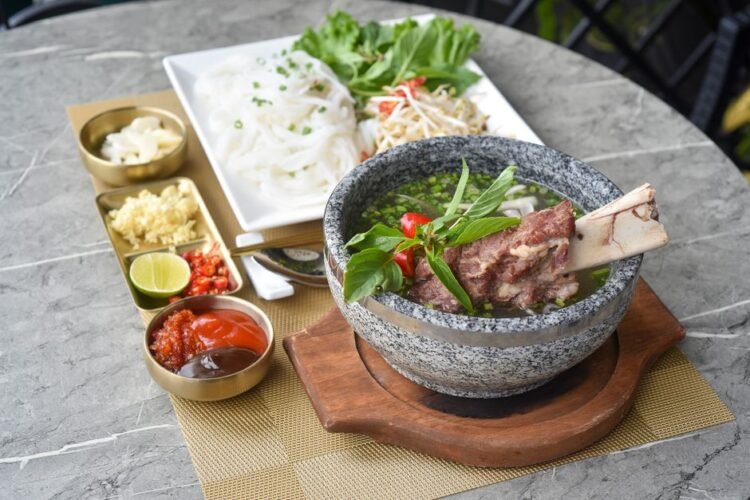
Gomtang is a classic Korean beef bone soup built on hours of gentle simmering that turns the broth a signature cloudy, milky white. This simplified version uses a pressure cooker to achieve that same richness in a fraction of the time, with tender beef shank and sweet Korean radish. Serve it piping hot with steamed rice for the ultimate warming bowl.
Prep Time20 mins
Cook Time150 mins
Total Time170 mins
Servings6
Yield6 servings
Nutrition Facts
Per serving (estimated)
- 480 kcalCalories
- 22 gFat
- 8 gSaturated Fat
- 10 gCarbs
- 1 gFiber
- 3 gSugar
- 52 gProtein
- 920 mgSodium
- 620 mgPotassium
- 85 mgCalcium
- 5.5 mgIron
- 10 mgVitamin C
- 30 mcgVitamin A
Ingredients
For the broth base
- 3 lbs ox leg and knee bones, cut into 2-inch pieces by the butcher
- 1 lb beef shank, in one piece
- 1 medium Korean radish (mu), peeled and cut into thick chunks
- 1 large yellow onion, halved (skin on)
- 1 whole head garlic, halved crosswise
- 12 cups cold water
For seasoning and serving
- 2 tablespoons kosher salt, plus more to taste
- 1 teaspoon saeujeot (salted fermented shrimp), minced (optional)
- 2 tablespoons finely minced fresh garlic
- 1 teaspoon freshly ground black pepper
- 5 green onions, thinly sliced
- 3 cups cooked short-grain white rice, to serve
Directions
- Soak the ox bones in a large bowl of cold water for 1 to 2 hours, then drain and rinse to draw out excess blood for a cleaner-tasting broth.
- Place the bones and beef shank in a large pot, cover with cold water, and bring to a vigorous boil. Boil for 10 minutes, then drain and rinse the bones and meat thoroughly under cold running water to remove all scum and impurities.
- Transfer the blanched bones and shank to a pressure cooker. Add the radish, halved onion, and garlic head, then pour in 12 cups of cold water. Lock the lid and cook at high pressure for 90 minutes. (Alternatively, simmer uncovered in a large stockpot for 5 to 6 hours, skimming foam as needed, until the broth turns milky white.)
- Release the pressure naturally. Lift out and discard the onion and garlic. Transfer the shank to a cutting board and, once cool enough to handle, slice it against the grain into thin bite-sized pieces. Break the softened radish into chunks with a spoon.
- Return the sliced beef and radish to the milky broth. Stir in the kosher salt and saeujeot (if using), then taste and adjust with more salt as needed.
- Ladle the broth, beef, and radish into warm bowls, making sure each portion gets a generous amount of milky broth.
- Top each bowl with minced garlic, a grind of black pepper, and a generous pinch of sliced green onions.
- Serve immediately with steamed rice and, if you like, kkakdugi (cubed Korean radish kimchi) on the side.
Cook’s Notes
- Always add salt at the very end of cooking; salting early prevents the broth from developing its signature milky cloudiness.
- For an even thicker, whiter broth, vigorously stir the cooked bones with a wooden spoon before straining to release more marrow and collagen.
- If using a stovetop, keep the lid off so moisture evaporates and concentrates flavor; top up with hot water if the bones become exposed.
- Gomtang tastes even better the next day once the surface fat has solidified; skim it off and save it for frying rice or vegetables, or stir it back in for extra richness.
- Ask your butcher to crack or saw the ox bones into smaller pieces so more marrow and minerals release into the broth during cooking.