 (No Ratings Yet)
 Loading...
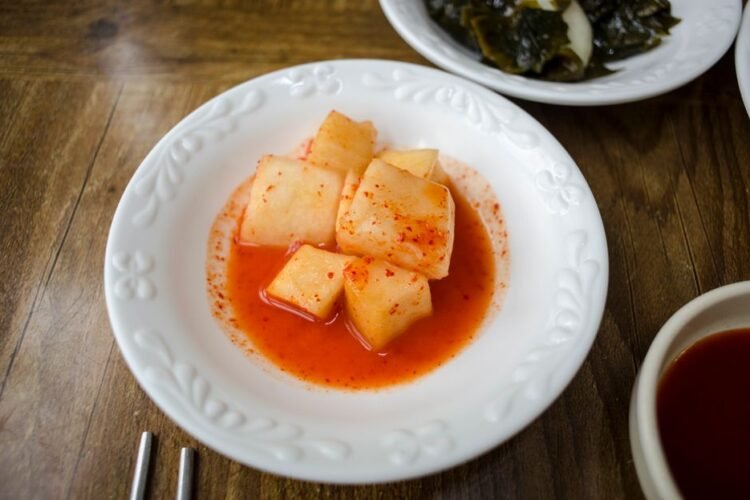
A light, refreshing Korean water kimchi made with sliced radish, napa cabbage, and Asian pear in a delicate, mildly tangy clear brine. Unlike classic kimchi, nabak kimchi uses far less chili and gets its subtle sweetness and body from a sweetened rice flour porridge. It is traditionally served cold as a palate-cleansing side to rich grilled meats or summer stews.
Prep Time30 mins
Cook Time5 mins
Total Time35 mins
Servings6
YieldAbout 8 cups (6 side-dish servings)
Nutrition Facts
Per serving (estimated)
- 45 kcalCalories
- 0 gFat
- 0 gSaturated Fat
- 10 gCarbs
- 2 gFiber
- 4 gSugar
- 1 gProtein
- 780 mgSodium
- 280 mgPotassium
- 45 mgCalcium
- 0.5 mgIron
- 18 mgVitamin C
- 180 mcgVitamin A
Ingredients
For the salted vegetables
- 1 lb Korean radish (mu), peeled and sliced into 1/8-inch half-moons (about 4 cups)
- 6 oz napa cabbage, cut into 1-inch pieces
- 1 cup julienned carrot
- 1/2 cup thinly sliced green onions (1-inch pieces)
- 1/4 cup coarse Korean sea salt, plus more as needed
For the porridge and brine
- 6 cups cool filtered water, divided
- 1 (4-inch) piece dried kelp (konbu)
- 2 tablespoons sweet rice flour (chapssal-garu)
- 3 tablespoons kosher salt
- 1 small Asian pear, peeled and thinly julienned
- 3 cloves garlic, thinly sliced
- 1 tablespoon minced fresh ginger
- 2 tablespoons mild gochugaru (Korean red pepper flakes)
Directions
- Toss the radish, napa cabbage, carrot, and green onions with the coarse salt in a large bowl until evenly coated. Let stand at room temperature for 1 hour to draw out moisture, then drain, rinse twice under cold water, and set aside to drain well.
- Make the rice porridge while vegetables salt: whisk 1 cup of the water with the sweet rice flour in a small saucepan until smooth. Bring to a gentle boil over medium heat, whisking constantly, and cook 2-3 minutes until it thickens into a glossy, translucent paste. Remove from heat and cool completely.
- Soak the dried kelp in the remaining 5 cups of filtered water for 30 minutes to release umami flavor, then remove (or simmer gently for 5 minutes, strain, and cool for a deeper-flavored stock).
- In a large non-reactive bowl, whisk the cooled rice porridge into the kelp water along with the kosher salt until fully dissolved. Stir in the Asian pear, garlic, ginger, and gochugaru.
- Add the rinsed and drained vegetables to the brine, tossing gently so everything is evenly coated. Transfer everything into a clean, sterilized 2-quart glass or food-grade plastic container with a tight lid.
- Press the vegetables down so they stay submerged (a small clean plate that fits inside the jar works as a weight). Cover loosely and leave at cool room temperature for 18 to 24 hours to start active fermentation, then seal and transfer to the refrigerator.
- Taste after 2 days for a bright, lightly effervescent tang; nabak kimchi is typically best enjoyed between days 2 and 7. Once the flavor is to your liking, keep refrigerated and consume within 3 weeks.
- To serve, ladle kimchi and some clear brine into small chilled bowls. Sip the brine as a probiotic refresher or stir it into cold noodles; the vegetables pair well with steamed rice, grilled pork, or Korean stews.
Cook’s Notes
- True Korean mu (radish) is denser and sweeter than Japanese daikon; either works, but Korean radish gives the most authentic crisp texture.
- Keep all utensils, jars, and hands scrupulously clean; a splash of brine from a previous batch acts as a healthy starter for faster, more predictable fermentation.
- Don't skip the rice flour porridge. It feeds the lactobacilli and gives the brine a smooth, slightly viscous body instead of a thin, watery one.
- If you prefer a more pronounced tang, let the kimchi rest an extra day at room temperature, or slow the ferment by going straight into the refrigerator from the start.
- Leftover brine is delicious sipped cold on its own, poured over cooked cold noodles, or used as a base for a quick cold soup with cucumbers and seaweed.