 (No Ratings Yet)
 Loading...
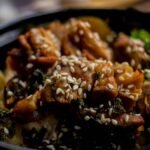
This iconic Taiwanese night-market snack features cubes of fermented tofu fried until crackling and golden, served with sweet-sour pickled cabbage and a punchy garlic-chili sauce. The funky aroma comes from a short brine loaded with fermented vegetables and aromatics, then mellows dramatically into a creamy, custardy interior once crisped. Eat it hot from the fryer for the full contrast of shatter-crisp shell and molten middle.
Prep Time25 mins
Cook Time15 mins
Total Time40 mins
Servings4
Yield4 servings
Nutrition Facts
Per serving (estimated)
- 320 kcalCalories
- 22 gFat
- 3 gSaturated Fat
- 8 gCarbs
- 2 gFiber
- 3 gSugar
- 18 gProtein
- 860 mgSodium
- 210 mgPotassium
- 260 mgCalcium
- 3 mgIron
- 9 mgVitamin C
- 55 mcgVitamin A
Ingredients
For the fermented tofu
- 2 (14 oz) blocks extra-firm tofu, cut into 1 1/2-inch cubes
- 4 cups room-temperature water
- 3 tablespoons coarse sea salt
- 2 tablespoons fermented bean curd brine (or 1 tablespoon white miso)
- 2 tablespoons rice bran (optional, for authentic aroma)
- 4 dried shiitake mushrooms, torn
- 1 small handful fresh perilla leaves or Thai basil
- 1 (1-inch) chunk of ginger, smashed
For the pickled cabbage
- 3 cups thinly shredded napa cabbage
- 1 1/2 teaspoons kosher salt
- 1 tablespoon rice vinegar
- 1 teaspoon granulated sugar
- 1/2 teaspoon grated garlic
For the garlic-chili sauce
- 3 tablespoons chili-garlic paste (such as sambal oelek)
- 1 tablespoon soy sauce
- 1 tablespoon rice vinegar
- 2 teaspoons sugar
- 1 teaspoon toasted sesame oil
- 2 cloves garlic, finely grated
For frying and finishing
- 3 cups neutral oil (canola or peanut), for deep-frying
- 1/2 teaspoon flaky sea salt
- 2 tablespoons chopped cilantro (optional)
- 1 teaspoon toasted white sesame seeds (optional)
Directions
- Pat the tofu cubes very dry with paper towels and let them sit uncovered on a wire rack for 30 minutes to release excess moisture.
- Combine the water, salt, fermented bean curd brine, rice bran (if using), shiitake, perilla, and ginger in a large glass or ceramic jar; stir until the salt dissolves.
- Submerge the tofu cubes in the brine, weight them down with a small overturned plate to keep them underwater, cover loosely with cheesecloth, and ferment at cool room temperature (around 70°F) for 2 to 4 days until strongly pungent.
- Meanwhile, toss the napa cabbage with the salt, rice vinegar, sugar, and grated garlic in a bowl; press down lightly, cover, and refrigerate for at least 4 hours, or until softened and tangy.
- Whisk together the chili-garlic paste, soy sauce, rice vinegar, sugar, sesame oil, and grated garlic in a small bowl; set aside.
- When ready to cook, gently rinse the fermented tofu under cool water and pat very dry with clean towels; the smell will be intense but this is normal.
- Heat the oil in a heavy pot or wok to 350°F (175°C) over medium-high heat; fry the tofu in small batches for 4 to 5 minutes, turning, until deep golden and crisp on all sides.
- Drain on a wire rack set over a tray (not paper towels, which trap steam and soften the crust) and season immediately with the flaky salt.
- Spread the pickled cabbage across a serving plate, pile the hot fried tofu on top, and either spoon the garlic-chili sauce over the tofu or serve it in a small dish alongside for dipping.
- Eat hot while the shells are shatter-crisp, poking through the crust with chopsticks to reveal the molten, custardy fermented center.
Cook’s Notes
- For a shortcut, buy vacuum-sealed fermented tofu from an Asian market, or soak plain tofu overnight in strong miso brine plus 1/4 cup drained pickle juice as a fast approximation.
- Double-fry for an even thicker, hollow shell: fry 3 minutes at 325°F, rest 2 minutes, then fry 2 minutes at 365°F – this mimics authentic night-market texture.
- The aroma is strongest during fermentation and the first minute of frying; open a window or run the exhaust fan because the funk is part of the experience.
- Stir 1 teaspoon Chinese chili crisp or a splash of numbing-spice oil into the dipping sauce for a mala-leaning Taipei variation.
- Save extra brine after fermenting to start the next batch; the culture strengthens with each round, producing more flavor in less time.