 (No Ratings Yet)
 Loading...
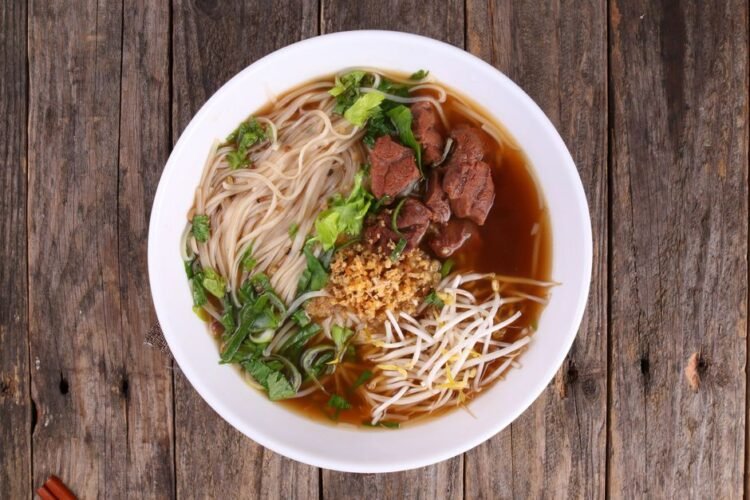
Taiwan's national comfort dish: slow-braised beef shank in a deeply savory, soy-and-spice broth, ladled over springy wheat noodles and finished with fresh greens and sharp pickled mustard greens. The long simmer coaxes collagen from the beef, giving the soup a rich, slightly clinging body.
Prep Time25 mins
Cook Time180 mins
Total Time205 mins
Servings6
Yield6 generous bowls
Nutrition Facts
Per serving (estimated)
- 640 kcalCalories
- 22 gFat
- 7 gSaturated Fat
- 68 gCarbs
- 4 gFiber
- 6 gSugar
- 42 gProtein
- 1280 mgSodium
- 820 mgPotassium
- 95 mgCalcium
- 6.5 mgIron
- 18 mgVitamin C
- 220 mcgVitamin A
Ingredients
For the beef and broth
- 1.5 kg beef shank, cut into 4 cm chunks
- 2 tablespoons neutral oil
- 1 large yellow onion, sliced
- 8 garlic cloves, smashed
- 1 thumb fresh ginger, sliced
- 3 tablespoons doubanjiang (spicy broad bean paste)
- 3 tablespoons light soy sauce
- 2 tablespoons dark soy sauce
- 2 tablespoons Shaoxing wine
- 1.5 liters water, plus more as needed
For the spice sachet and aromatics
- 2 star anise pods
- 1 cassia bark stick (or cinnamon stick)
- 1 teaspoon Sichuan peppercorns
- 4 cloves
- 1 teaspoon fennel seeds
- 2 bay leaves
- 2 tomatoes, quartered (optional, for sweetness)
For the noodles and assembly
- 700 g fresh thick wheat noodles (or 400 g dried)
- 200 g baby bok choy or choy sum
- 1/2 cup pickled mustard greens (suan cai), rinsed and chopped
- 3 scallions, thinly sliced
- 1/2 cup fresh cilantro leaves
For the chili oil (optional)
- 3 tablespoons chili oil with sediment
- 1/2 teaspoon toasted Sichuan peppercorn powder
Directions
- Bring a large pot of water to a boil. Add the beef shank chunks and blanch for 5 minutes to remove scum; drain and rinse the beef under warm water, then pat dry.
- Heat the neutral oil in a heavy pot or Dutch oven over medium heat. Add the onion, garlic, and ginger and cook for 4-5 minutes until softened and lightly golden.
- Stir in the doubanjiang and cook for 1 minute until fragrant and the oil turns red. Add the beef, light soy sauce, dark soy sauce, and Shaoxing wine; toss to coat and sear lightly for 2 minutes.
- Tie the star anise, cassia bark, Sichuan peppercorns, cloves, fennel seeds, and bay leaves into a piece of cheesecloth to make a sachet. Add the sachet and tomatoes to the pot, then pour in the water until the beef is just covered.
- Bring to a boil, skim any foam, then reduce to a low simmer. Cover partially and braise for 2.5 to 3 hours, or until the beef is fork-tender and the broth has reduced and darkened. Skim excess fat as needed and add water if the liquid drops below the beef.
- Meanwhile, cook the wheat noodles in a large pot of boiling water according to package directions until just tender; drain and divide among 6 large bowls. Blanch the bok choy in the noodle water for 30 seconds, then drain.
- Remove the spice sachet and tomatoes from the broth. Slice the braised beef against the grain into 1 cm thick pieces. Taste the broth and adjust saltiness with more soy sauce if needed.
- To assemble, pile sliced beef on top of the noodles, tuck in bok choy on the side, and spoon 350-400 ml of hot broth over each bowl. Top with pickled mustard greens, scallions, and cilantro.
- Serve immediately with chili oil on the side for diners to drizzle to taste.
Cook’s Notes
- For deeper flavor, make the broth a day ahead, chill overnight, and lift off the solidified fat before reheating and slicing the beef.
- If doubanjiang is unavailable, substitute 2 tablespoons of Korean gochujang plus 1 extra tablespoon of soy sauce, though the flavor profile will shift slightly.
- Tie the spices in cheesecloth so they flavor the broth without scattering through the soup; do not skip the sachet or the broth loses its aromatic backbone.
- Choose beef shank with visible connective tissue and a thin fat cap; it becomes silky and gelatinous after the long braise.
- Fresh wheat noodles (available in Asian markets) give the chewiest texture; if using dried, undercook by 1 minute since they soften further in the hot broth.