 (No Ratings Yet)
 Loading...
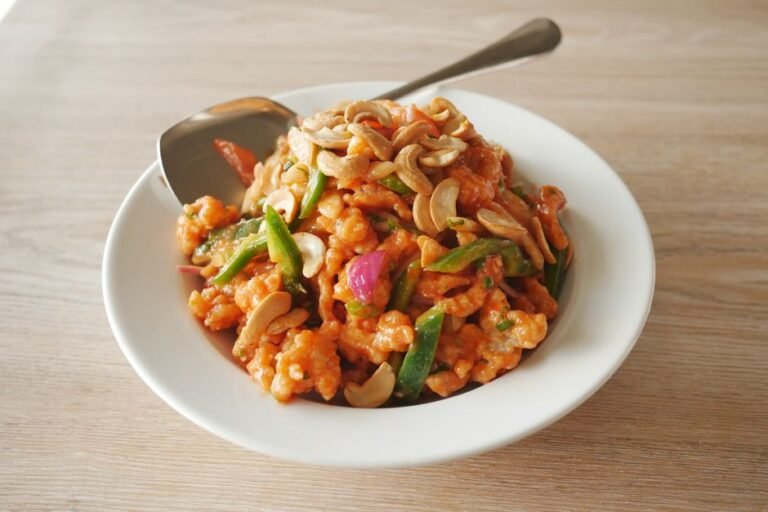
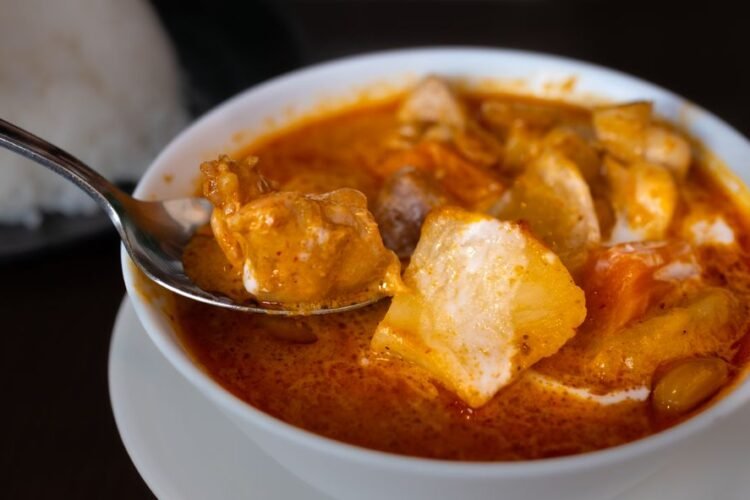
A rich and creamy Thai Panang Pork Curry featuring tender pork simmered in a fragrant coconut sauce with peanuts, aromatic kaffir lime leaves, and a balanced sweet-salty finish. This Central Thai specialty is milder than red curry but deeply savory, traditionally served alongside steamed jasmine rice to soak up the luscious sauce.
Prep Time15 mins
Cook Time30 mins
Total Time45 mins
Servings4
Yield4 servings
Nutrition Facts
Per serving (estimated)
- 620 kcalCalories
- 38 gFat
- 22 gSaturated Fat
- 45 gCarbs
- 4 gFiber
- 9 gSugar
- 32 gProtein
- 950 mgSodium
- 820 mgPotassium
- 90 mgCalcium
- 4 mgIron
- 28 mgVitamin C
- 150 mcgVitamin A
Ingredients
For the curry
- 1.5 lbs (700 g) pork shoulder, sliced into 1/2-inch thick pieces
- 2 tbsp vegetable oil
- 1/2 cup Panang curry paste
- 2 cans (800 ml total) full-fat coconut milk
- 1/3 cup roasted unsalted peanuts, finely ground
- 2 tbsp palm sugar, finely chopped
- 3 tbsp fish sauce
- 1 tsp tamarind paste
- 5 kaffir lime leaves, torn
- 1 red bell pepper, sliced into thin strips
- 4 Thai chilies, lightly smashed (optional)
- 1/2 cup fresh Thai basil leaves
For serving
- 4 cups cooked jasmine rice
- 1/4 cup roasted peanuts, roughly chopped
- Lime wedges
Directions
- Heat the oil in a heavy pot or deep skillet over medium heat. Add the Panang curry paste and fry for 2-3 minutes until fragrant and the oil begins to separate, stirring constantly to avoid burning.
- Pour in about one-third of the coconut milk and stir well into the paste. Cook for 3-4 minutes until the mixture thickens and turns a deep reddish-orange, releasing a rich aroma.
- Add the sliced pork and stir to coat thoroughly. Cook for about 5 minutes until the pork is lightly sealed and starts to turn opaque on the edges.
- Pour in the remaining coconut milk, add the ground peanuts, palm sugar, fish sauce, tamarind paste, and torn kaffir lime leaves. Stir well and bring to a gentle simmer.
- Reduce heat to low and simmer uncovered for 15-18 minutes, stirring occasionally, until the pork is fork-tender and the sauce has thickened to coat the back of a spoon.
- Add the red bell pepper and optional Thai chilies, and continue to simmer for 3-4 minutes until the peppers are just tender but still crisp.
- Remove from heat and stir in the fresh Thai basil leaves. Taste and adjust seasoning, adding more fish sauce for saltiness or palm sugar for sweetness as needed.
- Serve hot over steamed jasmine rice, garnished with chopped roasted peanuts and a wedge of lime.
Cook’s Notes
- For a more authentic texture, use pork shoulder with a bit of fat marbling; it stays tender during the slow simmer and adds richness.
- If Panang paste is hard to find, substitute with red curry paste plus 1 teaspoon of ground cumin and a pinch of white pepper for a closer flavor profile.
- Always use full-fat coconut milk for the creamy consistency characteristic of authentic Panang; light coconut milk will produce a thin, watery sauce.
- Add the bell peppers at the end so they retain a slight crunch and bright color, balancing the rich, nutty sauce.
- The curry tastes even better the next day as the flavors meld, so consider making it a few hours ahead and reheating gently before serving.