 (No Ratings Yet)
 Loading...
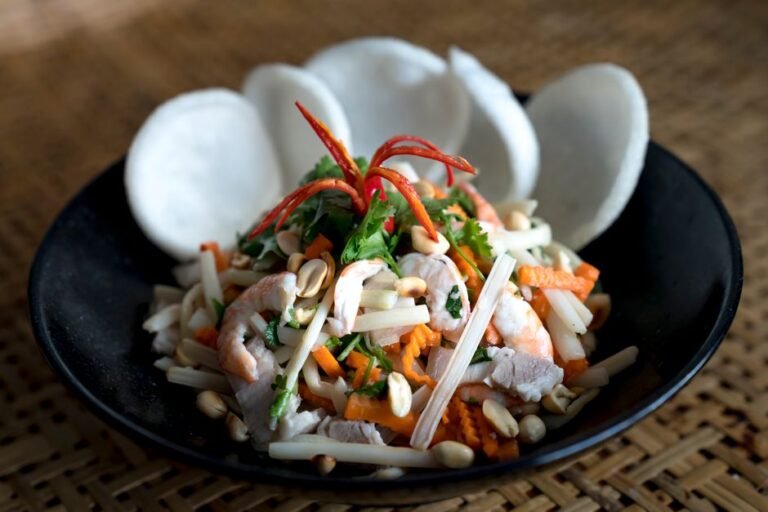
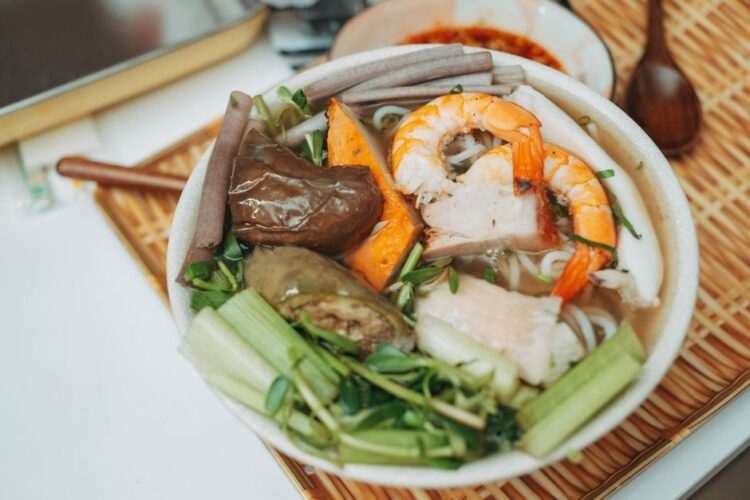
A signature noodle dish from central Vietnam's Quang Nam province, this vibrant bowl features wide rice noodles in a richly seasoned turmeric broth, topped with marinated pork, plump shrimp, fresh herbs, banana blossom, and crunchy peanuts. The broth is intentionally light—just enough to coat the noodles rather than drown them—letting every garnish shine.
Prep Time20 mins
Cook Time30 mins
Total Time50 mins
Servings4
Yield4 shallow bowls
Nutrition Facts
Per serving (estimated)
- 580 kcalCalories
- 18 gFat
- 4 gSaturated Fat
- 62 gCarbs
- 5 gFiber
- 7 gSugar
- 38 gProtein
- 1100 mgSodium
- 720 mgPotassium
- 150 mgCalcium
- 4 mgIron
- 18 mgVitamin C
- 220 mcgVitamin A
Ingredients
For the pork and shrimp
- 14 oz (400 g) pork shoulder, sliced 1/4 inch thick
- 12 oz (340 g) large shrimp, peeled and deveined (shells reserved)
- 2 tsp ground turmeric, divided
- 4 cloves garlic, minced
- 2 shallots, finely minced, divided
- 2 tbsp fish sauce
- 1 tbsp palm sugar (or brown sugar)
- 1 tbsp vegetable oil
For the broth
- 6 cups (1.4 L) low-sodium chicken stock
- Reserved shrimp shells and heads
- 1 tbsp annatto oil (for color)
- 1 tbsp fish sauce
- 1 tsp sugar
- 1/2 tsp salt
For assembly
- 14 oz (400 g) thick flat rice noodles (bánh phở or mì quảng style)
- 1/2 cup roasted unsalted peanuts, lightly crushed
- 1 banana blossom, julienned and soaked in acidulated water
- 2 cups mixed baby lettuce and Thai basil leaves
- 1 cup fresh bean sprouts, rinsed
- 4 hard-boiled eggs, halved
- 1 lime, cut into wedges
- 4 small rice crackers (bánh tráng nướng)
Directions
- Marinate the pork: In a bowl, combine the pork slices with 1 tsp turmeric, half the garlic, half the shallots, fish sauce, sugar, and oil. Toss well and let sit for 20 minutes while you prep the broth.
- Build the broth: Heat annatto oil in a pot over medium heat. Add the remaining shallots and garlic and cook 1 minute until fragrant. Add the shrimp shells and toast for 2 minutes. Pour in the chicken stock, fish sauce, sugar, salt, and remaining turmeric. Simmer gently for 20 minutes, then strain into a clean pot and keep warm.
- Prep the toppings: Drain the banana blossom and pat dry. Rinse the herbs, lettuce, and bean sprouts. Crush the peanuts and set everything aside in small bowls for the table.
- Cook the noodles: Bring a large pot of water to a boil. Cook the thick rice noodles according to package directions, usually 8 to 10 minutes, until tender but still chewy. Drain, rinse briefly under cool water, and divide among 4 shallow bowls.
- Sear the proteins: Heat a heavy skillet over medium-high. Add the marinated pork in a single layer and cook 3 to 4 minutes per side until golden and slightly caramelized. Push to one side and add the shrimp, cooking 1 to 2 minutes per side until pink and opaque.
- Top the bowls: Arrange the seared pork and shrimp over the noodles along with 2 egg halves per bowl. Ladle about 3/4 cup of the warm turmeric broth over each—just enough to coat the noodles, not submerge them.
- Garnish generously: Scatter banana blossom, lettuce, Thai basil, bean sprouts, and crushed peanuts over the top. Serve immediately with rice crackers, lime wedges, and sliced chili on the side.
- To eat, squeeze lime over the bowl, break the cracker into the broth, and toss everything together so the noodles absorb the seasoned broth while the herbs stay bright.
Cook’s Notes
- Always toast the shrimp shells in fat before adding stock—this gives the broth a deep, savory seafood backbone that powdered bouillon cannot match.
- If banana blossom is unavailable, substitute with thinly sliced green papaya or a handful of watercress for that fresh, slightly bitter crunch.
- Use annatto oil rather than just turmeric for the signature orange-red color; pure turmeric alone leans too yellow and muddy.
- Resist the urge to add lots of broth—mì quảng is meant to be a "wet noodle" dish, not a soup, so the noodles should just glisten, not float.
- For best texture, cook noodles just before serving and assemble bowls immediately so they stay pleasantly chewy rather than mushy.