 (No Ratings Yet)
 Loading...
A beloved Tokyo street snack dating back to the early 1900s, Ningyo Yaki are bite-sized sponge cakes baked in fish-shaped cast iron molds and filled with sweet red bean paste. The thin, golden-brown shell gives way to a fluffy castella-style interior wrapped around a warm ribbon of anko.
Prep Time15 mins
Cook Time20 mins
Total Time35 mins
Servings4
Yield8 fish cakes (2 per serving)
Nutrition Facts
Per serving (estimated)
- 420 kcalCalories
- 6 gFat
- 1.5 gSaturated Fat
- 82 gCarbs
- 3 gFiber
- 42 gSugar
- 9 gProtein
- 180 mgSodium
- 320 mgPotassium
- 60 mgCalcium
- 3 mgIron
- 1 mgVitamin C
- 100 mcgVitamin A
Ingredients
For the sponge batter
- 2 large eggs, room temperature
- 1/2 cup (100 g) granulated sugar
- 1 tablespoon honey
- 1 teaspoon vanilla extract
- 2 tablespoons whole milk
- 1 cup (120 g) all-purpose flour
- 1/2 teaspoon baking powder
- 1/8 teaspoon fine salt
For the filling and assembly
- 1 cup (240 g) smooth or chunky sweet red bean paste (anko)
- 1 tablespoon neutral oil or melted butter, for brushing the molds
- 1 tablespoon mirin, for fragrance (optional)
- 1/2 teaspoon powdered sugar, for dusting (optional)
- Hot matcha or green tea, for serving
Directions
- In a large bowl, whisk the eggs and granulated sugar with an electric mixer on high speed until the mixture is pale, thick, and falls in ribbons when the beaters are lifted, about 4 minutes.
- Add the honey, vanilla extract, milk, and mirin if using; whisk on low just until combined, scraping down the sides of the bowl.
- Sift the flour, baking powder, and salt over the wet mixture and gently fold with a rubber spatula until no streaks remain; the batter should be smooth and slightly looser than pancake batter.
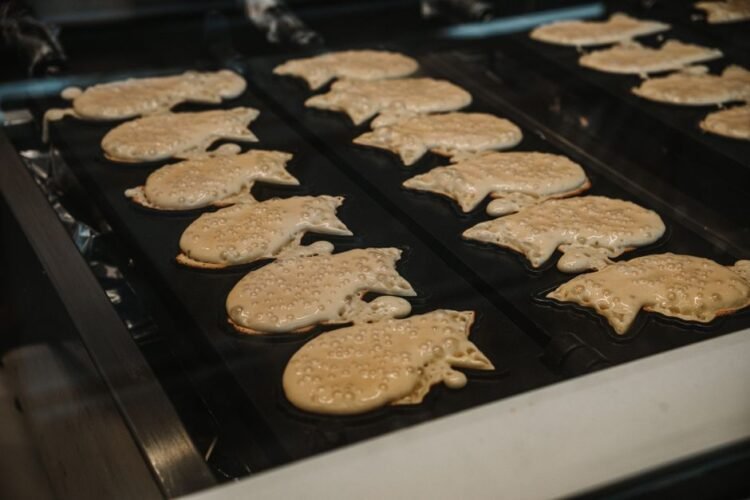
- Heat a fish-shaped cast iron cake mold (or taiyaki pan) over medium-low heat for 2 minutes, then lightly brush each cavity with neutral oil or melted butter using a pastry brush.
- Pour about 1 1/2 tablespoons of batter into each fish cavity, then spoon roughly 1 tablespoon of red bean paste into the center of each, keeping it away from the edges so the filling does not leak out.
- Top with another 1 1/2 tablespoons of batter to cover the filling and fill each cavity to just below the rim, smoothing the surface.
- Close the hinged lid and cook for 2 to 3 minutes, then flip the pan and cook another 2 to 3 minutes until both sides are deeply golden and the cakes spring back when touched.
- Carefully open the mold and lift each cake out with a thin spatula or chopsticks; transfer to a wire rack to cool for 2 minutes.
- Repeat with the remaining batter, brushing the molds lightly with oil between batches, until all the batter is used and you have 8 cakes.
- Dust with powdered sugar if you like and serve warm or at room temperature; pair with hot green tea for an authentic touch.
Cook’s Notes
- Batter consistency matters: if too thick it won't spread into the fish fins, if too thin the cakes will collapse — adjust with a teaspoon of water or flour as needed.
- Don't rush the browning — medium-low heat develops the signature crisp golden shell without scorching the sugar in the batter.
- Substitute the red bean paste with sweetened chestnut cream, matcha custard, chocolate-hazelnut spread, or sweet taro paste for modern variations.
- For maximum volume, set the mixing bowl over a pan of warm (not hot) water while beating the eggs and sugar for the first 2 minutes; cold eggs will not whip up as well.
- If you do not own fish-shaped molds, a takoyaki pan works well to make bite-sized round versions cooked the same way.