 (No Ratings Yet)
 Loading...
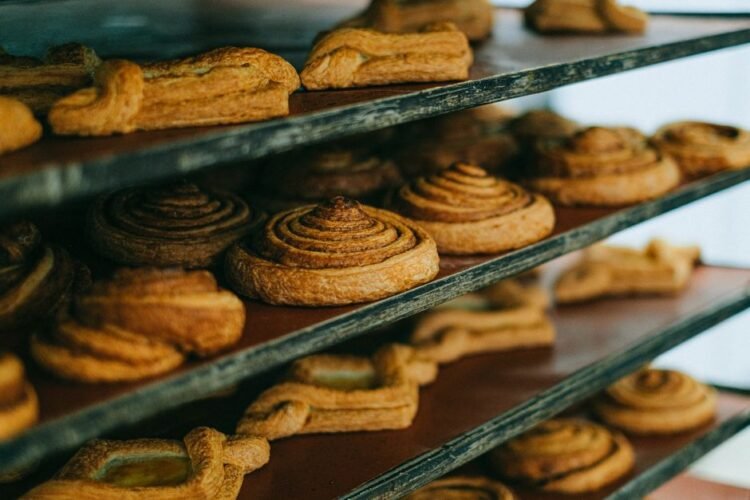
A signature treat from Brittany, this laminated pastry layers cold butter and sugar through yeasted dough, then bakes until the sugar caramelizes into a crisp, golden shell with a tender, buttery interior. Each pastry is rich, crisp-edged, and unapologetically decadent, best enjoyed warm from the oven.
Prep Time40 mins
Cook Time30 mins
Total Time70 mins
Servings6
Yield6 pastries
Nutrition Facts
Per serving (estimated)
- 485 kcalCalories
- 27 gFat
- 16 gSaturated Fat
- 54 gCarbs
- 1 gFiber
- 24 gSugar
- 6 gProtein
- 320 mgSodium
- 85 mgPotassium
- 35 mgCalcium
- 2 mgIron
- 0 mgVitamin C
- 210 mcgVitamin A
Ingredients
For the dough
- 3 1/4 cups (420 g) bread flour
- 1 teaspoon fine sea salt
- 2 1/4 teaspoons (1 packet) active dry yeast
- 1 tablespoon granulated sugar
- 3/4 cup (180 ml) warm whole milk (about 105°F/40°C)
- 1/4 cup (60 ml) warm water
- 2 tablespoons unsalted butter, melted and slightly cooled
For the lamination
- 1 cup (225 g) cold unsalted European-style butter (82% fat)
- 3/4 cup (150 g) granulated sugar, plus extra for sprinkling
- 1 teaspoon flaky sea salt, for finishing
Directions
- In a large bowl, whisk the flour, salt, yeast, and sugar. Pour in the warm milk, warm water, and melted butter and stir until a shaggy dough forms, then turn out and knead on a lightly floured surface for 8 to 10 minutes until smooth and elastic.
- Shape the dough into a ball, place in a lightly oiled bowl, cover, and let rise in a warm spot for 1 to 1 1/2 hours until nearly doubled in size.
- Place the cold butter between two sheets of parchment and pound with a rolling pin into an 8-inch (20 cm) square; refrigerate. Roll the risen dough on a lightly sugared surface into a 12-inch (30 cm) square, place the butter square on top diagonally, and fold the four corners of dough over the butter to enclose it completely.
- Roll the package out into a 12 by 16 inch (30 by 40 cm) rectangle, sprinkle lightly with 2 tablespoons of the sugar, then fold into thirds like a letter. Rotate 90 degrees, roll out again into a 12 by 16 inch rectangle, sprinkle with another 2 tablespoons sugar, and fold into thirds. Wrap in plastic and chill for 30 minutes.
- Repeat the roll, sugar-sprinkle, and fold two more times for a total of 4 turns, chilling 20 minutes between turns if the butter softens. After the final turn, roll the dough out to a 12 by 16 inch rectangle about 1/4 inch thick.
- Grease six 4-inch (10 cm) round metal cake rings or large muffin tins generously with butter and sprinkle each with about 1 tablespoon sugar. Cut the dough into 4-inch squares, gather the corners into the center, flip into the prepared rings (seam-side down), and let rise for 30 to 40 minutes until puffy.
- Preheat the oven to 400°F (200°C). Bake the pastries for 25 to 30 minutes until deeply golden brown and the sugar at the edges has caramelized to a deep amber; if browning too fast, tent loosely with foil.
- Cool in the pans for 5 minutes to let the caramel set, then turn out onto a wire rack. Sprinkle with flaky sea salt and serve warm.
- Leftovers keep in an airtight container at room temperature for 1 day; reheat in a 300°F (150°C) oven for 5 minutes to refresh the crisp crust.
Cook’s Notes
- Keep everything cold: chill the dough any time the butter feels soft or starts to ooze, since warm butter will ruin the layers.
- European-style high-fat butter (82% or higher) produces the flakiest result because it has less water than standard American butter.
- For an even richer caramel, brush the shaped pastries with a thin layer of melted butter and a sprinkle of sugar right before baking.
- Use metal cake rings or nonstick muffin tins; glass or silicone does not caramelize the sugar crust as well.
- Eat them the day they are baked, as the caramelized crust loses its crackle within hours.