 (No Ratings Yet)
 Loading...
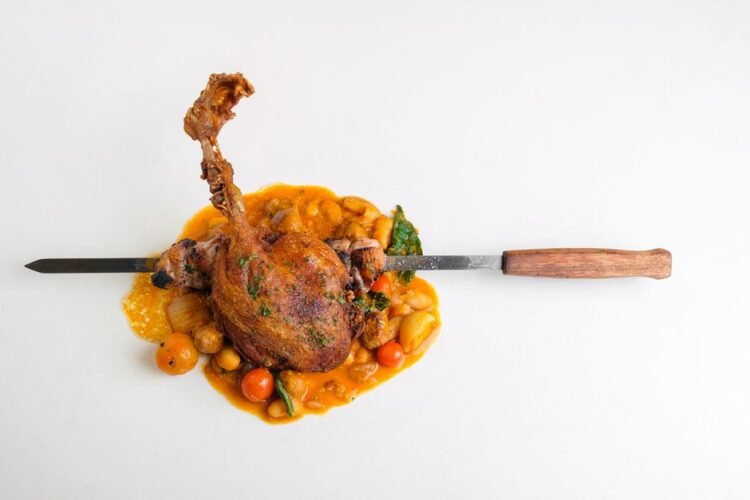
A signature specialty of southwestern France, this duck leg confit is salt-cured then gently poached in its own rendered fat until the meat turns silky and tender. The cooled legs are later pan-seared to render the skin shatteringly crisp, served traditionally with potatoes or a bitter-leaf salad.
Prep Time25 mins
Cook Time180 mins
Total Time205 mins
Servings4
Yield4 servings
Nutrition Facts
Per serving (estimated)
- 520 kcalCalories
- 42 gFat
- 14 gSaturated Fat
- 1 gCarbs
- 0 gFiber
- 0 gSugar
- 32 gProtein
- 880 mgSodium
- 410 mgPotassium
- 28 mgCalcium
- 4.5 mgIron
- 1 mgVitamin C
- 85 mcgVitamin A
Ingredients
For the salt cure
- 4 whole duck legs (about 2.5 lb / 1.1 kg total)
- 3 tbsp coarse sea salt
- 1 tsp whole black peppercorns, lightly crushed
- 6 garlic cloves, smashed
- 4 sprigs fresh thyme
- 2 dried bay leaves, crumbled
For the confit
- 4 cups rendered duck fat (about 2 lb / 900 g), melted
- 6 garlic cloves, smashed
- 3 sprigs fresh thyme
- 2 dried bay leaves
For finishing
- 1 tbsp rendered duck fat
- Flaky sea salt, to taste
- Cracked black pepper, to taste
Directions
- Pat the duck legs very dry with paper towels. In a small bowl combine the coarse salt, crushed peppercorns, garlic, thyme, and crumbled bay leaves, then rub the mixture thoroughly over every surface of each leg, pressing it into the skin.
- Arrange the legs in a single layer in a nonreactive dish, cover, and refrigerate for 12 to 24 hours so the cure penetrates the meat and tightens the skin.
- Rinse each leg briefly under cold water to remove the salt mixture, then pat completely dry. Let stand at room temperature for 30 minutes to take the chill off.
- In a heavy Dutch oven or deep cast-iron pot, melt the duck fat over low heat with the smashed garlic, thyme sprigs, and bay leaves. Slip the duck legs into the fat, making sure they are fully submerged by at least 1 inch.
- Warm the fat slowly to 180°F (82°C) — the surface should tremble but never boil. Hold at this gentle temperature for 2½ to 3 hours, until the meat is completely tender and pulls cleanly from the bone with a fork.
- Using tongs or a slotted spoon, lift the legs out of the fat and place them in a clean container. Strain the flavored fat through a fine sieve and pour it over the legs to cover; cool, then refrigerate for up to 3 months submerged in fat.
- When ready to serve, remove a leg and wipe off any solidified fat. Place it skin-side down in a cold skillet with 1 tablespoon of fresh duck fat, then set over medium-low heat.
- Cook undisturbed for 8 to 10 minutes, pressing gently, until the skin is deep mahogany and crisp; flip and warm the meat side for 2 minutes. Finish with flaky salt and cracked pepper, and serve hot with roasted potatoes, lentils, or a frisée salad.
Cook’s Notes
- The salt cure is what gives confit its characteristic flavor and preservation; do not shorten it below 12 hours.
- Cooked legs submerged in their strained fat will keep refrigerated up to 3 months — the original Gascon pantry staple.
- Never let the fat simmer hard; the duck should poach quietly at a low 180°F to stay silky and avoid drying out.
- For extra-crisp skin, score a shallow crosshatch through the fat layer (not the meat) before the final pan-sear.
- Save the strained confit fat — it is gold for roasting potatoes, sautéing greens, or cooking the next batch of confit.