 (No Ratings Yet)
 Loading...
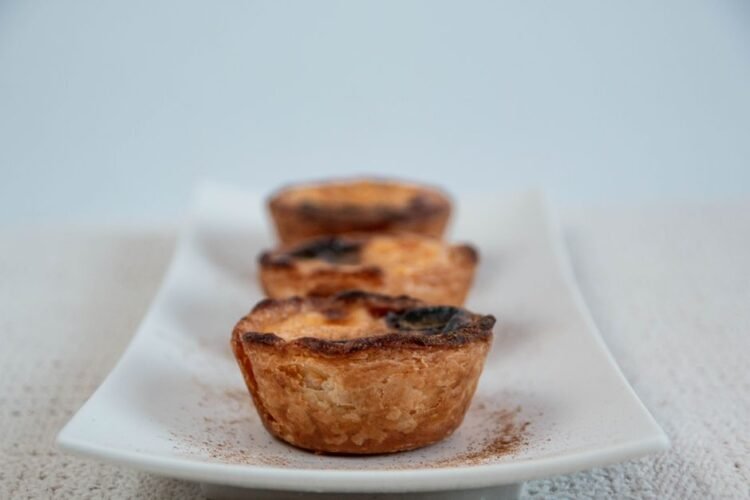
Crisp, flaky puff pastry shells filled with silky, vanilla-scented egg custard and topped with a signature scorched top — these iconic Portuguese tarts from Lisbon are best eaten warm with a dusting of cinnamon. They are deceptively simple to make at home and taste even better than the bakery originals when freshly baked.
Prep Time20 mins
Cook Time25 mins
Total Time45 mins
Servings12
Yield12 tarts
Nutrition Facts
Per serving (estimated)
- 215 kcalCalories
- 11 gFat
- 5 gSaturated Fat
- 24 gCarbs
- 0 gFiber
- 14 gSugar
- 4 gProtein
- 95 mgSodium
- 65 mgPotassium
- 45 mgCalcium
- 0.8 mgIron
- 0.4 mgVitamin C
- 80 mcgVitamin A
Ingredients
For the pastry shells
- 1 sheet (about 280 g) all-butter puff pastry, thawed if frozen
- 2 tablespoons unsalted butter, melted (for brushing)
- All-purpose flour, for dusting
For the custard filling
- 1 cup (240 ml) whole milk
- 1/2 cup (120 ml) heavy cream
- 2/3 cup (135 g) granulated sugar
- 1 cinnamon stick
- 1 strip lemon peel (yellow part only)
- 1 teaspoon pure vanilla extract
- 5 large egg yolks
- 1 1/2 tablespoons cornstarch
For finishing
- Ground cinnamon, for dusting
- Powdered sugar, optional, for dusting
Directions
- Preheat the oven to 275°F (135°C) and place a rack in the upper third. Lightly butter a 12-cup standard muffin tin (about 2 3/4-inch cups) and set aside.
- On a lightly floured surface, roll the puff pastry into a rectangle about 12 x 10 inches. Brush the surface with melted butter, then tightly roll the shorter side into a log. Slice the log into 12 equal discs, about 1 inch thick.
- Place each disc cut-side up into a muffin cup and, using your thumb dipped in flour, press and stretch the dough up the sides to form a thin shell that reaches the rim. Chill the shells in the refrigerator while you make the custard.
- In a medium saucepan, combine the milk, cream, sugar, cinnamon stick, and lemon peel. Bring to a gentle simmer over medium heat, stirring until the sugar dissolves, then remove from the heat, cover, and let steep for 10 minutes.
- Whisk the egg yolks and cornstarch together in a bowl until smooth. Slowly pour the warm milk mixture into the yolks while whisking constantly, then return everything to the saucepan.
- Cook the custard over medium-low heat, whisking constantly, until it thickens enough to coat the back of a spoon and holds a line when you swipe a finger through it, about 4 to 6 minutes. Do not let it boil. Strain through a fine-mesh sieve, stir in the vanilla, and let cool for 5 minutes.
- Spoon or pour the custard into the chilled pastry shells, filling each about three-quarters full. Bake on the upper rack for 18 to 22 minutes, until the tops are golden with characteristic dark brown blistered spots and the custard is just set with a slight wobble in the center.
- Remove from the oven and let the tarts cool in the pan for 5 minutes, then carefully lift them out and transfer to a wire rack. Serve warm or at room temperature, dusted with ground cinnamon and a little powdered sugar if you like.
Cook’s Notes
- For the classic scorched top, move the tarts to the top rack under a hot broiler for 30 to 60 seconds at the end — watch them closely as they burn fast.
- A 12-cup muffin tin works perfectly, but traditional Portuguese tart molds (tartelettes with fluted edges) give a more authentic shape and crispier edge.
- Make sure to strain the custard to remove the lemon peel, cinnamon stick, and any cooked egg bits for a perfectly smooth filling.
- The custard can be made up to 2 days ahead and refrigerated; give it a good whisk before filling the shells.
- Always serve on the day they are baked — the contrast between crisp pastry and creamy custard is at its peak within a few hours of baking.