 (No Ratings Yet)
 Loading...
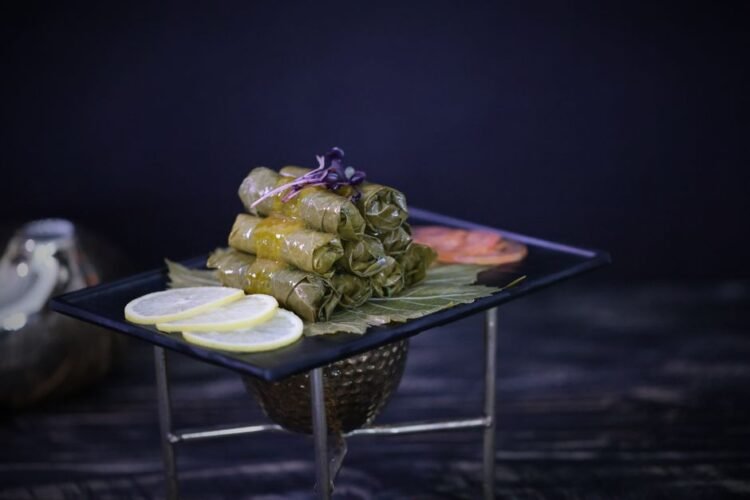
A classic Turkish zeytinyagli preparation, these tender grape leaves are wrapped around a fragrant rice filling scented with pine nuts, currants, fresh herbs, and warm allspice, then gently simmered in olive oil and lemon. Served chilled or at room temperature, they are a staple summer meze that tastes even better the day after they are made.
Prep Time45 mins
Cook Time60 mins
Total Time105 mins
Servings6
Yieldabout 40 rolls (6 servings)
Nutrition Facts
Per serving (estimated)
- 285 kcalCalories
- 14 gFat
- 2 gSaturated Fat
- 36 gCarbs
- 3 gFiber
- 4 gSugar
- 4 gProtein
- 380 mgSodium
- 260 mgPotassium
- 55 mgCalcium
- 2.2 mgIron
- 12 mgVitamin C
- 210 mcgVitamin A
Ingredients
For the leaves
- 40 fresh grape leaves (or 25 jarred brined grape leaves, rinsed)
- 1 tsp salt, for blanching water
For the rice filling
- 1 cup short-grain rice, rinsed and drained
- 3 tbsp extra-virgin olive oil
- 1 medium yellow onion, finely diced
- 3 tbsp pine nuts
- 2 tbsp dried currants
- 2 tbsp tomato paste
- 1 tsp ground allspice
- 1/2 tsp ground cinnamon
- 1/4 cup finely chopped fresh parsley
- 2 tbsp finely chopped fresh dill
- 1 tbsp finely chopped fresh mint
- 1 tsp granulated sugar
- 1 1/2 tsp fine sea salt
- 1/2 tsp freshly ground black pepper
- 1/4 cup warm water
For cooking and finishing
- 1/2 cup extra-virgin olive oil
- 1/2 cup fresh lemon juice (about 2 lemons)
- 2 cups warm water
- 1 tsp fine sea salt
- 1 large lemon, cut into wedges, for serving
Directions
- If using fresh grape leaves, blanch them in salted boiling water for 30 seconds until pliable, then transfer to an ice bath and drain. Pat dry and trim the stems. If using jarred leaves, rinse well under cold water to remove excess brine.
- Warm 3 tablespoons of olive oil in a skillet over medium heat. Add the onion and cook until soft and translucent, about 5 minutes. Stir in the pine nuts and toast for 1 minute, then add the currants and tomato paste and cook 1 minute more.
- Add the rinsed rice to the skillet along with the allspice, cinnamon, sugar, salt, and pepper. Stir for 2 minutes so each grain is coated and slightly toasted, then pour in 1/4 cup warm water. Remove from heat and fold in the parsley, dill, and mint. Let the filling cool until just warm, about 10 minutes.
- Place a grape leaf vein-side up on a work surface with the stem end toward you. Spoon about 1 teaspoon of filling near the stem. Fold the stem end over the filling, fold in both sides, and roll tightly away from you into a small cigar. Do not overwrap or the rice will split the leaf as it expands.
- Line the bottom of a wide, heavy pot with a few torn or leftover grape leaves to prevent scorching. Arrange the rolled sarma in tight concentric circles, seam side down, packing them snugly so they hold their shape.
- Drizzle the 1/2 cup olive oil, 1/2 cup lemon juice, 2 cups warm water, and 1 teaspoon salt evenly over the rolls. Place an inverted heatproof plate directly on top to weigh the rolls down and keep them from unraveling.
- Bring the pot to a gentle simmer over medium-low heat, then reduce to low and cook uncovered at a bare simmer for 50 to 60 minutes, until the rice is fully tender and most of the liquid has been absorbed. Do not boil or stir.
- Remove from heat, tilt the pot, and let the rolls cool in their liquid for at least 2 hours, or ideally overnight in the refrigerator. Transfer to a serving platter and serve cold or at room temperature with lemon wedges.
Cook’s Notes
- Always use young, pale green grape leaves if picking them fresh; older leaves turn bitter and stay tough.
- Rinse jarred brined leaves thoroughly and taste one; if salty, soak in cold water for 15 minutes before using.
- Resist the urge to add more filling than the recipe states; the rice nearly doubles in size during cooking.
- For the cleanest flavor, make the sarma a day ahead so the herbs and lemon fully infuse the leaves.
- Serve alongside sliced tomatoes, cucumbers, and a drizzle of extra-virgin olive oil for a traditional Aegean presentation.