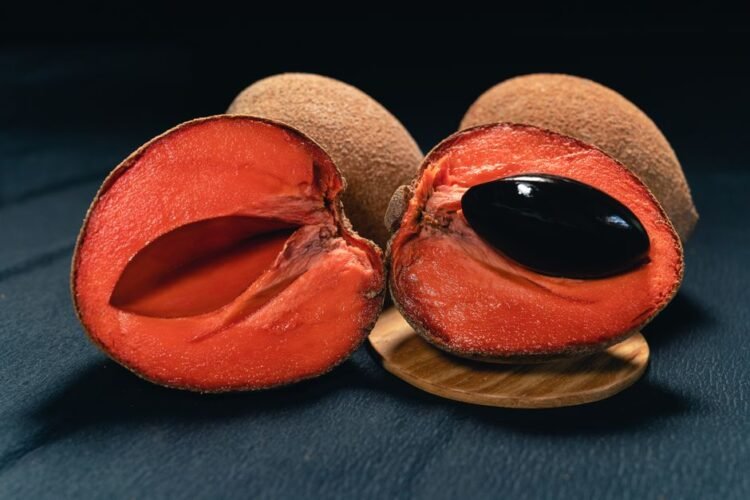
A subtropical Andean fruit with smooth green-yellow skin and dry, intensely sweet, egg-yolk-yellow flesh, widely eaten fresh or as a powder in desserts.
CategoryFruits
Scientific namePouteria lucuma
OriginAndean valleys of Peru, Chile, Ecuador, and Bolivia
History & Origins
Lucuma was domesticated in pre-Columbian Andean civilizations, with archaeological seeds found in Peruvian tombs dating back thousands of years, and was frequently depicted in Moche and Nazca ceramics. The Inca considered it a sacred fruit and it spread to other parts of South America before being introduced to Hawaii and parts of Asia in the 19th century. Today Peru remains the world's largest producer and exporter, where it is a national flavor emblem alongside cacao and coffee.
Nutrition Facts
Per 100 g, edible portion (estimated)
- 108 kcalCalories
- 1.4 gProtein
- 0.4 gFat
- 25 gCarbs
- 1.7 gFiber
- 14 gSugars
- 470 mgPotassium
- 2.6 mgVitamin C
- 575 mcgVitamin A
Culinary Uses
- Scooped fresh at the table once fully ripe and slightly soft
- Blended into milkshakes, smoothies, and Peruvian lucuma ice cream
- Dehydrated and milled into lucuma powder for cakes, custards, and energy bars
- Stirred into mousse, panna cotta, or pancake batter as a natural sweetener
Known Benefits
- Exceptionally high in beta-carotene, supporting eye and skin health
- Provides dietary fiber for digestive regularity
- Good source of potassium for cardiovascular function
- Contains plant polyphenols with antioxidant activity
Hidden Benefits
- Naturally contains ferulic acid and other phenolic compounds with anti-inflammatory effects
- Provides modest iron and zinc, micronutrients often low in plant-based diets
- Low-to-moderate glycemic index compared with other sweet fruits despite high sugar content
- Powdered form retains carotenoids, making it a functional sweetener alternative to refined sugar
Cautions & Considerations
- May trigger reactions in people with latex-fruit allergy syndrome due to shared profilin proteins
- Unripe fruit is highly astringent and unpleasant until fully softened
- High natural sugar content warrants portion control for people with diabetes
- Imported fresh fruit must be fully ripened at room temperature; refrigerated storage slows maturation


