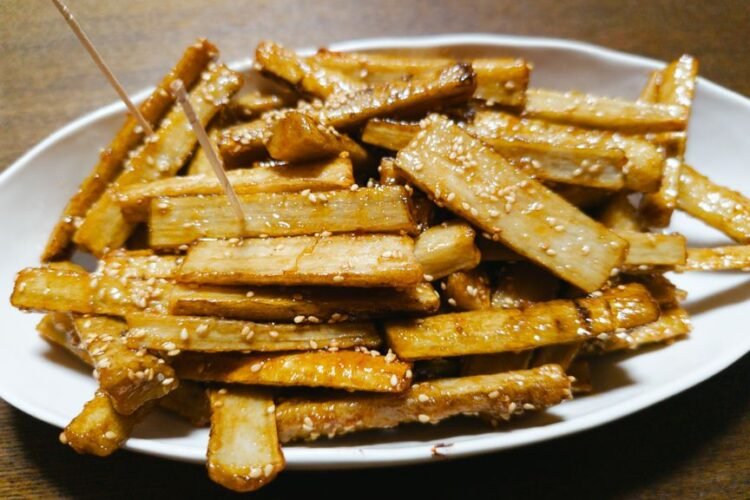
Burdock root, known as gobo in Japan and niúbàng in China, is a long, slender taproot with crisp flesh and an earthy, slightly sweet, artichoke-like flavor. It is a cornerstone of East Asian cooking and a celebrated medicinal plant.
CategoryVegetables
Scientific nameArctium lappa
OriginTemperate Eurasia (Europe and Northern Asia)
History & Origins
Burdock has been documented in Traditional Chinese Medicine since at least the Han Dynasty (206 BCE–220 CE), where it was classified as a cooling herb for dispelling 'wind-heat.' It spread westward through the Silk Road, becoming a common European folk remedy and root vegetable during the Middle Ages. In Japan it became firmly embedded in cuisine by the Edo period, where it remains a pillar of macrobiotic and home cooking.
Nutrition Facts
Per 100 g, edible portion (estimated)
- 72 kcalCalories
- 1.5 gProtein
- 0.2 gFat
- 17.3 gCarbs
- 3.3 gFiber
- 2.9 gSugars
- 308 mgPotassium
- 3 mgVitamin C
- 0 mcgVitamin A
Culinary Uses
- Kinpira gobo: Japanese stir-fry of julienned burdock with carrots and sesame oil
- Shaved into tataki gobo with sesame-miso dressing
- Added to sukiyaki, oden, and miso soup for depth
- Lightly battered and deep-fried as tempura
- Brewed with dandelion and sugar into the British 'dandelion and burdock' soft drink
Known Benefits
- Rich in inulin, a prebiotic fiber that supports gut flora
- Provides potassium for blood pressure regulation
- Contains polyphenols such as chlorogenic and caffeic acids
- Traditionally used as a liver and skin tonic in herbal medicine
Hidden Benefits
- Arctigenin and arctiin lignans are under study for anti-inflammatory and cytotoxic effects on tumor cells
- Inulin may improve calcium absorption and mineral density
- Diuretic and mild hypoglycemic actions observed in rodent studies
- Mucilaginous compounds soothe irritated mucous membranes when consumed as tea
Cautions & Considerations
- May trigger allergic reactions in people sensitive to Asteraceae plants (ragweed, chrysanthemums)
- First-year leaves can be confused with toxic foxglove or belladonna rosettes
- Diuretic effect may interact with lithium or blood pressure medications
- Whole raw root contains compounds that may cause mild digestive upset in sensitive individuals


