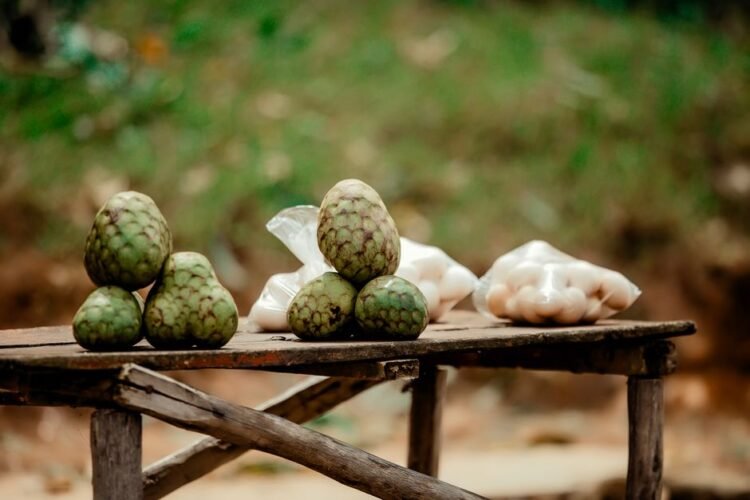
Cherimoya is a heart-shaped subtropical fruit with a scaly green skin and creamy white pulp studded with inedible black seeds, celebrated for its custard-like texture and sweet tropical flavor blending notes of banana, pineapple, and strawberry. Grown primarily in cool highland climates, it is enjoyed fresh, blended into drinks, or folded into chilled desserts.
History & Origins
Cherimoya was domesticated in the Andean foothills of Ecuador and Peru at least two thousand years ago, where Inca and pre-Inca peoples cultivated it in terraced groves. Spanish naturalists carried seeds to Iberia in the late 1700s, from which the crop spread to the Canary Islands, southern Spain, and later to California, Chile, New Zealand, and Australia. Mark Twain declared it "the most delicious fruit known to man" after sampling it in San Francisco during the 1860s.
Nutrition Facts
Per 100 g, edible portion (estimated)
- 75 kcalCalories
- 1.6 gProtein
- 0.6 gFat
- 18.0 gCarbs
- 3.0 gFiber
- 12.9 gSugars
- 287 mgPotassium
- 0.27 mgIron
- 12.6 mgVitamin C
Culinary Uses
- Halved and scooped fresh with a spoon, often chilled
- Blended into smoothies, juices, and batidos with lime or milk
- Churned into ice cream, sorbet, or semifreddo
- Whipped into mousses, custards, or layered in tropical fruit salads
Known Benefits
- Excellent source of dietary fiber for digestive health
- Provides vitamin C to support immune function
- Contains B-complex vitamins, especially B6, for energy metabolism
- Rich in antioxidant carotenoids and polyphenols
Hidden Benefits
- Good source of magnesium and iron supporting muscle and blood health
- Supplies modest amounts of tryptophan and thiamine for nervous system function
- Contains annonaceous acetogenins studied for bioactive potential
- Provides folate and trace copper for cellular repair processes
Cautions & Considerations
- Black seeds contain toxic alkaloids and must always be removed
- Unripe fruit is astringent and can cause stomach upset
- Skin contact may trigger reactions in people with latex-fruit allergy syndrome
- Chronic heavy consumption of Annona species has been linked to atypical Parkinsonism due to annonacin