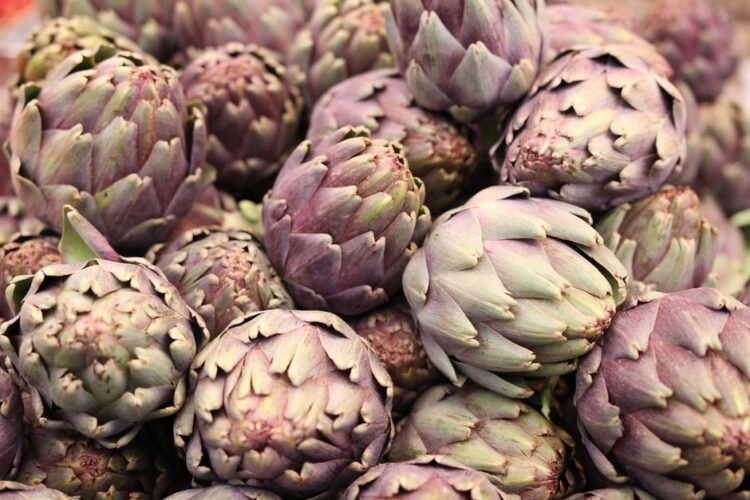
Cardoon is a large perennial thistle in the Asteraceae family, cultivated for its thick, celery-like leaf stalks and immature flower buds, with a flavor reminiscent of artichoke hearts accented by mild bitterness.
History & Origins
Wild cardoon grows throughout the Mediterranean, where it was first harvested and eventually domesticated in antiquity; Greeks and Romans ate it, and by the Middle Ages it had become a mainstay of Iberian, Italian, and French cookery. Selection for large fleshy stalks in southern Europe paralleled the development of the closely related globe artichoke, which most botanists regard as a cultivar of the same species. Spanish settlers later carried the plant to the Americas, where Argentine and Chilean cardoon traditions endure today.
Nutrition Facts
Per 100 g, edible portion (estimated)
- 17 kcalCalories
- 0.7 gProtein
- 0.1 gFat
- 4.1 gCarbs
- 1.6 gFiber
- 0.85 gSugars
- 400 mgPotassium
- 70 mgCalcium
- 0.7 mgIron
- 2.8 mgVitamin C
- 17 mcgVitamin A
- 22 mcgFolate
Culinary Uses
- Braised in Italian cardoon gratin with béchamel and Parmigiano
- Added to Spanish cocido and Catalan escudella stews
- Fried in olive oil after parboiling, often as an antipasto in Rome
- Blanched and served cold with vinaigrette as a winter crudité
- Used as a natural milk coagulant in traditional Portuguese and Spanish cheeses such as Serra da Estrela
Known Benefits
- Rich in dietary fiber supporting digestive health
- Good source of potassium for blood pressure regulation
- Contains cynarin and other polyphenols with antioxidant activity
- Provides inulin-type fructans that act as prebiotics
- Low in calories while adding volume and satiety to meals
Hidden Benefits
- Flowers contain aspartic proteases historically used as vegetarian rennet for cheesemaking
- Cynaropicrin and related sesquiterpenes stimulate bile flow and digestion as bitter aperitifs
- Leaves have been used in folk medicine as a diuretic and liver tonic
- Spent stalks can be processed into high-quality paper and biofuel feedstock
- Traditional galactagogue used in some Mediterranean cultures to support nursing mothers
Cautions & Considerations
- Raw stalks contain bitter sesquiterpene lactones that may cause stomach upset in sensitive individuals
- Stems and leaf ribs carry fine spines that must be trimmed and stalks cooked thoroughly
- Skin contact during harvest can cause mild irritation or allergic reaction in sensitive people
- Contains moderate oxalates; those with kidney-stone history should limit intake
- Improperly blanched stalks remain tough and fibrous and may be difficult to digest


