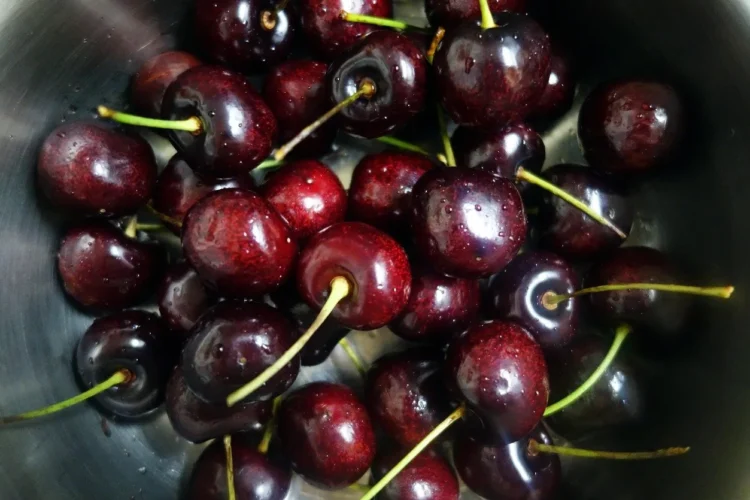
Sweet cherries are juicy, sweet stone fruits with glossy red-to-dark-purple skin and firm pale flesh, prized fresh and as the base for liqueurs, preserves, and classic desserts.
CategoryFruits
Scientific namePrunus avium
OriginNative to Europe and southwestern Asia, particularly the region around the Caspian and Black Seas; the name derives from the Greek kerasos via Latin cerasium.
History & Origins
Cherries were gathered from the wild in prehistoric Europe and formally cultivated in Asia Minor and Greece by the 4th century BCE; the Romans spread the fruit across their empire following the campaigns of General Lucullus in the 1st century BCE. By the Middle Ages, sweet and sour varieties were established throughout Europe, and English colonists later carried them to North America in the 1600s, where they became a foundation of regional fruit cultivation in Michigan, Washington, and Oregon.
Nutrition Facts
Per 100 g, edible portion (estimated)
- 63 kcalCalories
- 1.06 gProtein
- 0.2 gFat
- 16.01 gCarbs
- 2.1 gFiber
- 12.82 gSugars
- 222 mgPotassium
- 7 mgVitamin C
- 3 mcgVitamin A
Culinary Uses
- Eaten fresh as a seasonal snack or in fruit salads
- Featured in classic desserts such as clafoutis, Black Forest cake, and cherry pie
- Distilled into kirsch, maraschino, and ratafia liqueurs
- Dried for trail mixes, granolas, and baked goods
- Paired with rich meats like duck, pork, and venison in savory sauces
Known Benefits
- High in anthocyanin antioxidants that combat oxidative stress
- Provides vitamin C and potassium for immune and cardiovascular support
- Anti-inflammatory polyphenols linked to reduced muscle soreness
- Natural source of dietary fiber supporting digestion
Hidden Benefits
- Contains measurable melatonin that may improve sleep onset and quality
- Quercetin and cyanidin compounds may help lower uric acid and reduce gout flare-ups
- Post-exercise cherry juice shown to accelerate recovery in athletes
- Polyphenols may support healthy circadian rhythm regulation
Cautions & Considerations
- Pits contain amygdalin, which can release cyanide; never crush or swallow pits
- Naturally high sugar content requires moderation for diabetics
- May interact with blood thinners such as warfarin due to coumarin-like compounds
- Oral allergy syndrome possible in people allergic to birch pollen