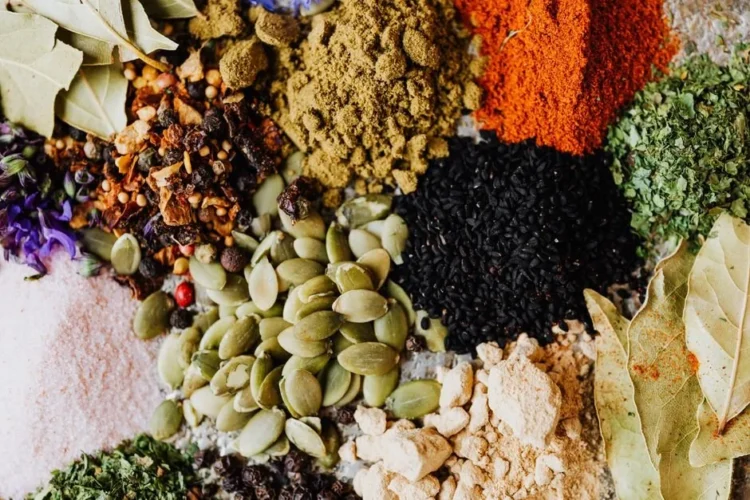
Nigella seeds, sometimes called black cumin or kalonji, are the small, angular, jet-black seeds of a Ranunculaceae annual, prized for their smoky, onion-pepper aroma. They function as both a flavoring spice and a traditional remedy across South Asian and Middle Eastern cuisines.
History & Origins
Nigella sativa has been used medicinally and culinarily for more than three millennia; archaeologists found seeds in Tutankhamun's tomb (c. 1323 BCE), and they are described in the Ebers Papyrus and the Bible. Avicenna's Canon of Medicine praised the seeds for stimulating metabolism and easing breathing, while in Ayurveda they were classified as a pungent digestive tonic long before reaching European spice cabinets via Ottoman and Arab trade.
Nutrition Facts
Per 100 g, edible portion (estimated)
- 400 kcalCalories
- 16.0 gProtein
- 31.5 gFat
- 34.5 gCarbs
- 7.0 gFiber
- 2.0 gSugars
- 1,700 mgPotassium
- 570 mgCalcium
- 9.7 mgIron
- 7 mgVitamin C
Culinary Uses
- Sprinkled on naan, flatbreads, and Turkish çörek before baking
- Component of Bengali five-spice panch phoron alongside cumin, mustard, fennel and fenugreek
- Stirred into yogurt-based raitas, dhal, and North Indian pickles
- Used in Middle Eastern cheeses, nigella-scented olive oils, and Assyrian/Syrian pastry toppings
- Bitter flavoring in Armenian, Bosnian, and Iraqi breads and savory pastries
Known Benefits
- Source of thymoquinone, a bioactive compound studied for anti-inflammatory and antioxidant effects
- Traditionally used to soothe cough, asthma, and digestive discomfort in Unani medicine
- May support healthy lipid profiles and blood-sugar balance in preliminary human trials
- Provides plant sterols, fixed oils, and modest iron and calcium levels
Hidden Benefits
- Seeds contain nigellone and thymohydroquinone investigated for histamine-modulating activity
- Fixed oil is rich in linoleic and oleic fatty acids suitable for culinary finishing
- Roasting deepens nutty notes without destroying thymoquinone, making toast-topping a functional practice
- Acts as a natural shelf-life extender in pickles due to mild antimicrobial volatile oils
Cautions & Considerations
- May slow blood clotting; avoid high medicinal doses before surgery or with anticoagulants
- Pregnant women should limit culinary intake and avoid concentrated oil extracts due to potential uterine stimulation
- Topical undiluted oil can cause contact dermatitis in sensitive individuals
- Seeds are sometimes confused with toxic look-alikes sold as "black cumin" (Bunium persicum) or onion seed