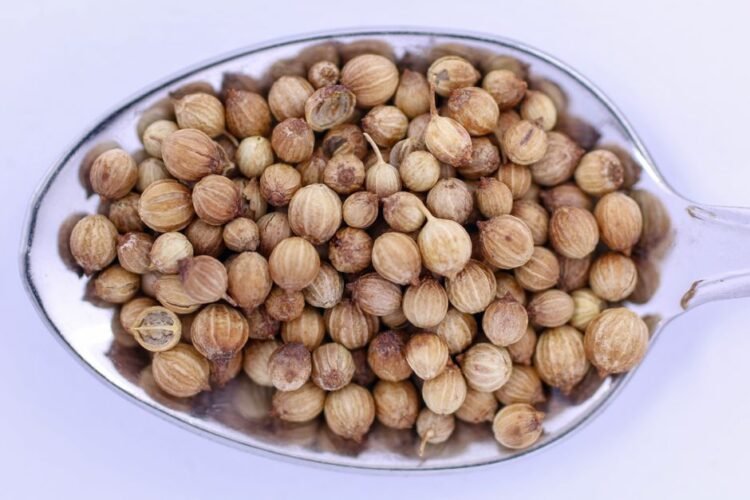
Coriander seeds are the small, round, tan-colored dried fruits of the annual herb Coriandrum sativum, prized for their warm, citrusy, nutty, and slightly sweet aroma. They are one of the most globally traded spices and a foundational component in Indian, Middle Eastern, Latin American, and European cuisines.
History & Origins
Archaeobotanical evidence places coriander among the earliest cultivated spices, with desiccated seeds recovered from the Nahal Hemar cave in Israel dating to roughly 6,000 BCE and from Predynastic Egyptian tombs. The Ebers Papyrus (c. 1550 BCE) records its use by Egyptian physicians for digestive and urinary complaints, while Greeks and Romans used it as both a seasoning and a meat preservative. It dispersed eastward along Silk Road caravan routes by the early centuries CE, becoming integrated into Ayurvedic, Persian, and Chinese pharmacopoeias and cuisine.
Nutrition Facts
Per 100 g, edible portion (estimated)
- 298 kcalCalories
- 12.4 gProtein
- 17.8 gFat
- 55.2 gCarbs
- 41.9 gFiber
- 0 gSugars
- 1267 mgPotassium
- 21 mgVitamin C
- 0 mcgVitamin A
Culinary Uses
- Essential component of Indian garam masala, curry powder, sambar powder, and rasam blends
- Dry-toasted and ground for spice rubs on lamb, pork, poultry, and root vegetables
- Used whole in pickling brines for cucumbers, beets, cauliflower, and onions
- Flavoring for rye breads, pumpernickel, and traditional Scandinavian and German baking
- Featured in Belgian witbier and German Berliner Weisse brewing traditions
- Key ingredient in Chinese five-spice powder alongside star anise, cloves, Sichuan pepper, and cinnamon
- Bitter liqueurs such as aquavit, kümmel, and herbal chartreuse-style digestifs
Known Benefits
- High in polyphenolic antioxidants including quercetin, kaempferol, and apigenin
- Traditionally used to relieve bloating, gas, and indigestion
- Contains linalool, a terpene with documented anti-inflammatory action
- May support blood sugar regulation and postprandial glucose control
- Rich source of dietary fiber, iron, magnesium, and manganese
Hidden Benefits
- Linalool exhibits mild anxiolytic and sedative activity in animal studies
- Dodecenal (E-2-dodecenal) demonstrates potent antimicrobial action against Salmonella and Listeria monocytogenes
- Petroselinic acid and other fatty acids may contribute to improved lipid profiles
- Diuretic and mild cholesterol-lowering effects observed in small human trials
- Topical coriander oil shows in vitro antifungal activity against Candida species
Cautions & Considerations
- Can trigger allergic reactions in individuals sensitive to Apiaceae family plants (carrot, celery, parsley, fennel)
- High medicinal doses may potentiate diabetes and blood pressure medications
- Essential oil is irritant to skin in concentrated form and should not be ingested undiluted
- Pregnant women are advised to avoid therapeutic quantities due to potential uterine stimulation
- Seeds may cross-contaminate with toxigenic molds (aflatoxin) if stored in humid conditions


