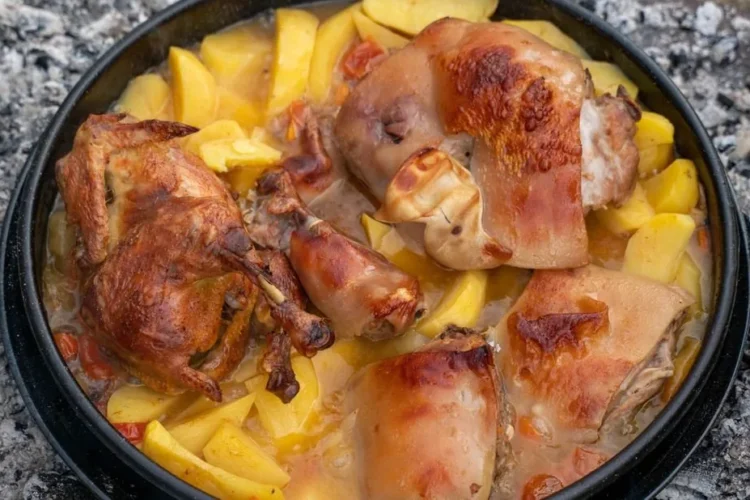
A lean, game-flavored poultry from the domesticated helmeted guinea fowl, prized in French, Italian, and West African cuisine for its firm texture and richer, slightly gamier taste than chicken, with significantly lower fat content.
History & Origins
The wild helmeted guinea fowl is native to the savannas of West and Central Africa, where it was first domesticated several thousand years ago; the ancient Greeks and Romans knew the bird through trade and often raised it for the table. By the medieval period guinea fowl had spread across the Mediterranean and were firmly established in French and Italian cookery, where they remained a favored alternative to chicken for special occasions. Today they are farmed commercially in France, Italy, the United States, and several African nations.
Nutrition Facts
Per 100 g, edible portion (estimated)
- 158 kcalCalories
- 28.4 gProtein
- 3.9 gFat
- 0 gCarbs
- 1.3 mgIron
Culinary Uses
- Roasted whole with herbs, butter, and citrus
- Braised in red wine with mushrooms (French-style salmis)
- Grilled or smoked in West African stews and soups
- Incorporated into pâtés, terrines, and confit
Known Benefits
- Exceptionally high lean-protein content per serving
- Lower in fat and calories than chicken or duck
- Good source of B-complex vitamins, especially niacin and B12
- Provides bioavailable heme iron
Hidden Benefits
- Contains meaningful levels of selenium for thyroid support
- Delivers conjugated linoleic acid (CLA) from pasture-raised birds
- Naturally rich in taurine and creatine compared to plant proteins
- Holds more moisture than chicken when brined, making it forgiving in slow roasts
Cautions & Considerations
- Must reach internal temperature of 74 °C (165 °F) to ensure food safety
- Young birds have very little fat and can dry out quickly without barding
- Skin of commercially farmed birds may carry salmonella if undercooked
- Wild-caught specimens are protected in many regions and require a hunting license





