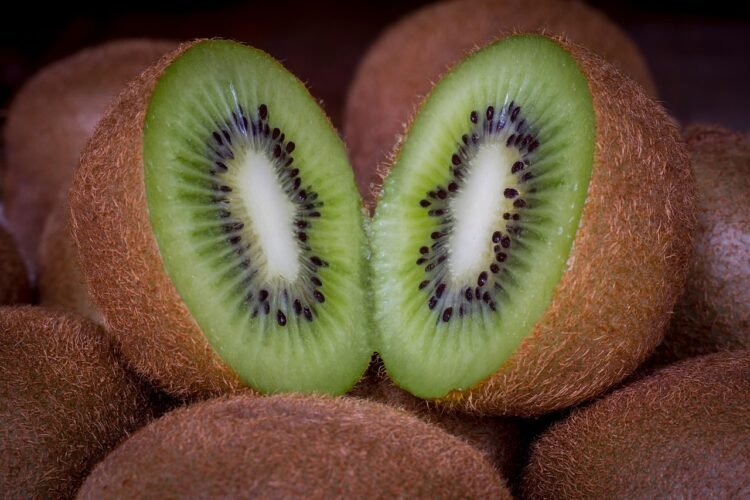
A small, fuzzy brown-skinned berry with vivid emerald-green flesh and a ring of tiny black seeds, prized for its sweet-tart flavor and exceptionally high vitamin C content.
CategoryFruits
Scientific nameActinidia deliciosa
OriginYangtze River valley, southern China
History & Origins
Native to the Yangtze River valley of China, the fruit was long gathered from the wild and known as míhóutáo ('macaque peach') because monkeys were fond of it. Seeds were brought to New Zealand in 1904 by schoolteacher Isabel Fraser, and the cultivar 'Hayward' was developed there in the 1920s. Growers rebranded it 'kiwifruit' in 1959 for North American export, transforming it into an international commercial crop now cultivated in Italy, Chile, Greece, and Iran.
Nutrition Facts
Per 100 g, edible portion (estimated)
- 61 kcalCalories
- 1.1 gProtein
- 0.5 gFat
- 14.7 gCarbs
- 3.0 gFiber
- 9.0 gSugars
- 312 mgPotassium
- 92.7 mgVitamin C
- 40.3 mcgVitamin K
- 25 mcgFolate
Culinary Uses
- Eaten fresh, typically halved and scooped with a spoon
- Layered into fruit salads, smoothies, and tropical salsas
- Made into jams, jellies, and a tangy chutney for meats
- Featured in desserts such as pavlova, tarts, sorbet, and pavé
Known Benefits
- Exceptionally high vitamin C—more per gram than orange
- Supports immune function and collagen synthesis
- Provides dietary fiber for digestive regularity
Hidden Benefits
- Contains actinidin, a cysteine protease that tenderizes proteins and aids protein digestion
- Provides more potassium per calorie than the banana
- Rich in polyphenols such as quercetin and kaempferol with antioxidant activity
Cautions & Considerations
- May trigger oral allergy syndrome in those allergic to birch pollen or latex
- Contains vitamin K—patients on warfarin should monitor consistent intake
- Overconsumption can cause bloating or laxative effects due to fiber and actinidin


