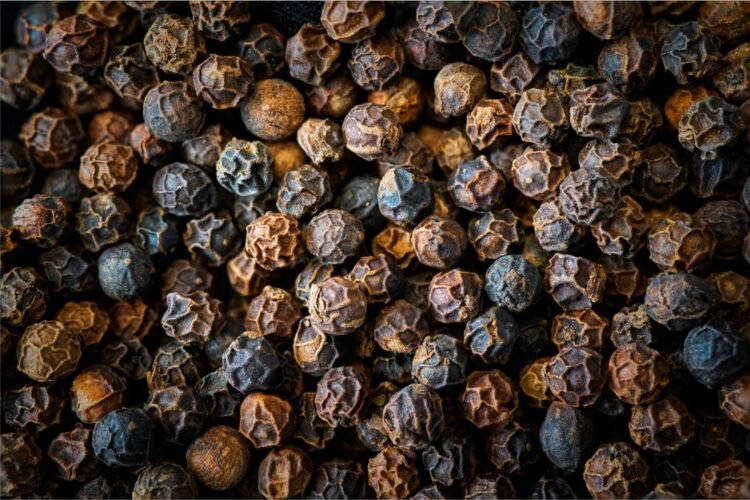
Long pepper is a dried catkin-like spike of the Piper longum vine, prized for its hot, sweet-numbing flavor combining notes of black pepper, ginger, and nutmeg. It is a foundational spice in Ayurvedic medicine and in the spice pastes and pickles of South and Southeast Asia.
History & Origins
Long pepper was one of the first spices to reach the Mediterranean, traded via the ancient routes of the Periplus of the Erythraean Sea and mentioned in Charaka and Sushruta's Ayurvedic treatises around the 4th century BCE. In Rome it commanded a price rivaling black pepper and appears in Apicius' recipes, but by the medieval period it was gradually eclipsed by Piper nigrum as maritime trade shifted. It remains a staple in Indonesian masala blends, Bengali and Nepali cuisine, and in classic North Indian spice mixes such as trikatu.
Nutrition Facts
Per 100 g, edible portion (estimated)
- 285 kcalCalories
- 10.4 gProtein
- 2.8 gFat
- 58.3 gCarbs
- 22.5 gFiber
- 0 gSugars
- 1080 mgPotassium
- 5.2 mgVitamin C
- 28 mcgVitamin A
Culinary Uses
- Component of Ayurvedic trikatu and Indian garam masala for slow-cooked curries
- Ground into Indonesian spice pastes (bumbu) for rendang and soto
- Whole spikes preserved in vinegar in Bengali and Nepalese pickles (achar)
- Finely ground as a finishing spice on tandoori meats and root vegetable roasts
Known Benefits
- Contains piperine, which supports bioavailability of curcumin and other nutrients
- Used in Ayurveda to kindle digestive agni and treat respiratory congestion
- Source of manganese and dietary fiber
Hidden Benefits
- Piperlongumine studied for selective cytotoxicity toward cancer cell lines in vitro
- Traditional use as an aphrodisiac (vajikarana) in classical Indian texts
- May enhance thermogenesis and metabolic rate when paired with capsaicinoids
Cautions & Considerations
- Hot, numbing bite can irritate the mouth in large doses
- Uterine stimulant in traditional medicine; traditionally avoided in pregnancy
- May potentiate drugs metabolized by CYP3A4 enzymes due to piperine content
- Can interfere with absorption of certain antidepressants and blood thinners if used heavily