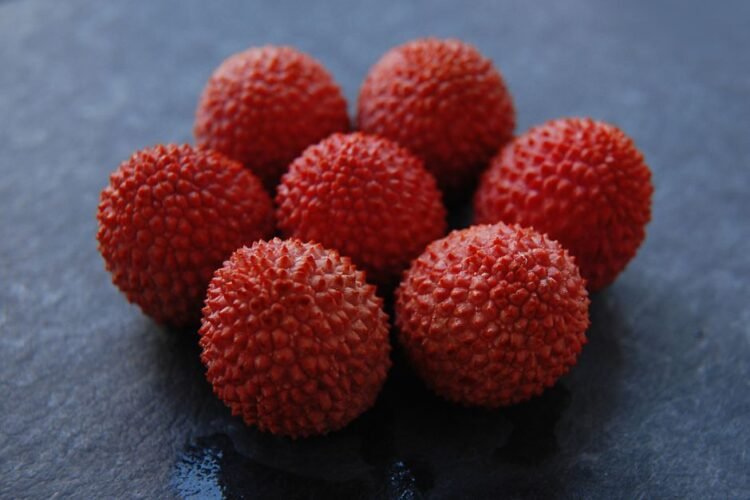
A small, subtropical fruit with a rough, crimson rind and translucent, juicy white flesh, lychee is celebrated for its floral aroma and sweet-tart flavor. It is widely consumed fresh, dried, and in preserves across East and Southeast Asia.
CategoryFruits
Scientific nameLitchi chinensis
OriginSouthern China (Guangdong, Fujian, Hainan, and Yunnan provinces)
History & Origins
Lychee has been cultivated in southern China for over 2,000 years, with the earliest written references appearing during the Han dynasty (206 BCE–220 CE). It was a prized tribute fruit presented to the imperial court and was spread westward along trade routes, reaching Bengal by the late 17th century and the Caribbean and Florida by the 19th century. The fruit was introduced to Réunion and Madagascar by Chinese traders and later to other tropical regions.
Nutrition Facts
Per 100 g, edible portion (estimated)
- 66 kcalCalories
- 0.8 gProtein
- 0.4 gFat
- 16.5 gCarbs
- 1.3 gFiber
- 15.2 gSugars
- 171 mgPotassium
- 71.5 mgVitamin C
- 0 mcgVitamin A
Culinary Uses
- Eaten fresh as a snack or dessert fruit
- Sun-dried or dehydrated as 'lychee nuts' for long-term storage
- Poached or paired with duck, pork, and seafood in Cantonese cuisine
- Blended into sorbets, mousses, cocktails (e.g., lychee martini), and fruit teas
- Canned in syrup for use in Western desserts and fruit salads
Known Benefits
- Exceptionally high in vitamin C, supporting immune function
- Provides copper and B-complex vitamins such as niacin and folate
- Contains polyphenols including rutin and proanthocyanidins with antioxidant activity
- Source of dietary fiber and potassium for cardiovascular health
Hidden Benefits
- Oligonol, a polyphenol formed during lychee processing, may improve circulation and reduce post-exercise fatigue
- Anti-inflammatory flavonoids have shown lipid-lowering effects in animal studies
- Bromelain-like enzymes and oligomeric procyanidins may aid digestion and vascular function
Cautions & Considerations
- Unripe lychees contain hypoglycin A and methylenecyclopropylglycine (MCPG), linked to outbreaks of acute encephalopathy in malnourished children in India and Vietnam
- High natural sugar content requires moderation for individuals with diabetes
- Consumption on an empty stomach in large quantities may cause digestive upset or reactions in sensitive individuals