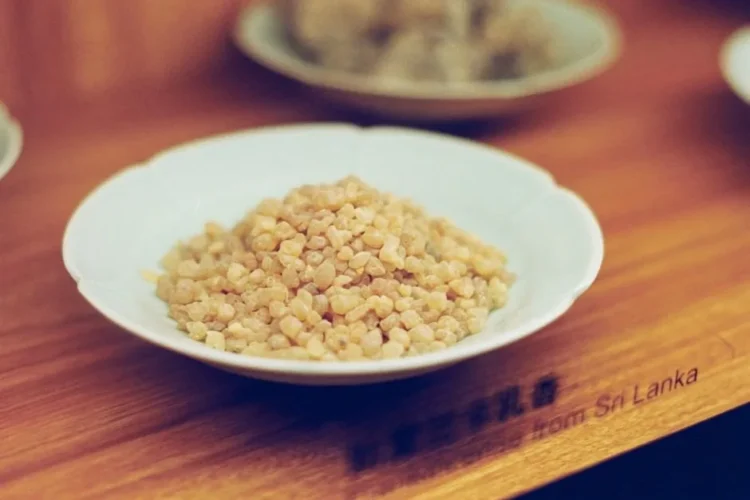
Mastic is an aromatic, pale-yellow resin obtained by wounding the bark of Pistacia lentiscus, an evergreen shrub native to the eastern Mediterranean. It hardens into glassy 'tears' prized for their piney, slightly herbal flavor in Greek, Turkish, and Levantine cuisines.
History & Origins
Mastic resin has been harvested on the Greek island of Chios for over 2,500 years, where it served as a precious commodity in ancient Egypt, Rome, and Byzantium. During the Ottoman era, the sultans controlled mastic production as a state monopoly, severely punishing Chiot smugglers and exporting the resin throughout their domains. Today, the southern villages of Chios remain the world's primary source under a Protected Designation of Origin, producing roughly 250 tonnes annually.
Nutrition Facts
Per 100 g, edible portion (estimated)
- 260 kcalCalories
- 0.1 gProtein
- 0.5 gFat
- 60 gCarbs
- 0 gFiber
- 0 gSugars
- 55 mgPotassium
- 0 mgVitamin C
- 0 mcgVitamin A
Culinary Uses
- Flavoring for Greek mastiha liqueur, tsoureki, and ice cream
- Whisked into Turkish dondurma and salep-based puddings
- Ground into Lebanese and Syrian breads, cookies, and ma'amoul
- Component of Arabic spice blends and Persian savory dishes
- Traditionally chewed as a natural gum for freshening breath
Known Benefits
- Traditionally used to soothe digestive complaints and ulcers
- Studied for inhibition of Helicobacter pylori in clinical trials
- Demonstrated anti-inflammatory and antioxidant activity
- Supports oral health by reducing plaque and gingival bacteria
Hidden Benefits
- Animal studies suggest hepatoprotective and cholesterol-lowering effects
- Topical folk use for burns, wounds, and eczema shows promise
- Aromatic compounds may exert mild anxiolytic effects
- Prebiotic potential on gut microbiota under active investigation
Cautions & Considerations
- Rare contact dermatitis reported in highly sensitive individuals
- May potentiate anticoagulant medications; consult a physician
- Must not be confused with the toxic 'false mastic' of Schinus species
- High supplemental doses not advised during pregnancy or lactation





