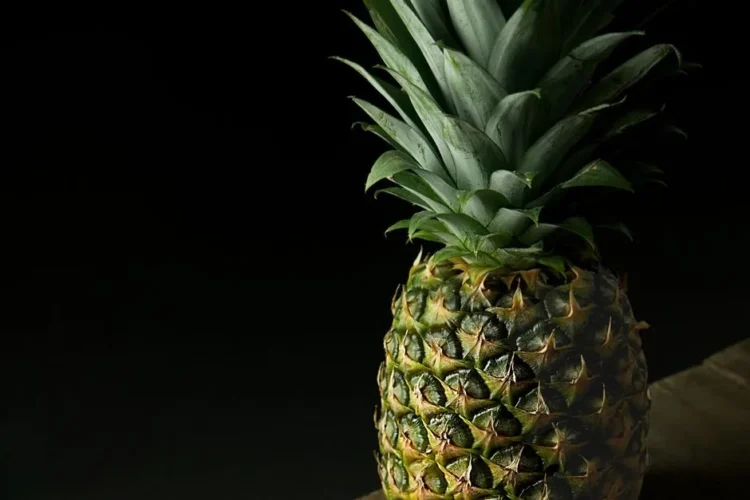
A herbaceous perennial of the Bromeliaceae family that produces a compound 'multiple fruit' from the coalescence of many individual berries on a single inflorescence, characterized by a spiky green crown, scaly yellow-green rind, and sweet, juicy yellow flesh.
History & Origins
Domesticated by the Guaraní and Tupi peoples of lowland South America perhaps as early as 1,200 years ago, where it was valued for fiber as well as food and woven into the culture of pre-Columbian peoples including the Maya and Aztec. Christopher Columbus encountered the fruit in Guadeloupe in 1493 and carried it back to Europe, after which Portuguese and Spanish sailors propagated it across tropical Africa, India, the Philippines, and Hawaii, transforming it into a global commodity. By the 19th century it had become a status symbol in Europe and America, prompting the construction of vast heated pineapple pits and the hothouses of figures such as Duchess of Cleveland and the horticulturist Joseph Paxton.
Nutrition Facts
Per 100 g, edible portion (estimated)
- 50 kcalCalories
- 0.54 gProtein
- 0.12 gFat
- 13.12 gCarbs
- 1.4 gFiber
- 9.85 gSugars
- 109 mgPotassium
- 47.8 mgVitamin C
- 3 mcgVitamin A
Culinary Uses
- Grilled or charred as a sweet-savory side dish in Caribbean, Brazilian, and Hawaiian cuisines
- Juiced for beverages, smoothies, piña coladas, and the fermented beverage tepache
- Canned, dried, or candied for industrial use in fruit salads, cakes, and the classic American pineapple upside-down cake
- Core and rind simmered with sugar to make chutneys, vinegars, and infused syrups in Asian and Latin American cooking
Known Benefits
- Exceptionally high vitamin C content supporting immune function
- Contains bromelain, a proteolytic enzyme complex that aids protein digestion
- Anti-inflammatory action attributed to bromelain
- High water content (~86%) provides hydration with relatively few calories
Hidden Benefits
- Manganese is unusually abundant, supporting bone formation and antioxidant defenses
- Bromelain may reduce post-exercise muscle soreness and bruising
- Polyphenols such as ferulic acid contribute to antioxidant capacity
- Dietary fiber includes inulin-type fructans that may benefit gut microbiota
Cautions & Considerations
- High acidity and bromelain can irritate the lips, tongue, and gums, causing a stinging sensation
- Unripe pineapple is caustic and may cause severe mouth and gastrointestinal irritation
- Bromelain can potentiate anticoagulant medications such as warfarin
- Canned pineapple in syrup has substantially higher sugar and lower bromelain than fresh fruit





