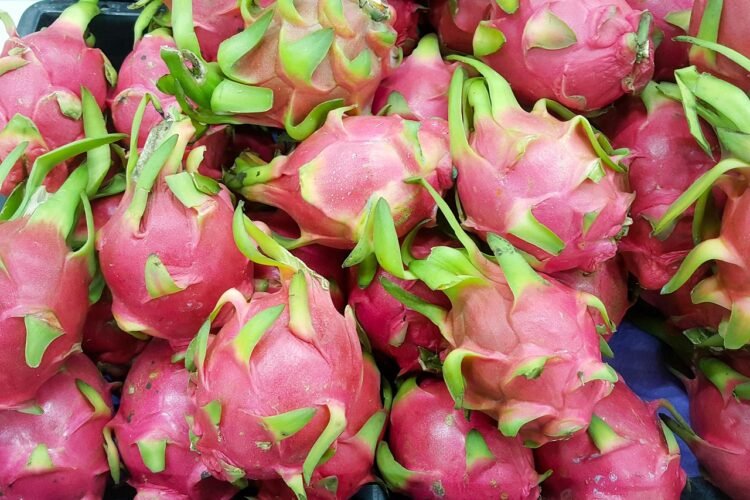
Pitaya, popularly called dragon fruit, is the edible berry of several climbing cacti, recognized by its vivid magenta-yellow skin, leaf-like bracts, and delicately sweet white or deep magenta flesh speckled with tiny black seeds. It is eaten chilled, fresh, or blended into modern tropical cuisine across Southeast Asia and beyond.
History & Origins
Pitaya is native to the tropical forests of southern Mexico, Guatemala, and Costa Rica, where it was cultivated and consumed by pre-Columbian peoples including the Maya. Spanish missionaries carried cuttings to Asia in the late 19th and early 20th centuries, where it was adopted by farmers in Vietnam (where it is called thanh long), Thailand, and the Philippines. Today Vietnam is the world's largest exporter, with commercial cultivation spreading to Israel, Australia, and the Mediterranean.
Nutrition Facts
Per 100 g, edible portion (estimated)
- 60 kcalCalories
- 1.2 gProtein
- 0 gFat
- 13 gCarbs
- 3 gFiber
- 8 gSugars
- 110 mgPotassium
- 0.4 mgIron
- 18 mgMagnesium
- 5.6 mgVitamin C
- <1 mcgVitamin A
Culinary Uses
- Served chilled, halved and scooped with a spoon
- Blended into smoothies, smoothie bowls, and tropical fruit salads
- Stirred into yogurt parfaits or overnight oats
- Used as a natural pigment in sorbets, ice creams, and aguas frescas
- Mixed into cocktails, mocktails, and boba tea for color and subtle sweetness
Known Benefits
- Low in calories and naturally fat-free
- Good source of dietary fiber supporting digestion
- Contains vitamin C and several B-vitamins
- Rich in antioxidant betalains (red varieties) and carotenoids
- Hydrating due to high water content (~85%)
Hidden Benefits
- Black seeds contribute small amounts of omega-3 and omega-6 fatty acids
- Prebiotic fibers may foster beneficial gut microbiota
- Magnesium content supports muscle and nerve function
- Iron and vitamin C together enhance non-heme iron absorption
- Betalains in red-fleshed cultivars show anti-inflammatory activity in preliminary studies
Cautions & Considerations
- May trigger mild laxative effect when consumed in large quantities
- Rare allergic reactions reported, especially in those sensitive to other cacti
- Diabetic individuals should monitor intake due to natural sugars
- Cross-reactivity possible with kiwi, strawberry, or latex sensitivities
- Excess consumption may interact with certain blood-pressure medications


