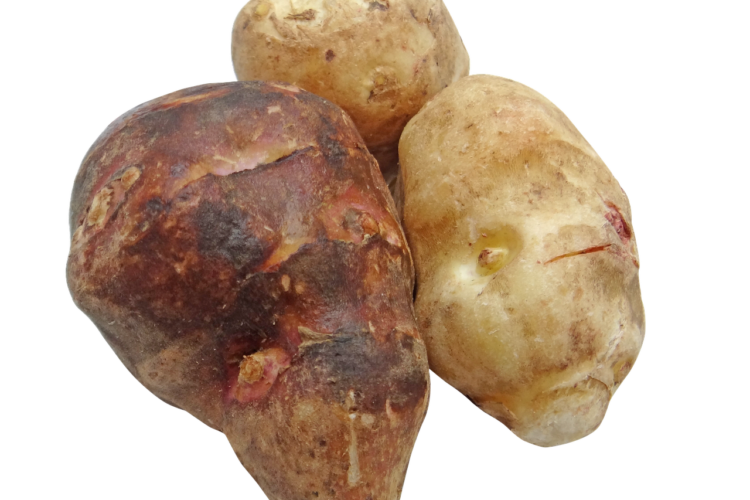
Sunchoke, also known as Jerusalem artichoke, is a species of sunflower cultivated for its edible tuber, which has a crisp, nutty flavor reminiscent of artichoke hearts and can be eaten raw or cooked.
CategoryVegetables
Scientific nameHelianthus tuberosus
OriginEastern North America
History & Origins
Sunchoke was cultivated by Native American tribes, particularly the辽incan and Algonquian peoples, long before European contact. French explorer Samuel de Champlain brought the tuber to Europe in 1605, where it gained popularity in France and England during the 18th century. It was promoted as a food crop by European agriculturalists during World War II as a substitute for potatoes. Today it is widely grown in France, the United States, Canada, and Australia, though it remains a niche vegetable.
Nutrition Facts
Per 100 g, edible portion (estimated)
- 60 kcalCalories
- 83 gWater
- 0.8 gProtein
- 0.4 gFat
- 0.1 gSaturated Fat
- 15 gCarbs
- 1.6 gFiber
- 14 gSugars
- 168 mgPotassium
- 11 mgCalcium
- 0.2 mgIron
- 10 mgMagnesium
- 36 mgVitamin C
- 54 mcgVitamin A
- 4 mcgVitamin K
- 43 mcgFolate
Culinary Uses
- Roasted whole with olive oil, garlic, and rosemary for a caramelized side dish
- Thinly sliced raw in salads for a crunchy texture and nutty flavor
- Pureed into soups blended with potato or cream
- Pickled in vinegar brine as a tangy condiment
- Fried as chips in thin rounds until golden and crispy
Known Benefits
- Excellent source of inulin, a prebiotic fiber that supports gut health
- Low in calories and fat, making it suitable for weight-conscious diets
- Contains iron and potassium which support blood oxygenation and electrolyte balance
- Provides vitamin C contributing to immune function and antioxidant protection
- Gluten-free and suitable for low-carb or diabetic-friendly eating plans
Hidden Benefits
- Inulin content may improve calcium absorption, supporting bone density
- Contains chlorogenic acid, a polyphenol with anti-inflammatory properties
- High potassium-to-sodium ratio can help regulate blood pressure
- Fructooligosaccharides in sunchokes may reduce LDL cholesterol levels
- Resistant starch formed after cooking and cooling supports short-chain fatty acid production in the colon
Cautions & Considerations
- Excessive consumption can cause bloating and flatulence due to high inulin content
- May trigger digestive discomfort in individuals with FODMAP sensitivity or irritable bowel syndrome
- People with ragweed pollen allergies may experience cross-reactive reactions
- Not suitable as a sole dietary staple due to imbalanced mineral profile compared to leafy greens
- Raw tubers should be thoroughly washed to remove soil-borne bacteria before consumption