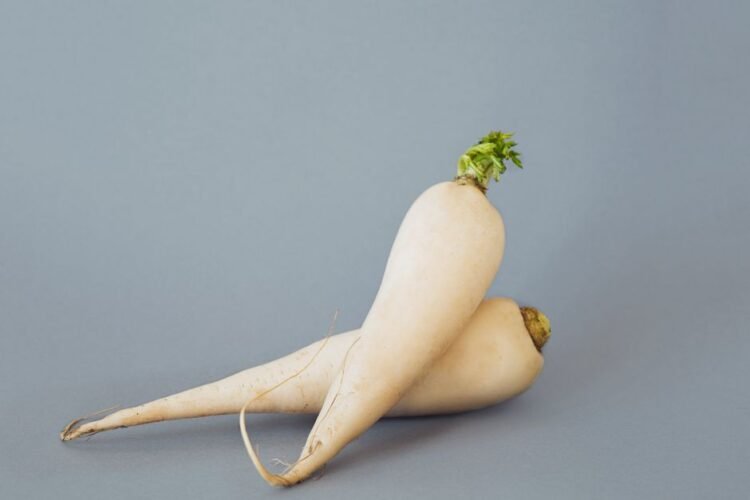
Daikon radish is a large, mild-flavored white radish native to East Asia, characterized by its crisp texture and refreshing taste, widely used in Asian cuisines both raw and cooked.
CategoryVegetables
Scientific nameRaphanus sativus var. longipinnatus
OriginEast Asia (China and Japan)
History & Origins
Daikon radish has been cultivated in China and Japan for over a thousand years, with archaeological evidence suggesting domestication occurred by the Tang Dynasty. It spread throughout East and Southeast Asia, becoming a staple in Japanese, Korean, and Chinese cooking. The vegetable was introduced to other parts of the world through Asian immigration and trade routes.
Nutrition Facts
Per 100 g, edible portion (estimated)
- 18 kcalCalories
- 95 gWater
- 0.6 gProtein
- 0.1 gFat
- 0 gSaturated Fat
- 4.1 gCarbs
- 1.6 gFiber
- 2.5 gSugars
- 227 mgPotassium
- 25 mgCalcium
- 0.4 mgIron
- 16 mgMagnesium
- 22 mgVitamin C
- 0 mcgVitamin A
- 0.3 mcgVitamin K
- 28 mcgFolate
Culinary Uses
- Eaten raw in salads and garnishes for its crisp texture
- Pickled as takuan in Japanese cuisine
- Used in soups, stews, and stir-fries across Asian cuisines
- Grated as a garnish for fried foods to add freshness
- Pickled as kimchi component in Korean cuisine
Known Benefits
- Supports digestive health through natural enzyme content
- Low calorie vegetable suitable for weight management
- High vitamin C content supports immune function
- Good source of dietary fiber for gut health
- Contains potassium which supports heart health
Hidden Benefits
- Contains glucosinolates with potential anti-cancer properties
- Contains raffinose family oligosaccharides that support beneficial gut bacteria
- Has natural detoxifying compounds that may support liver function
- Contains cumic acid which may have anti-inflammatory properties
Cautions & Considerations
- May contribute to goiter formation if consumed in extremely large quantities due to goitrogens
- Can cause digestive gas in sensitive individuals due to raffinose content
- Raw daikon may interfere with thyroid medication absorption if eaten in excess
- Those with mustard family allergies may react to raw radish