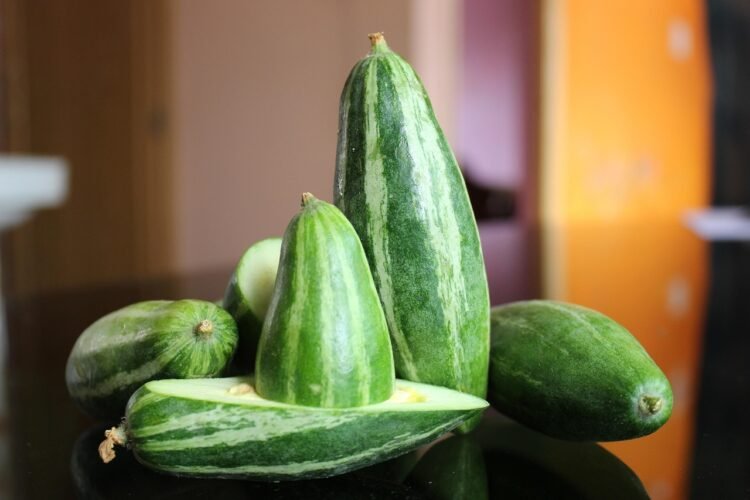
Pointed gourd (Trichosanthes dioica) is a perennial cucurbit vine cultivated across the Indian subcontinent for its slender, striped, immature fruits. It is a staple vegetable in Bengali, Odia, and Bihari cuisines, prized for its tender texture and mild, slightly bitter flavor.
History & Origins
Pointed gourd has been cultivated in eastern India, Bangladesh, and Nepal for centuries, with references appearing in classical Ayurvedic texts as a cooling, digestive vegetable. It remains one of the most economically important cucurbits of the Gangetic plain and is propagated vegetatively from vine cuttings rather than seed. The vegetable is strongly associated with Bengali cuisine, where it features in elaborate fish and shrimp curries alongside mustard and poppy-seed pastes.
Nutrition Facts
Per 100 g, edible portion (estimated)
- 22 kcalCalories
- 1.4 gProtein
- 0.2 gFat
- 4.6 gCarbs
- 2.4 gFiber
- 1.5 gSugars
- 95 mgPotassium
- 14 mgVitamin C
- 18 mcgVitamin A
Culinary Uses
- Stuffed with spiced coconut or poppy-seed fillings (parwal bharwa)
- Simmered in mustard-based curries with fish or shrimp
- Stir-fried with nigella and green chilies
- Added to Bengali dal or mixed-vegetable ghanto preparations
Known Benefits
- Very low in calories and suitable for weight-management diets
- Provides dietary fiber supporting digestion
- Source of vitamin C for immune function
- Contains antioxidants including beta-carotene and flavonoids
Hidden Benefits
- Provides trace minerals such as magnesium, phosphorus, and iron
- Traditional Ayurvedic texts credit it with mild hypoglycemic and hepatoprotective effects
- Contains cucurbitacin-related compounds with reported anti-inflammatory activity in laboratory studies
Cautions & Considerations
- Must be cooked thoroughly; raw fruits can cause stomach irritation
- May provoke contact dermatitis in sensitive handlers due to trichome sap
- Avoid strongly bitter or over-mature fruits, which indicate cucurbitacin accumulation


