 (No Ratings Yet)
 Loading...
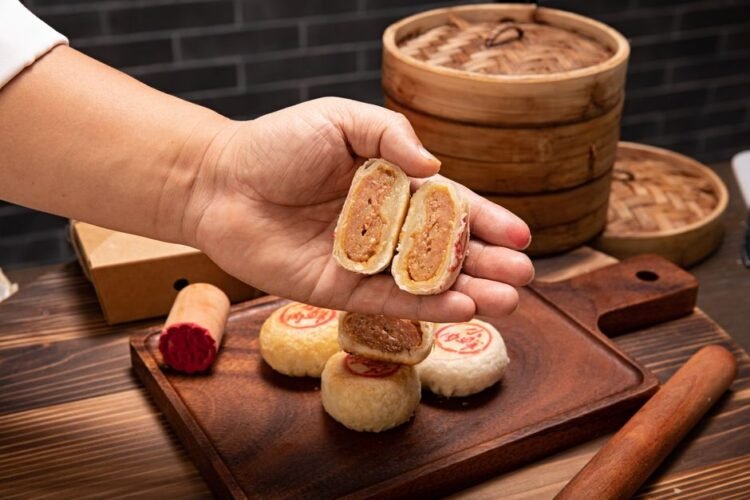
The Lotus Paste Mooncake Classic is the gold standard of Cantonese mid-autumn festival baking, featuring a glossy golden crust that wraps a dense, fragrant filling of slow-cooked lotus seed paste. Made with golden syrup and lye water in the dough, these hand-pressed cakes develop their signature tender skin and decorative patterns after a few days of resting.
Prep Time60 mins
Cook Time30 mins
Total Time90 mins
Servings4
Yield4 mooncakes (120 g each)
Nutrition Facts
Per serving (estimated)
- 395 kcalCalories
- 16 gFat
- 2.5 gSaturated Fat
- 60 gCarbs
- 2 gFiber
- 32 gSugar
- 5 gProtein
- 45 mgSodium
- 210 mgPotassium
- 35 mgCalcium
- 1.6 mgIron
- 0.5 mgVitamin C
- 20 mcgVitamin A
Ingredients
For the lotus seed paste
- 200 g dried lotus seeds (about 1 cup)
- 180 g caster sugar
- 80 ml vegetable oil, plus extra if needed
- 1/4 tsp fine salt
- 600 ml water for boiling
For the mooncake skin
- 100 g all-purpose flour, sifted
- 70 g golden syrup (Lyle's recommended)
- 25 ml vegetable oil
- 1/2 tsp lye water (kansui)
For the egg wash and finishing
- 1 large egg yolk
- 1 tbsp whole milk or water
- 1/2 tsp toasted sesame seeds for topping (optional)
Directions
- Soak the dried lotus seeds overnight in plenty of cool water, then drain and slit each seed lengthwise to remove the bitter green germ from the center. Rinse well.
- Place the cleaned seeds in a heavy pot, cover with 600 ml fresh water, and bring to a boil. Reduce heat and simmer for 1 to 1.5 hours until the seeds are very soft and fall apart when pressed. Drain, reserving a splash of cooking liquid.
- Transfer the warm seeds to a food processor and blend to a smooth, thick puree, adding a tablespoon of reserved liquid only if needed. Push the puree through a fine-mesh sieve for a silky paste.
- Cook the lotus puree in a nonstick skillet over medium-low heat with the sugar and salt, stirring constantly for 8 to 10 minutes until the mixture thickens. Gradually add the oil in a thin stream, stirring until fully absorbed and the paste holds together as a soft ball. Cool completely, then weigh out four 75 g portions.
- Make the skin: whisk the golden syrup, oil, and lye water in a bowl until combined, then stir in the flour to form a soft, slightly sticky dough. Wrap in plastic and rest at room temperature for 30 minutes.
- Divide the rested dough into four equal 30 g balls. Flatten each piece into a 10 cm round, place a lotus paste portion in the center, and gently push the dough up and around the filling, pinching to seal. Lightly dust each ball with cornstarch and press into a greased mooncake mold; tap out onto a parchment-lined baking sheet.
- Bake in a preheated 180°C (350°F) oven for 8 minutes, then remove and let cool for 5 minutes. Whisk the egg yolk with milk and brush a very thin, even layer over the tops and sides, avoiding the patterned edges. Return to the oven and bake 10 to 12 minutes more until the crust is deep amber.
- Cool the mooncakes on a rack for at least 2 hours, then store in an airtight container for 24 to 48 hours before eating; the skin will soften and develop its characteristic glossy, tender texture.
Cook’s Notes
- Always use golden syrup, not corn syrup or honey; its invert sugar content is what gives the crust its signature color and long-lasting softness.
- Lye water (kansui) is essential for the classic golden hue and slightly alkaline flavor; substitute a solution of 1/4 tsp baking soda in 1 tsp water if unavailable.
- For a richer filling, stir 1 to 2 tablespoons of melon seeds or chopped toasted walnuts into the cooled lotus paste before wrapping.
- Resist eating the mooncakes straight from the oven; the 1 to 2 day rest is crucial for the crust to soften and the flavors to mellow.
- Dust the dough balls with cornstarch (not flour) before pressing so the pattern releases cleanly from the mold.